

What Is Epoxy Flooring? Types, Benefits and Applications
We explain in plain language what epoxy flooring is, which types are available and why it is chosen for different kinds of spaces.
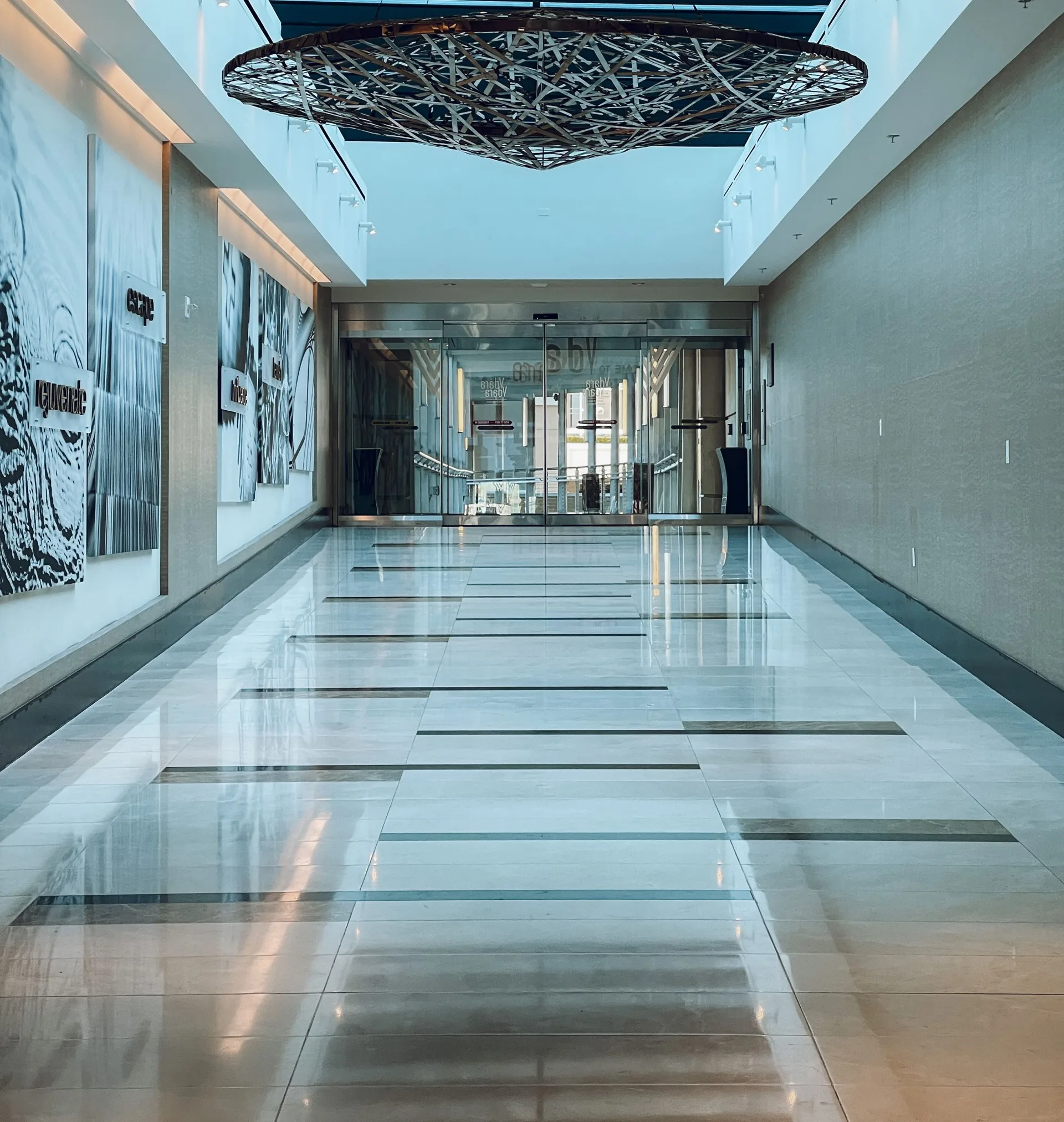
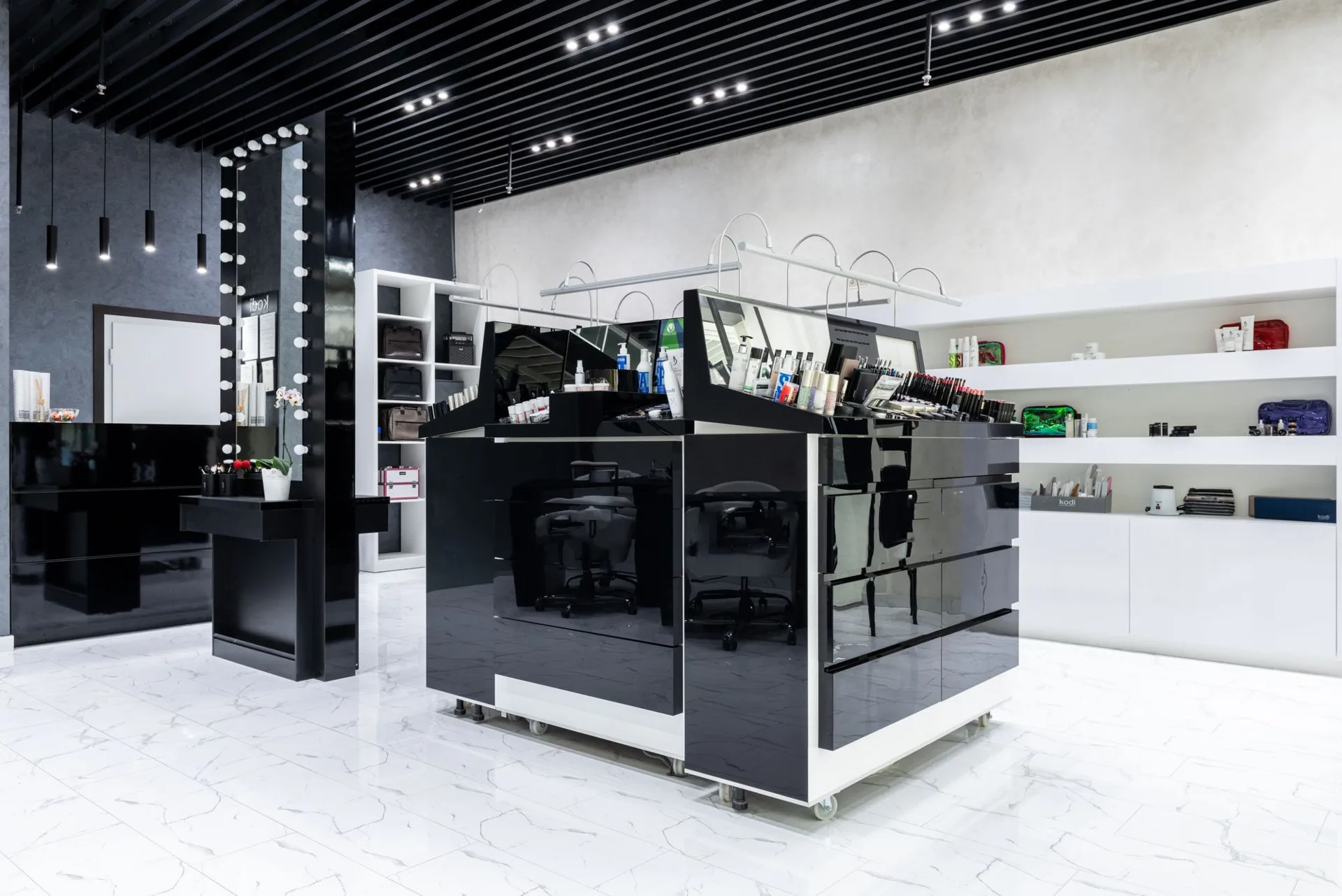
Seamless epoxy floors in brand colors for malls, grocery stores, retail stores and showrooms that stand up to heavy foot traffic, with plain-color, metallic and matte options.
Commercial epoxy flooring for malls and retail stores is preferred for its seamless look, wide choice of colors and resistance to heavy foot traffic. A 2–3 mm self-leveling epoxy is used on sales floors, metallic epoxy in showrooms and boutiques and epoxy paint in stockrooms and back-of-house areas; departments that get wet are given an anti-slip texture. It can be applied over sound ceramic tile without demolition, can be walked on after about 24 hours and is fully cured in 7 days.
Commercial epoxy flooring for malls and retail stores meets two expectations of a commercial space together: the floor has to withstand thousands of footsteps and shopping carts every day, and at the same time it has to carry the look of the store. When a customer walks into a space, the floor is one of the first large surfaces they see; a cracked tile or blackened grout lines lower the perception of the product as well.
With ceramic and porcelain tiles, what wears out most of the time is not the tile but the joint. Light-colored grout darkens within a short time under foot traffic, shopping cart wheels rattle over the joints, a tile struck on its corner breaks and finding the same series again becomes difficult. Polished concrete does not dust, but it is prone to staining and its choice of colors is limited.
An epoxy coating runs from wall to wall without joints. What this means in commercial spaces is tangible:
When we speak of commercial spaces, the factors that stress the floor change from one business to the next: in a home improvement store it is pallet loads that are decisive, in a boutique high heels, and in a grocery store spilled liquids. Below we have dealt with each type of space separately.
In shopping malls epoxy is used most in the areas that the visitor does not see but that keep the building running: service corridors, receiving and loading areas, waste rooms, plant rooms and the parking garage. In these sections the wheels of pallet jacks and waste containers are constantly at work; self-leveling epoxy or, depending on the traffic, epoxy paint stops dusting and gives a washable surface. In the common areas, meanwhile, a seamless floor is preferred in sections such as the food court, the children's play area, the event space and the restroom corridors. Because the tray return points and the back of the kitchens in the food court get wet, a textured finish is needed. In malls the expansion joints of the building show through in the floor across the wide spans; these joints are not closed off with the coating but are bridged with a profile. The work is carried out during the night hours when the mall is closed and in accordance with the work permit rules of the management. For the parking levels, you can look at our parking garage epoxy flooring page.
In neighborhood grocery stores the area is small, while traffic is dense in the narrow aisles. What tires the floor the most is the area in front of the checkout, the entrance and the produce section. Water and crushed vegetables in the produce section, a broken bottle in the cooking oil aisle and spilled liquid in the detergent aisle all make a smooth floor slippery. This is why we recommend self-leveling epoxy with a matte topcoat on the sales floor and a fine sand texture in front of the produce and deli counters. In small grocery stores the shelves can be emptied and shifted; the application can be done by dividing the shop in two and moving the shelving from one side to the other. In the small stockroom at the back, epoxy floor paint is sufficient. No pieces of the old floor should be left under the checkout conveyor and the cabinets; they come to light when the layout changes, and a difference in level remains between them and the new floor. For the wheels and feet of equipment that is moved often, such as beverage coolers and ice cream freezers, a scratch-resistant topcoat is important.
In supermarkets the scale grows and wheel loads are added to the floor. The shelves are replenished during the day and on the night shift with full pallets, by pallet jack, and customer carts follow the same tracks along the long aisles. The floor is cleaned with a scrubber-dryer every day. Under these conditions a 2–3 mm self-leveling epoxy is the right choice on the sales floor; thin-film paint wears through quickly under pallet wheels. Condensation water collects in front of the refrigerated cabinets, and the areas behind the fish, meat and bakery counters work wet; in these lanes we use textured epoxy. For the preparation rooms behind the counters, the rules on the food plant floors page apply. The receiving dock and the stockroom are coated with a system separate from that of the sales floor, and generally in the first phase. Because the area in front of the checkout line is where the carts stop and turn, it is the part of the sales floor that goes dull the fastest; this is taken into account when the topcoat is selected.
In clothing, footwear, cosmetics and accessory stores the floor is the stage behind the product. A simple single-color floor brings the product to the fore, which is why self-leveling epoxy is the most widely preferred system. In stores, what wears the floor is not weight but point loads and friction: stiletto heels, the feet of clothing racks and display stands, and furniture dragged around at the change of season. Applying a clear polyurethane topcoat with high scratch resistance to the surface and fitting felt pads to the feet of the stands reduce the marks. In stores inside a mall, the work is mostly done at night in accordance with the fit-out rules of the mall; permission is obtained from the management for bringing in materials and for noise and odor. Small rooms such as fitting rooms and the area behind the cash desk are joined with the same coating, without thresholds. If there is a section in front of the shop window that receives sunlight, a polyurethane topcoat becomes especially important against yellowing and differences in shade.
In showrooms the job of the floor is to reflect the product on display. A glossy, mirror-like surface multiplies the light in displays of vehicles, tiles, fittings or machinery; a glossy floor, however, also shows the slightest undulation beneath it. This is why, in showroom jobs, a significant part of the time goes into leveling and surface preparation. We use a self-leveling system for a plain color and metallic epoxy for a bolder look; because the pattern in a metallic floor is created by hand, the color samples are chosen together in advance. In car showrooms, tires that stand in the same place for a long time can leave a dark mark on the floor; a polyurethane topcoat and pads under the tires reduce this risk. In tile, bathroom and kitchen showrooms the floor is coated from wall to wall before the heavy display boards are installed, so that no patching is needed when the display layout changes. You can find details on car display and service areas on the automotive sector page.
Furniture stores are large, open spaces that are rearranged frequently. Bedroom sets, sofas and dining tables change places as the display changes, and most of the time they are dragged without being lifted. The narrow foot of a heavy wardrobe means a point load, and the dragged leg of an armchair means a long scratch. For this reason we recommend a matte or satin finish instead of a gloss one in furniture stores; fine scratches are far less visible on a matte surface. In choosing the color, the floor should not compete with the product: neutral gray, beige or light concrete shades bring out the colors of wood and fabric. In multi-story stores the ramps and stair landings are given a fine texture. While the display area is being coated, the furniture is gathered to one side phase by phase, and most of the time it is this moving that determines the duration of the job. The route between the receiving door, where the products are unloaded from the truck, and the display area is the line that wears the most because of the wheels of the handling trolleys.
Home improvement stores are the commercial spaces that most resemble a warehouse. Pallets of tiles, cement, paint and garden soil are moved inside the sales floor by forklift and pallet jack; the racking is high and transfers a large load to the floor. Here the floor has to look like a store and last like a warehouse. Self-leveling epoxy is used in the main aisles and pallet areas, and a quartz-sand texture at the points where forklifts turn frequently. Spills occur in the paint and chemicals aisles, and a seamless surface makes them easier to wipe up. In the timber cutting section, sawdust makes a smooth floor slippery, so a light texture works well. Forklifts going in and out through the exterior doors carry sand and gravel inside; at these entrances the surface should be swept more often. Semi-open garden sections should be considered separately: on a floor exposed to direct sunlight epoxy yellows and chalks, and it is not the right choice outdoors. For densely racked storage sections, the warehouses and logistics areas page offers guidance.
In electronics stores the lighting is strong, and the display tables and screen walls are reflected in the floor. A self-leveling floor in light gray or near-white with a satin finish both brings the product to the fore and does not show footprints as much as a glossy surface does. In these stores a large number of data and power lines run beneath the floor; the surrounds of the floor outlet boxes and the cable duct covers should be finished at the same level as the coating and with a clean line. The duct routes need to be settled before the coating, because a duct cut in afterwards leaves a mark. One topic that comes up often is static electricity: on the sales floor a conductive floor is generally not required. If, however, there is a technical service section inside the store where work is done on exposed circuit boards, it is right to apply anti-static epoxy in that room. The stockroom doors and thresholds through which heavy products such as major appliances pass are reinforced against impact.
It is quite normal for two or three systems to be used together in the same store. The transitions are made to coincide with doorways or with the boundaries between departments, so that the different surfaces do not jar on the eye.
On a commercial floor the decision about appearance is as important as the technical decision, and it should be made with thought for how the floor will look while it is in use. A glossy surface is impressive on the first day, but it is also the one that shows dust, footprints and fine scratches the most. On sales floors with heavy traffic, a satin or matte finish looks clean for longer. Gloss is better suited to showrooms that exist for display and have limited traffic.
In color, extreme shades demand maintenance. Very dark floors reveal dust and light-colored marks, while pure white floors reveal the marks of wheels and shoe soles. Mid-tone grays, beiges and clouded effects are the options that hide dirt best. If the brand color is a vivid shade, using it in wayfinding bands, in front of the checkout or at the transitions between departments gives a more lasting result than spreading it across the whole floor.
A logo, a direction arrow, a queuing line or the name of a department can be laid into the floor. When these markings are placed beneath the topcoat, they are not worn away as people walk over them.
In store renovations the question asked most often is whether the old floor will have to be broken out. If the tiles are sound and fully bedded, there is no need to break them out. The surface is roughened by diamond grinding, tiles that sound hollow are taken out and the gap is filled, the joints are closed with paste and the surface is leveled. A primer suited to ceramic and the coating are then applied.
The point that has to be discussed openly here is the joint pattern. If the joints are not filled and leveled sufficiently, the shadow of the tile pattern can show through on the surface of a thin coating after a while. For this reason we recommend, over ceramic tile, not epoxy paint but a self-leveling system together with a leveling coat. Because there is no demolition, rubble, dust and noise are reduced; in stores inside a mall this is the deciding factor most of the time. Since the floor level will rise by a few millimeters, the door clearances and thresholds are checked in advance.
In commercial businesses every day spent closed is lost revenue, and the schedule is built accordingly. In small stores the job is fitted into a refurbishment closure of a few days. In large areas such as supermarkets and home improvement stores, the sales floor is divided into zones: while one zone is closed off with barriers and panels, the rest of the store goes on trading. The boundaries of the phases are made to coincide with the aisle axes so that the day joints end up beneath the shelving.
In stores inside a mall the working hours are set by the mall management; preparation and coating are generally carried out after closing time. The grinding machines work with dust extraction, and the systems used are solvent-free and low in odor; even so, the area is closed off and ventilated so that the smell does not pass into the neighboring stores and the common area.
When the opening date is being planned, the time until the floor can be walked on should not be the only thing taken into account. The surface opens to foot traffic in about 24 hours, but it is necessary to wait a few days before erecting heavy shelving, setting down full pallets and placing furniture; the coating reaches its full hardness in 7 days. On a surface loaded too early, the marks of shelving feet and wheels can be permanent. In unheated spaces during the winter months, the times become longer.
On a floor with heavy foot traffic, half of the maintenance is preventing dirt from getting inside. A matting system placed at the entrance that cleans the soles of shoes over several steps is the most effective measure for preserving the gloss of the surface. For daily cleaning, a microfiber mop or a floor machine with a soft pad and a neutral detergent are used.
Spilled drinks, oil and sauces should be wiped up before they dry; they do not soak into the surface, but once dry they create slipperiness and the appearance of a stain. Chewing gum is removed by freezing it, and sticky label residues with a soft scraper. Abrasive powder cleaners, steel wool and hard pads scratch the topcoat. Fitting felt pads or plastic caps under the feet of shelving, display stands and chairs prevents scratches when things are moved.
The wheels of shopping carts and pallet jacks can leave black marks over time; these are mostly on the surface and are cleaned by machine. If dulling occurs on the main walking lines over the years, the floor is not stripped out: the surface is sanded lightly and a new topcoat is applied. This renewal takes far less time than the original application and can be carried out zone by zone.
For a daily, weekly and yearly maintenance schedule and cleaning tips for each type of stain, see our guide Epoxy Floor Maintenance and Cleaning.
This is why the quotations for two stores of the same floor area can turn out very different from one another; when making a comparison, it is necessary to look at the thickness of the system and the scope of the surface preparation.
We explain what to look for when comparing quotes in our article 7 Factors That Determine the Cost of Epoxy Flooring per m².
You can start the process for your store, supermarket or showroom by filling in the quotation form. It is enough to include the following information in the form:
To compare the systems you can look at the services page, and for other areas of use at the sectors page. Private spaces such as home garages and basements are described on the epoxy flooring for home garages and basements page.
| Recommended system | 2–3 mm self-leveling epoxy; metallic epoxy in decorative areas |
|---|---|
| Back-of-house areas | Epoxy floor paint (0.3–0.5 mm) |
| Substrate | Over concrete, screed or sound ceramic tile |
| Topcoat | Clear polyurethane against scratching and yellowing |
| Open to foot traffic | Approx. 24 hours (24–48 hours for metallic) |
| Placing shelving and furniture | After a few days |
| Full cure | 7 days (20 °C) |
In large stores yes; in small stores a closure of a few days is generally needed. Large areas such as supermarkets and home improvement stores are divided into zones; while one zone is closed off and coated, trading continues in the others. In a small single-room store, on the other hand, there is no space left to route customers around, so the job is fitted into a refurbishment period or several consecutive closed days. In stores inside a mall, the work is done at night in accordance with the rules of the mall. The surface can be walked on after about 24 hours, and a few more days are allowed before shelving and furniture are placed.
Epoxy is a hard coating and high heels do not puncture the surface in normal use; like any hard floor, however, it is not entirely immune to fine scratches. The main causes of scratches are sand carried in on shoes and furniture that is dragged. On a glossy surface these marks become visible in the light, while on a matte or satin surface they are noticed far less. A clear polyurethane topcoat increases scratch resistance. Entrance matting and felt pads fitted to furniture feet are the two most effective measures for preserving the look the surface had on its first day.
Not if it is prepared correctly. When the joints are filled with paste, the surface is leveled and a 2–3 mm self-leveling coat is then applied, the tile pattern disappears completely. The pattern mostly shows through when a thin coat of paint is applied without filling the joints, or when tiles with voids beneath them are left in place. This is why the soundness of the tiles is first checked one by one. Because the floor will rise by a few millimeters, the door clearances and the junction with the adjoining floor are also measured in advance.
Yes, unprotected epoxy yellows over time in direct sunlight; this is a known property of the material. In the strips in front of shop windows and glazed facades, a polyurethane topcoat that is resistant to sunlight is therefore applied over the epoxy. Because yellowing is noticed sooner in light and near-white colors, gray and beige shades are safer in sunlit spaces. For terrace and garden sections that are entirely outdoors, epoxy is not a suitable solution; we say so at the quotation stage.
On sales floors with heavy foot traffic a matte or satin finish gives the better result, and in showrooms intended for display a gloss finish. A glossy surface reflects the light and the product and makes the space feel airy; in return, it reveals dust, footprints and fine scratches more and demands more frequent maintenance. A matte surface hides these marks. When in doubt, satin is a good middle course. Because the gloss level depends on the topcoat, it can be changed in the future when the surface is renewed.
No, in most cases there is no need to remove it. If the coating is firmly bonded to the concrete, the surface that has gone dull or been scratched is sanded lightly and a new topcoat or color coat is applied over it. This renewal takes far less time than the original application, and it can also be used when the store changes its colors or concept. Small zones broken away by impact are repaired in place; because the color of the patch may not match its surroundings exactly, however, in visible areas the repair is extended as far as a department boundary.
We explain in plain language what epoxy flooring is, which types are available and why it is chosen for different kinds of spaces.
The two coatings look alike but behave differently. We compare epoxy and polyurethane in terms of hardness, flexibility, and UV and heat resistance.
An epoxy floor needs little maintenance, but it should not be neglected. Everything you need to know, from daily cleaning and stain removal to the…
Our priority is
Tell us about your project, and together we will pin down the right epoxy system for your floor, the application time and our quote.
Get a Quote5-year workmanship and 10-year product warranty. We respond to all requests within 24 hours. We work in all 81 provinces.