
Epoxy vs. Polyurethane Flooring: The Right Choice for Your Floor
The two coatings look alike but behave differently. We compare epoxy and polyurethane in terms of hardness, flexibility, and UV and heat resistance.
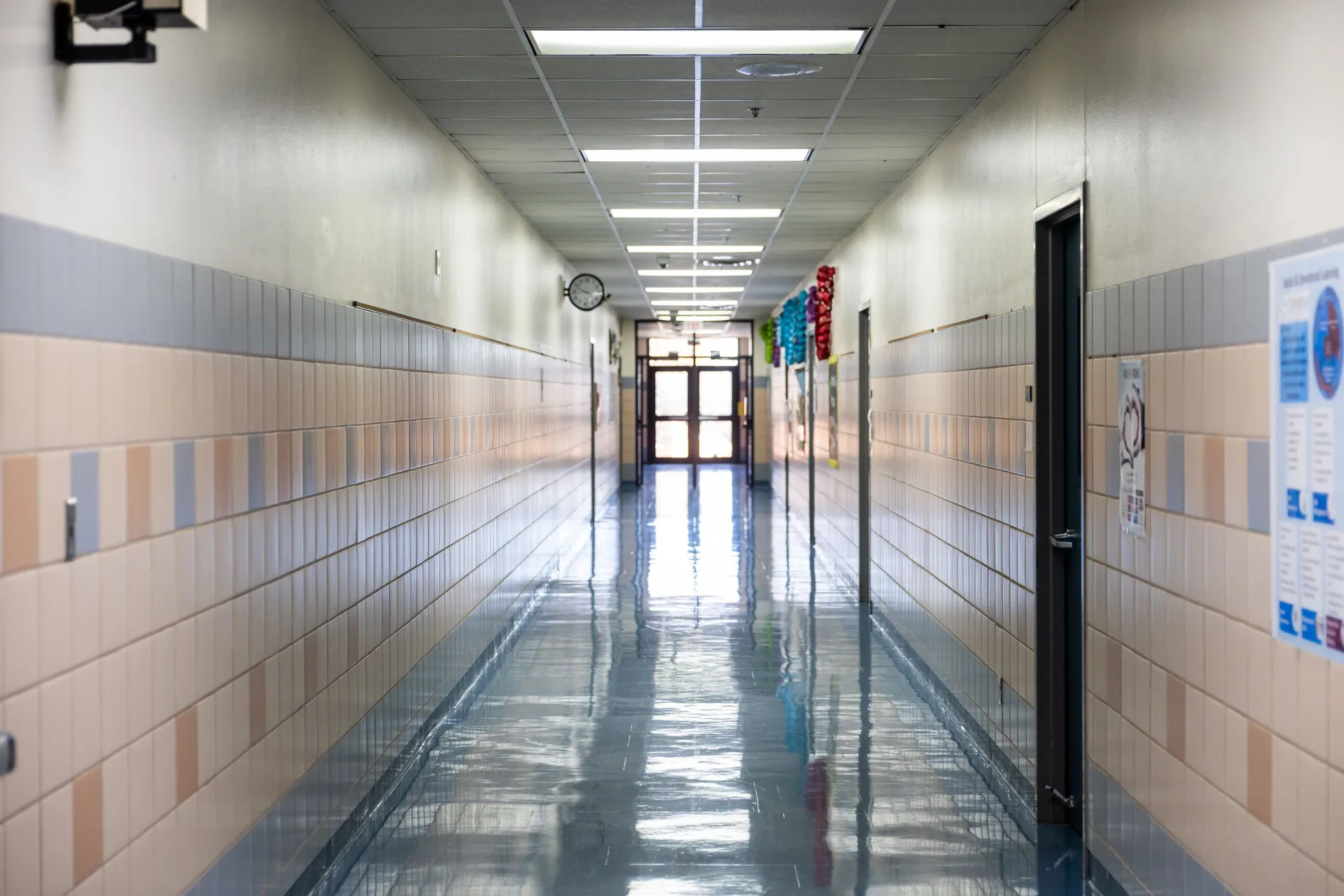
Seamless, easy-to-clean epoxy flooring for classrooms, corridors, laboratories, workshops and the areas around sports halls, scheduled to fit into the school break.
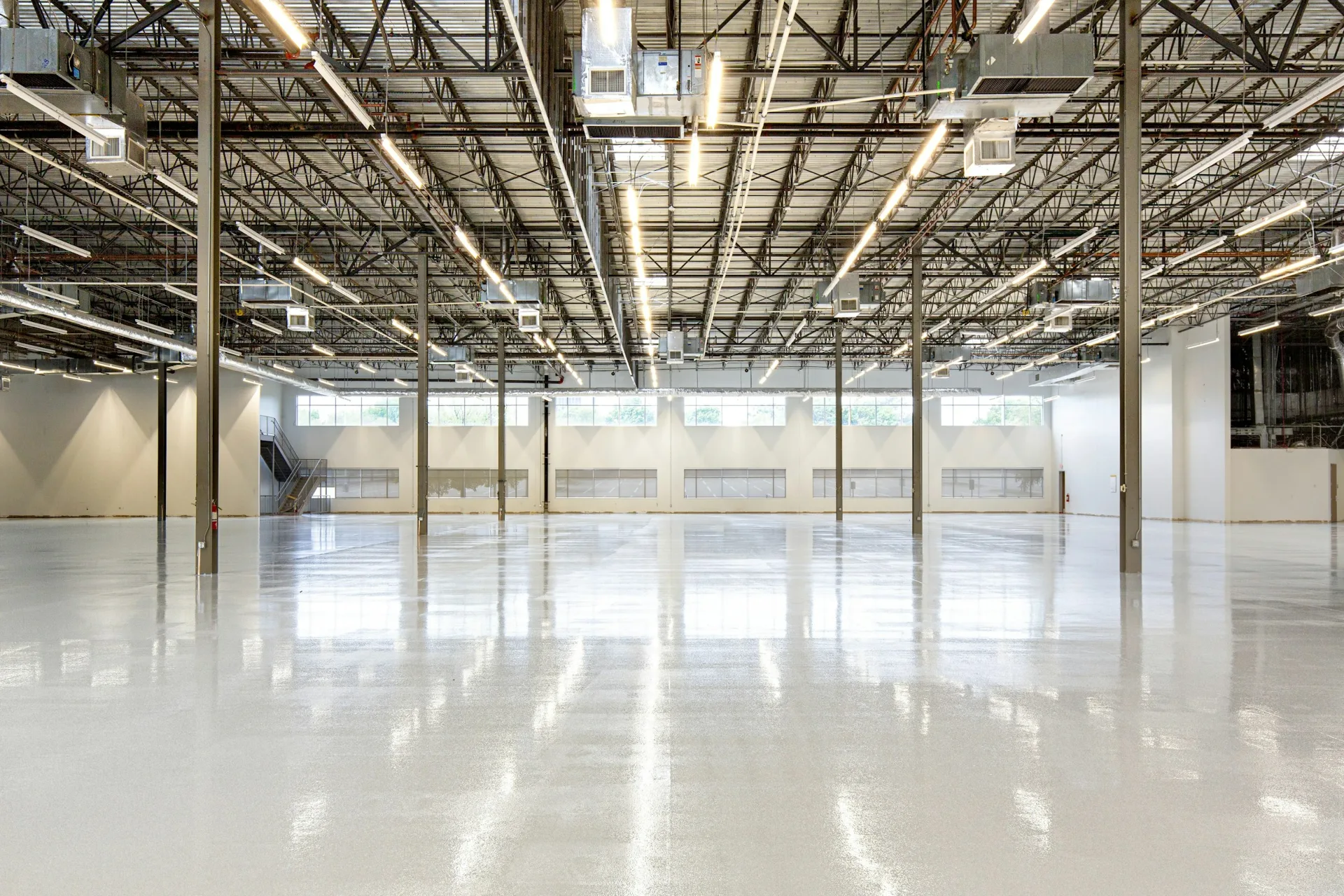
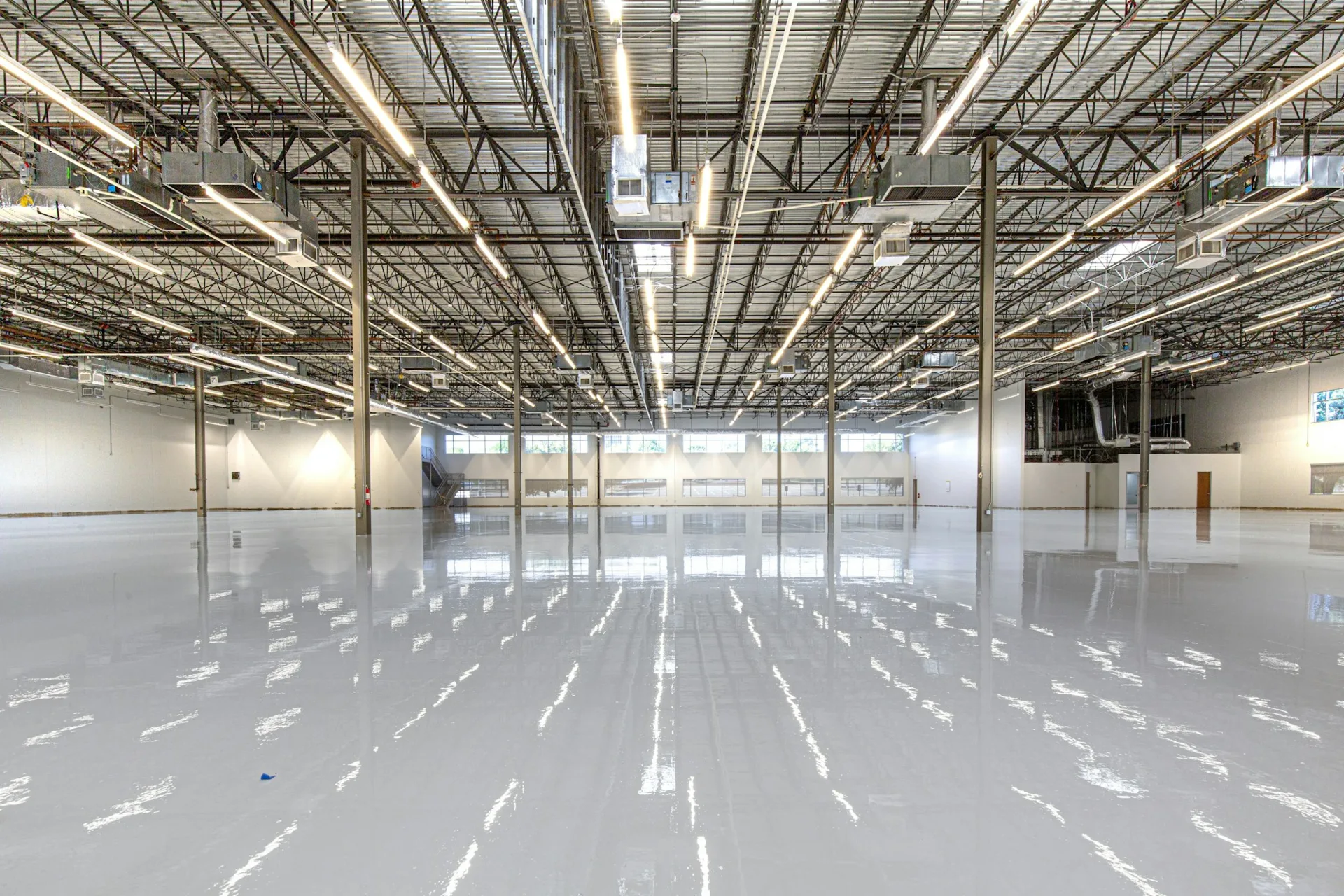
School epoxy flooring gives classrooms, corridors, laboratories and workshops a seamless, dust-free surface that wipes clean easily. Classrooms and corridors get 2–3 mm self-leveling epoxy, entrances and sink areas that get wet get a textured finish, and storerooms and plant rooms get epoxy paint. The work is scheduled for the summer or mid-year break; the floor can be walked on after about 24 hours and is fully cured in 7 days. Where an impact-absorbing floor is needed, such as under play equipment and on ball-game courts, epoxy on its own is not the right choice.
School epoxy flooring turns the hardest-working surface of an educational building, from the classroom to the laboratory and from the corridor to the workshop, into a single, seamless layer that wipes clean easily. Over the course of a day a school floor carries hundreds of pairs of shoes, desks being dragged around, spilled drinks and the rush of recess. What is more, all of this is repeated every day at the same hours and in the same corridors.
Terrazzo and ceramic tiles, which are common in educational buildings, hold dirt along their joint lines. The joints darken over time, and tiles that crack or work loose create a trip hazard. PVC-based floor coverings open up at the seams, and when water gets underneath they blister. Bare screed or concrete, meanwhile, gives off dust, and that dust ends up in the classroom air, in books and in computers.
An epoxy coating removes the common source of these problems, namely the joint and the pore. The surface does not absorb liquids, stains do not work their way in deep, and the cleaning staff can clean the same area in less time. Because the color range is wide, floors and departments can be told apart by color, and wayfinding lines and play patterns can be worked into the floor.
That said, epoxy is not a cure for every problem. It is a hard coating; it does not cushion a fall and it does not absorb sound. On this page we explain plainly which system is right for which space, and in which spaces epoxy alone is not enough.
What is expected of the floor on a campus changes from space to space. A playroom in a kindergarten and a lathe workshop in a vocational high school are not solved with the same system. Below you will find the areas we come across most often in educational buildings and what we look at in each of them.
A university campus is not a single building but something like a small town: lecture halls, the library, the dining hall, research laboratories, dormitories and parking garages are all the responsibility of the same administration. That is why it calls for a flooring plan that varies by space rather than a single system. We use 2–3 mm self-leveling epoxy in corridors and foyers that carry heavy student traffic, epoxy floor paint in archives and plant rooms, and a textured system in wet sections such as the dining hall kitchen.
For the electronics and cleanroom sections of research centers, anti-static epoxy comes into consideration. In the enclosed parking garages on campus, the principles on our parking garage epoxy flooring page apply. The hardest part of the job at universities is the calendar: because of summer school, make-up exams and conferences, the buildings never empty out completely, even in summer. For this reason the work has to be phased faculty by faculty, and even floor by floor.
In elementary, middle and high schools, two things are hardest on the floor: the desks and chairs that are pushed back and forth in every lesson, and the sand carried in from the schoolyard. Grains of sand work like sandpaper under the soles of shoes, and they wear down entrance halls and the heads of staircases most of all. In classrooms and corridors, self-leveling epoxy stands up to the scraping of desk legs far longer than a thin-film paint.
Finishing the surface in satin or matte rather than gloss both hides fine scratches and reduces the reflection of light from the windows onto the board and into the eyes. A lightly textured finish is preferred in the entrance hall, which people walk into with wet shoes on rainy days, on stair landings and in front of sinks. If a different color is chosen for each floor, younger students find their own floor easily. If a school's existing terrazzo tile floors are sound, they can be coated without being taken up, by grinding and priming them; this also makes it easier to fit the job into the break.
In a kindergarten, children spend most of their time on the floor: they sit, they crawl, they spread their toys out on the ground. That is why a seamless surface that wipes clean easily is a matter of hygiene here before it is a matter of appearance. Spilled fruit juice, finger paint and modeling clay clean off an epoxy surface without leaving a mark. We use solvent-free systems; the main point to watch is that children are not allowed into the space before curing is complete.
Epoxy is a hard floor and does not cushion a fall. An impact-absorbing floor is needed under play equipment such as climbing frames and slides; in these zones epoxy on its own is not the right choice, and we state this plainly at the quotation stage. In the playroom, the dining room, the nap room and the corridors, on the other hand, vivid colors with hopscotch and roadway patterns produce a surface that children love and that the teacher can keep clean with little effort.
Vocational high schools house a small industrial plant inside the school building. The engine, metalwork, electrical, furniture and food-and-beverage departments each stress the floor in a different way. In the motor vehicles department, oil and fuel drip onto the floor, and jacks and stands create point loads; the conditions are no different from those of a service bay, and we apply the quartz-filled system described on our auto repair shop epoxy flooring page.
In the metalwork and machining departments there are metal chips, coolant and dropped workpieces; in the furniture department, drips of varnish and thinner are added to these. If sensitive circuit work is carried out in the electrical and electronics department, an anti-static floor is considered. In training kitchens, a textured finish is essential against a wet and greasy floor. We also mark the safety boundaries around machines, the pedestrian walkways and the emergency exit routes on the floor with lines. That way, students get used to the floor-marking conventions of the factory they will work in later while they are still at school.
In science, chemistry and biology laboratories, what is expected of the floor is that it does not absorb spilled liquids and can be decontaminated easily. Epoxy resists dilute acids, alkalis, salt solutions and many cleaning chemicals. However, concentrated acids and some strong solvents can cause dulling or discoloration if they are left on the surface for a long time. For this reason, wiping up spills without delay should be part of the laboratory routine.
If we know the list of chemicals in use beforehand, we select the topcoat accordingly. Forming a coved skirting along the base of the walls prevents spilled liquid from collecting in the corner. In laboratories that have an emergency shower and eyewash station, the area around that point is given an anti-slip texture. The floor around bench and cabinet legs is detailed one by one; where possible, fixed furniture is installed after the coating. In computer, robotics and electronics laboratories, an anti-static system can be chosen, because static discharge can damage circuit boards. In medical and health sciences laboratories, the expectations come close to those described on our hospital epoxy flooring page.
Art, ceramics, woodworking and design-and-technology workshops are far dirtier and busier spaces than classrooms. Acrylic paint, glue, clay slip, plaster and sawdust fall on the floor; heavy workbenches and wheeled material carts are moved around frequently. On bare screed these stains are permanent, whereas on an epoxy surface most of them come off with a damp cloth or a plastic scraper.
In workshops we generally apply 2–3 mm self-leveling epoxy. In sections that are washed down often and where muddy water runs, such as the ceramics workshop, a lightly textured finish is safer. Color choice is functional here: a mid-tone gray or beige shows both paint stains and dust less than very light or very dark colors do. In woodworking shops, care is taken under the machines and around the dust extraction lines. The yellow safety boundary drawn around the machines also makes it easier for the teacher to keep the workshop in order.
In school sports halls, an honest distinction has to be made first. On courts where basketball, volleyball and handball are played, the floor is expected to absorb impact and to show a certain degree of resilience. Epoxy is a hard coating; on playing courts of this kind it is not the right choice on its own, and we say so plainly at the quotation stage.
Where epoxy is strong is around the hall: locker rooms, the corridors leading to the showers, equipment storerooms, the spaces under the bleachers, weight corners and multipurpose halls. People walk barefoot and with wet feet in locker rooms and around showers; here an anti-slip texture and a fall toward the drains are important. In weight areas, rubber tiles need to be laid over the coating to protect it from dropped barbells. In multipurpose halls that are also used for ceremonies and exams, self-leveling epoxy stands up well to chair and stage traffic. For details, see our gym and sports hall epoxy flooring page.
Coating an entire school with a single system means both unnecessary cost and the wrong performance. The right approach is to divide the building into zones according to how they are used and to give each zone as much coating as it needs.
School and university kitchens where meals are cooked are a separate subject. Because grease, hot water and frequent washing are involved, the criteria on our food processing plant epoxy flooring page apply to these areas.
In schools, flooring work starts with the calendar. No application is carried out while students are in the building, so the work is slotted into the gaps in the academic calendar. Working out realistically how much work will fit into which gap is as important as choosing the system.
When calculating the duration, curing counts as well as the application days. About 24 hours is enough for foot traffic; but full cabinets and row upon row of furniture have to wait until the floor reaches its full strength. For this reason we recommend planning the work so that it finishes at least one week before the school opens.
In large schools, splitting the work by floor and having the crews follow one another shortens the schedule: while grinding is under way on one floor, primer is being applied on another. Because all educational institutions empty out at the same time in the summer months, completing the quotation and site survey in the spring takes the pressure off the calendar.
On a school floor, safety covers the application process as much as the coating itself. We address the following points separately on every education project.
Two limits also need to be stated plainly. Epoxy does not reduce the effect of a fall; under play equipment and on ball-game courts, a separate impact-absorbing floor is required. Nor does epoxy absorb sound; if echo is a problem in long corridors, the solution lies not in the floor but in acoustic treatment of the ceiling and walls.
The greatest benefit of an epoxy floor in a school is that it shortens daily cleaning. On smooth surfaces, dry dust mopping followed by a damp mop with a neutral detergent is sufficient. A floor scrubber can be used in wide corridors. Textured zones should be cleaned with a brush, not a mop; otherwise dirt settles into the texture.
A few habits specific to schools extend the life of the floor noticeably:
Polish must not be used in laboratories with an anti-static floor; polish forms an insulating film and reduces the conductivity of the floor.
For a daily, weekly and yearly maintenance schedule and cleaning tips for each type of stain, see our guide Epoxy Floor Maintenance and Cleaning.
In educational institutions the flooring budget is usually fixed in advance. To stay within that budget, you need to know the items that make up the cost.
If the budget is limited, it is possible to spread the work over several years: first the ground floor and corridors, which suffer the most wear, and then the classrooms in the next break. Because the color and system are decided in the first phase, the later phases continue with the same look.
We explain what to look for when comparing quotes in our article 7 Factors That Determine the Cost of Epoxy Flooring per m².
We set out the right system and a realistic schedule for your school in a written quote prepared from the information and photos you send us; once the quote is approved, we survey and measure the area on site. As a first step, you can fill in the quote request form. Including the following information makes our work easier:
You can review all the systems we install on the services page and our solutions for other industries on the sectors page. For questions, you can reach us through the contact page.
| Classrooms and corridors | Self-leveling epoxy, 2–3 mm |
|---|---|
| Wet areas and areas near entrances | Textured (anti-slip) epoxy |
| Storerooms, archives and plant rooms | Epoxy floor paint, 0.3–0.5 mm |
| Surface preparation | Diamond grinding with dust extraction |
| Open to foot traffic | Approx. 24 hours |
| Full cure | 7 days (20 °C) |
| Application period | Summer, mid-year and short term breaks |
Yes, in most schools coating every floor fits comfortably into the summer break. What determines the duration is not so much the square meters as the condition of the existing floor and the other renovation work carried out in the same period. The floor is done last, after the painting and plumbing work has finished. The coating can be walked on after about 24 hours and reaches full strength in 7 days, so the aim is to finish the job at least one week before the school opens.
Solvent-free epoxy systems are used in schools; their odor during application is far lower than that of solvent-based paints. Even so, the space is ventilated throughout application and curing, and the area is kept closed to students. Foot traffic is allowed after about 24 hours; however, in spaces such as kindergartens where children play on the floor, we recommend waiting for the full cure time of 7 days.
If the floor is sound, yes, it can be coated without removal. First the tiles are checked one by one; loose pieces that have come away from the bed underneath are lifted and the gaps are filled. The surface is then roughened by diamond grinding, the joint lines are closed with filler and a suitable primer is applied. This method is often chosen in schools because it produces no rubble and shortens the schedule. PVC coverings, on the other hand, are always stripped and the adhesive residue is cleaned off.
Desks and chairs whose plastic glides are in place do no lasting damage to 2–3 mm self-leveling epoxy; the fine marks that form on the surface over time are barely noticeable on a matte or satin finish. The real causes of scratching are bare metal legs that have lost their glides and sand carried in on shoes. Checking the glides at the start of each term and placing a sand-trapping mat at the entrance are sufficient precautions. Worn zones can later be renewed with a fresh topcoat.
For the playing court itself, epoxy is usually not the right choice, because in ball games the floor is expected to absorb impact and epoxy is a hard coating. In locker rooms, shower corridors, equipment storerooms, the spaces under the bleachers and multipurpose halls, on the other hand, epoxy performs well. An anti-slip textured system is used in sections where people walk with wet feet. At the quotation stage we state separately which section is suited to which floor.
An epoxy floor resists the dilute acids and alkalis, salt solutions and cleaning chemicals used in school laboratories. Concentrated acids and some strong solvents, however, can cause dulling or discoloration if they stay on the surface for a long time. For this reason, spilled chemicals need to be wiped up immediately. If you add the list of substances used in the laboratory to the quote request form, we select the topcoat to suit those substances.
The two coatings look alike but behave differently. We compare epoxy and polyurethane in terms of hardness, flexibility, and UV and heat resistance.
When can you walk on an epoxy floor, and when can it take loads? Curing times by temperature and the conditions that affect the process.
We explain in plain language what epoxy flooring is, which types are available and why it is chosen for different kinds of spaces.
Why do epoxy flooring prices vary so much from one project to the next? We explain the items that make up the price so that you can compare quotes…
Every stage of an epoxy flooring installation from survey to handover: surface preparation, repairs, primer, coating layer and curing.
An epoxy floor needs little maintenance, but it should not be neglected. Everything you need to know, from daily cleaning and stain removal to the…
Our priority is
Tell us about your project, and together we will pin down the right epoxy system for your floor, the application time and our quote.
Get a Quote5-year workmanship and 10-year product warranty. We respond to all requests within 24 hours. We work in all 81 provinces.