
How Is Epoxy Flooring Installed? Application in 7 Steps
Every stage of an epoxy flooring installation from survey to handover: surface preparation, repairs, primer, coating layer and curing.
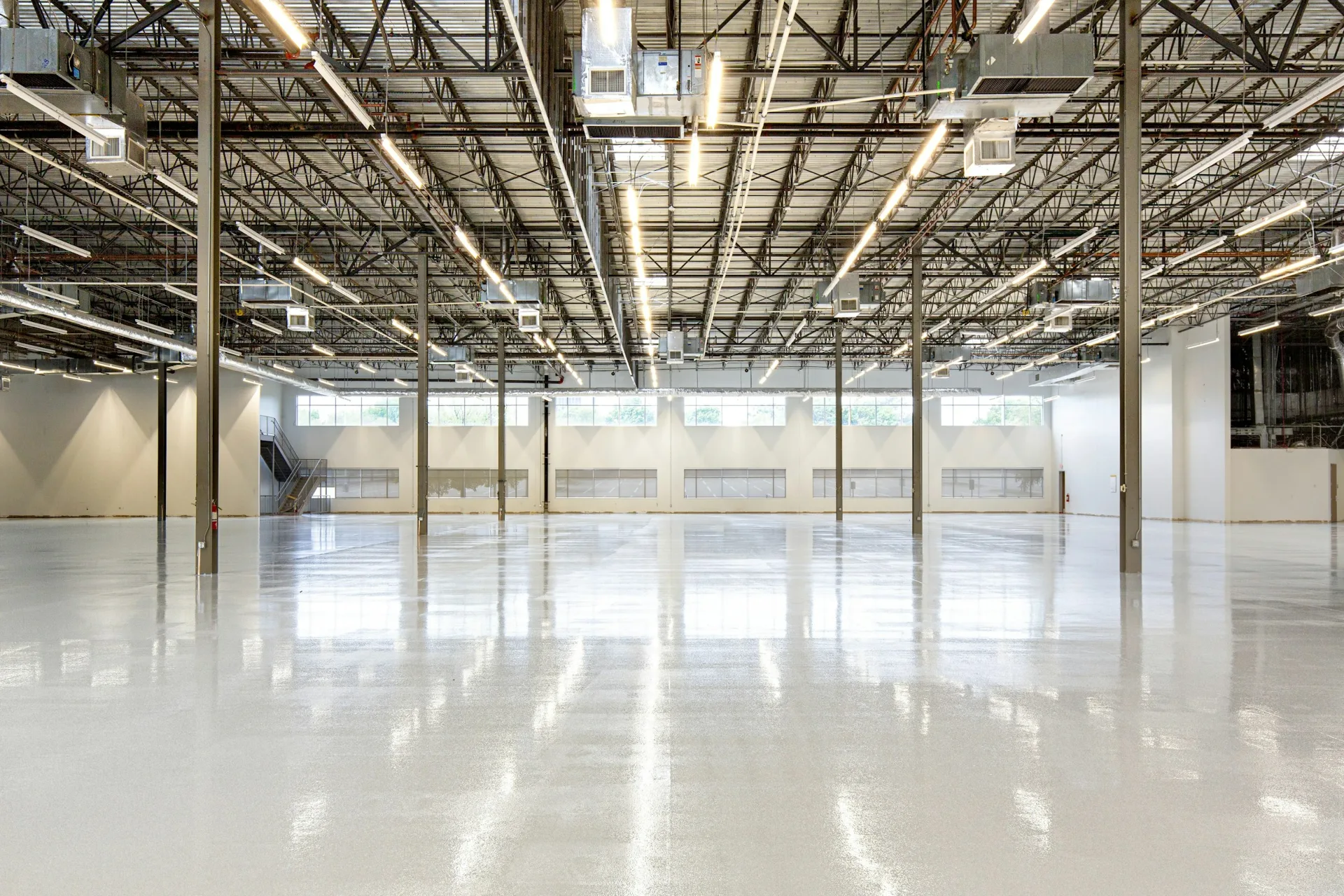
A solvent-free epoxy coating that flows out on its own into a seamless, smooth and glossy surface 2–3 mm thick; for factory, warehouse, laboratory and retail floors.
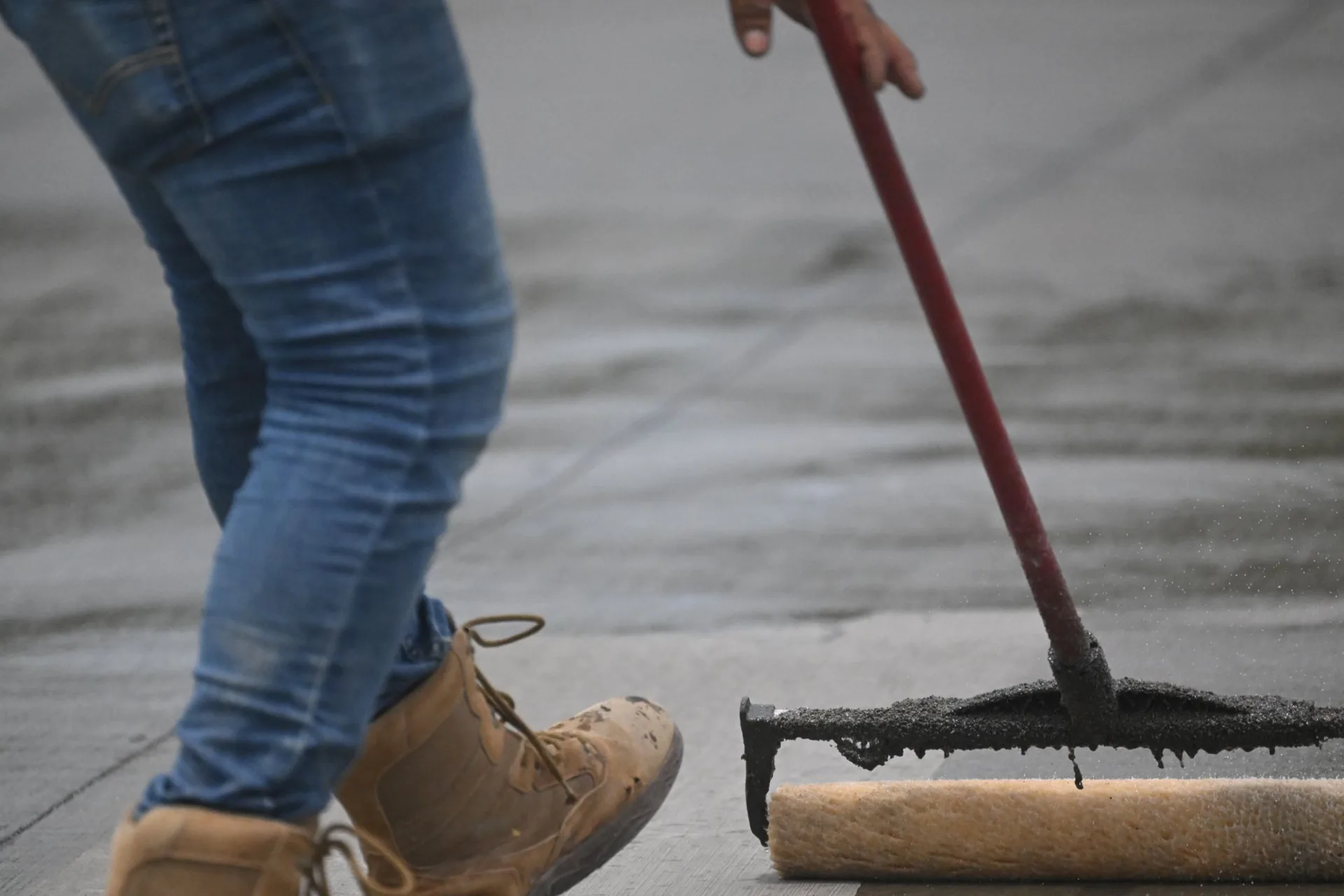
Self-leveling epoxy flooring is a seamless, smooth and dust-free coating, 2–3 mm thick, that spreads out on its own once the resin and hardener have been mixed and poured onto the floor. It is spread with a notched trowel and de-aerated with a spiked roller; it can be walked on after about 24 hours and cures fully in 7 days at 20 °C. Because its surface is flat it can become slippery when wet; in wet areas textured epoxy is chosen.
Self-leveling epoxy flooring is a seamless coating, 2–3 mm thick, that spreads and levels out under its own weight when it is poured onto the floor. It is also known as "self-smoothing epoxy" or simply as a poured epoxy floor. From factory aisles to laboratories and from warehouses to retail stores, it is the epoxy system chosen most often for floors that are expected both to carry loads and to look immaculate.
The material has two components: an epoxy resin and a hardener. When the two are mixed in a fixed ratio a chemical reaction begins, and within hours the liquid mixture sets into a hard, impermeable layer. The system contains no solvent; because nothing evaporates into the air as it cures, the thickness that is poured stays on the floor, and the odor during application is far lower than with solvent-based paints.
The term "self-leveling" is sometimes misunderstood. The material does not put a poor slab right by itself; it is drawn out to an even thickness with a notched trowel, the air trapped in it is released with a spiked roller, and only then does it close up the trowel marks and form a flat film. The quality of the finished surface therefore depends on the quality of the preparation beneath it.
The cured floor is seamless, does not dust, does not absorb liquids and is not crushed under wheels. The porous, dusting surface of the concrete is sealed off completely.
Self-leveling epoxy is not a single coat but a system of layers that bond to one another. Each layer has a job of its own; when one is skipped, the problem usually shows up months later.
The waiting time between layers is part of the system too. A coat is applied once the one beneath it has hardened enough to be walked on, but without too long a delay, so that the coats bond firmly to each other. If that window has been missed, the surface of the lower coat is sanded to roughen it again.
The system owes its popularity not to a single property but to the fact that it offers several benefits at the same time.
No single system suits every floor. Knowing from the start the conditions in which self-leveling epoxy falls short heads off the problems that would otherwise appear later.
The system suits almost any indoor space that works dry and carries heavy wheeled traffic. Below we summarize the types of space where we apply it most often, and the detail that matters most in each of them.
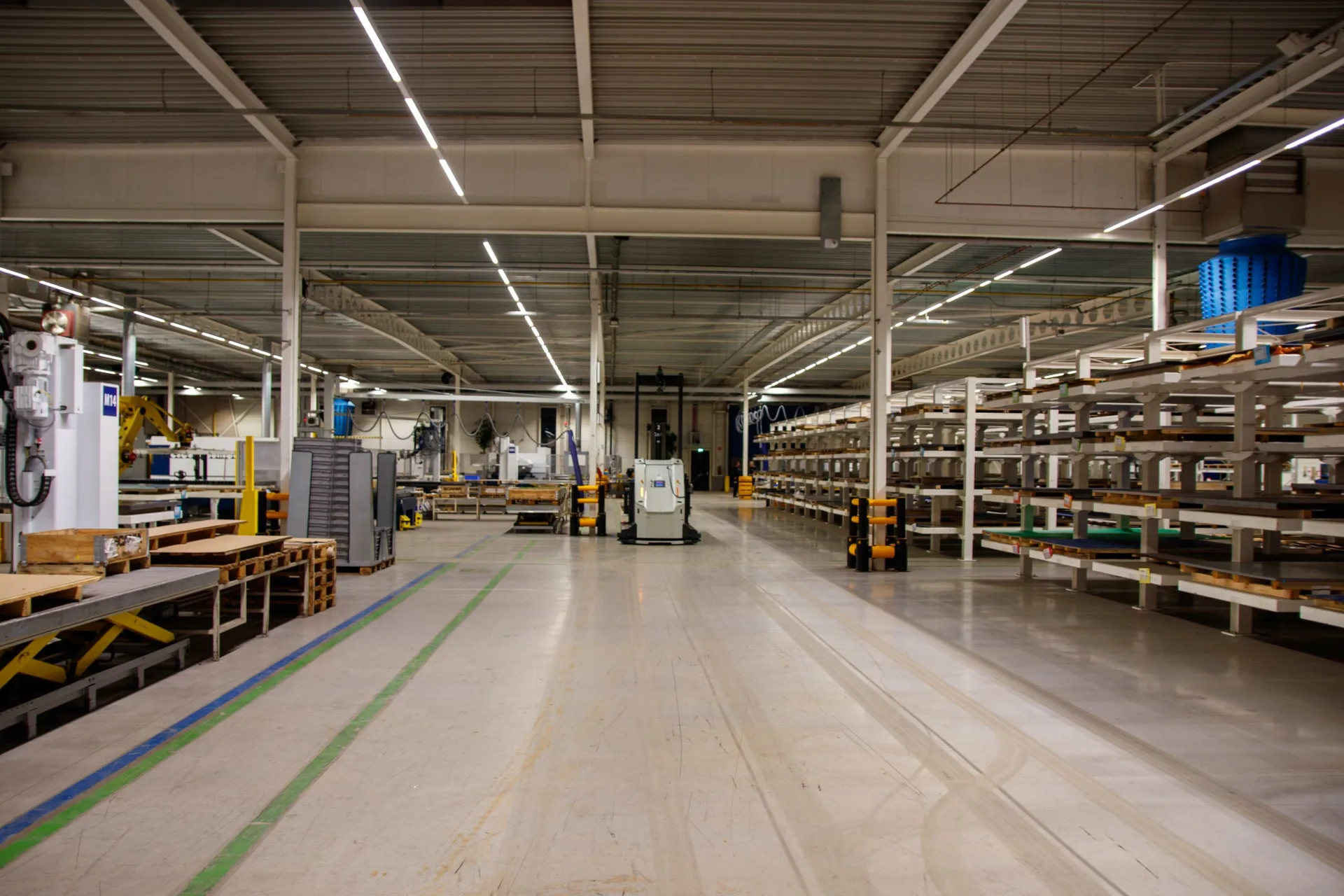
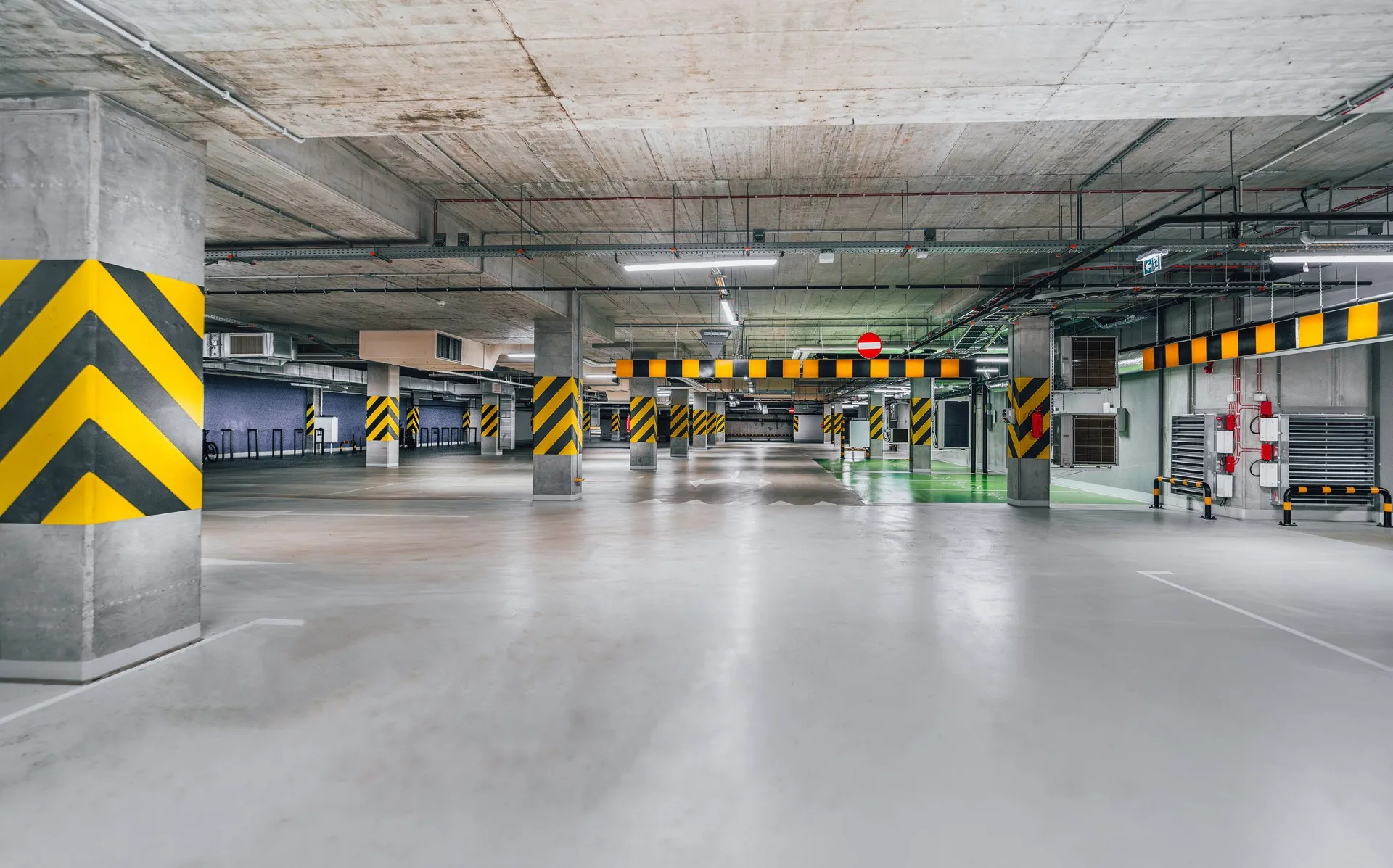
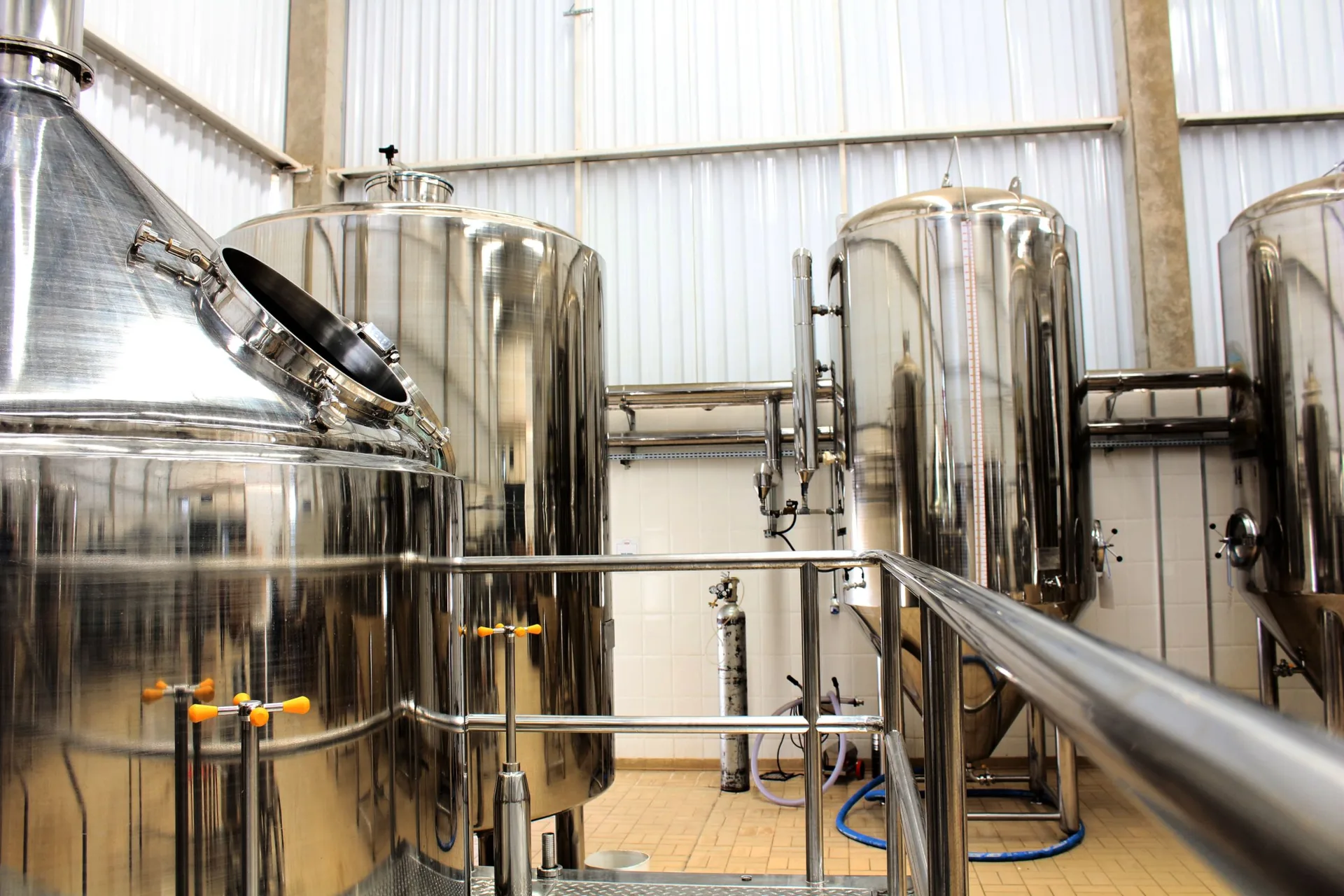
Assembly lines, machine halls, packaging sections and in-plant aisles are the most common places where self-leveling epoxy is used. All day long the floor carries pallet jacks and forklifts, machine oil drips onto it, and swarf and dust build up. The seamless surface does not absorb oil, and sweeping and washing become easier. The points where machine feet sit, the edges of channels and the joints are dealt with one by one before application. In the sections of production that work wet, we switch to the textured system in the same color. For details, see our factory epoxy flooring page.
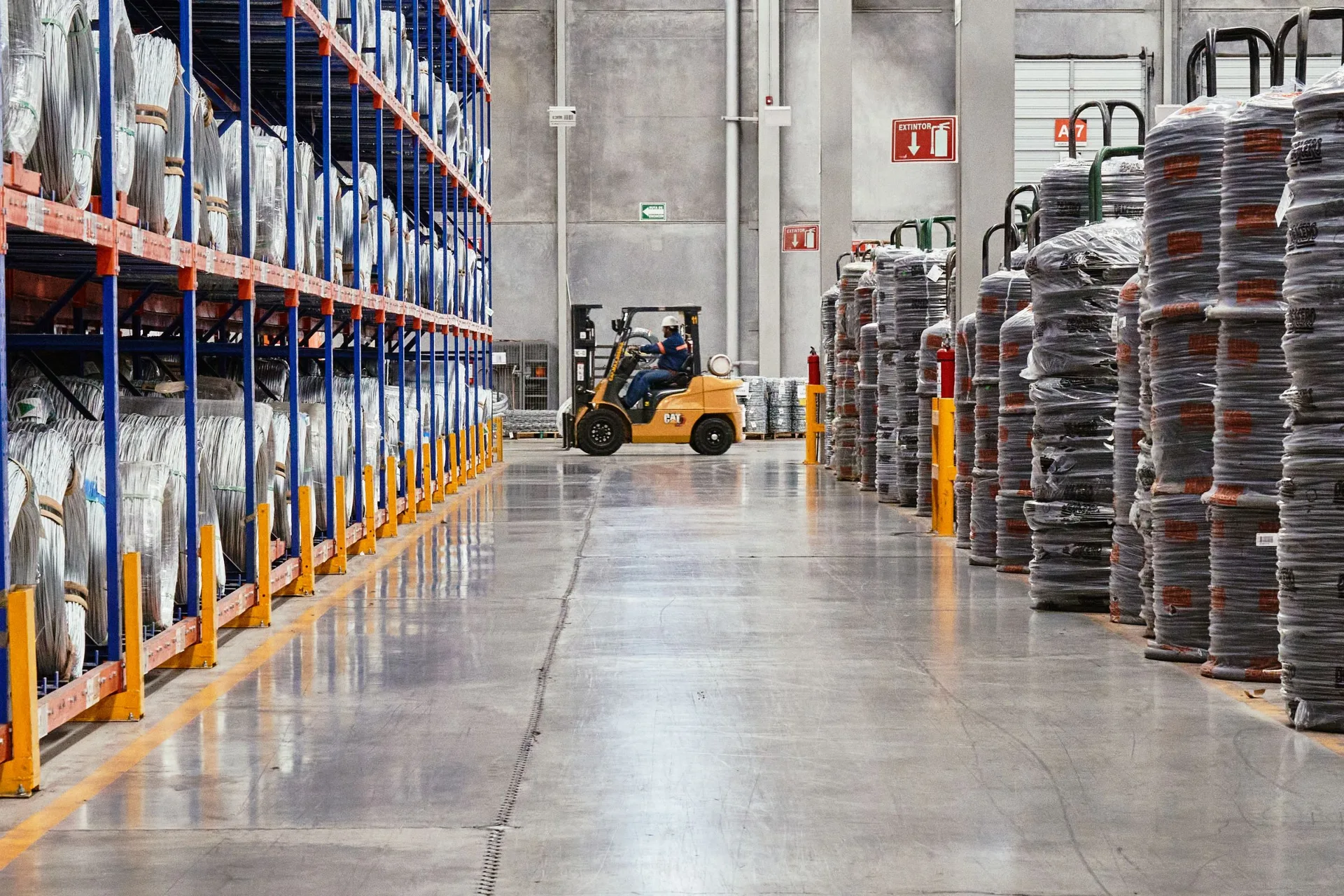
In warehouses, what wears the floor is hard wheels turning thousands of times along the same route. Self-leveling epoxy is used in busy forklift aisles, in picking and packing areas and in front of the shipping doors. In high-bay warehouses with narrow aisles, the flatness of the floor also matters for the safe operation of the stacker truck; since the coating does not remove large differences in level in the concrete, this is addressed separately at the preparation stage. In large sections that see no traffic, such as the areas under the racks, it can be combined with epoxy paint to balance the budget. The details are on the warehouse epoxy flooring page.
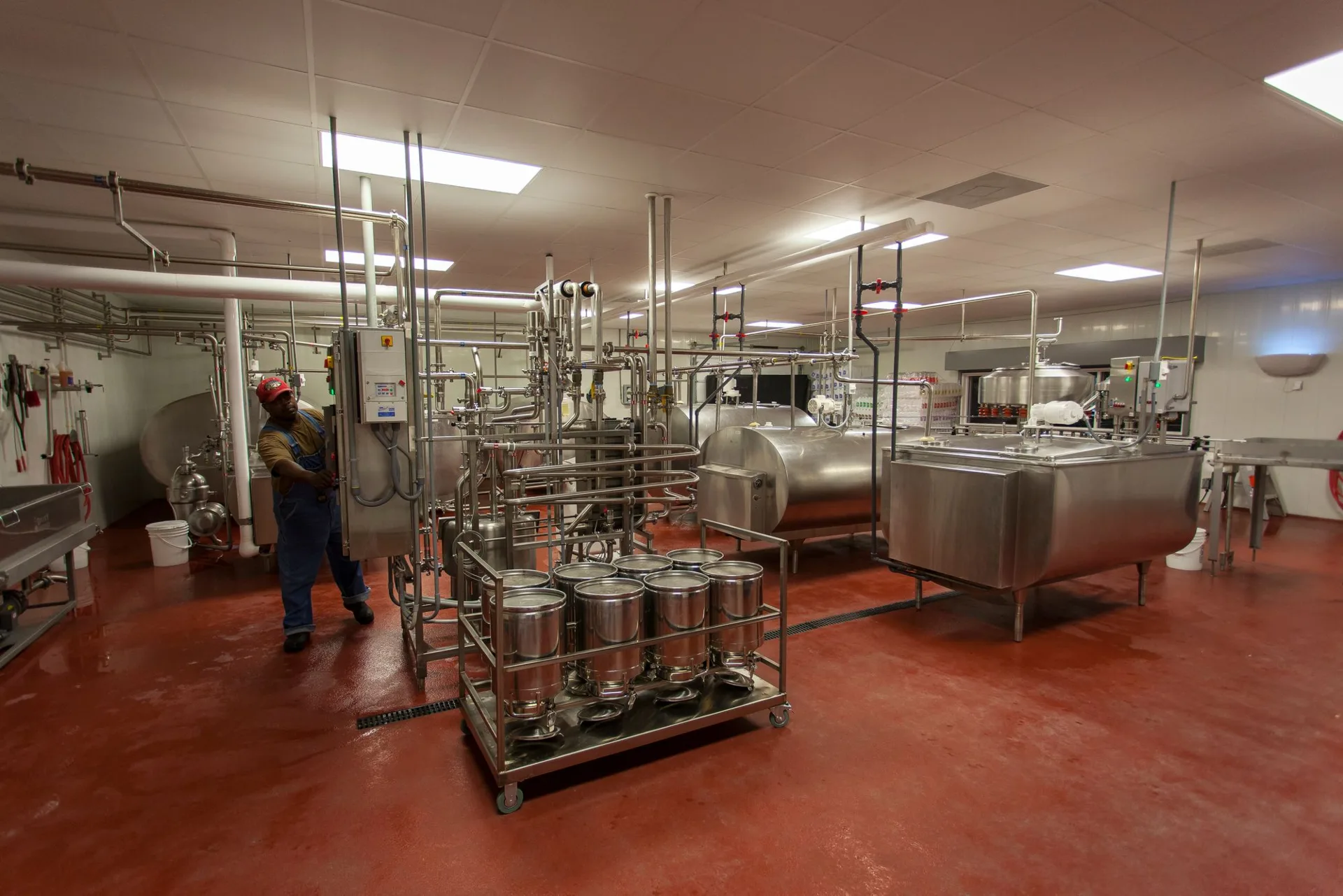
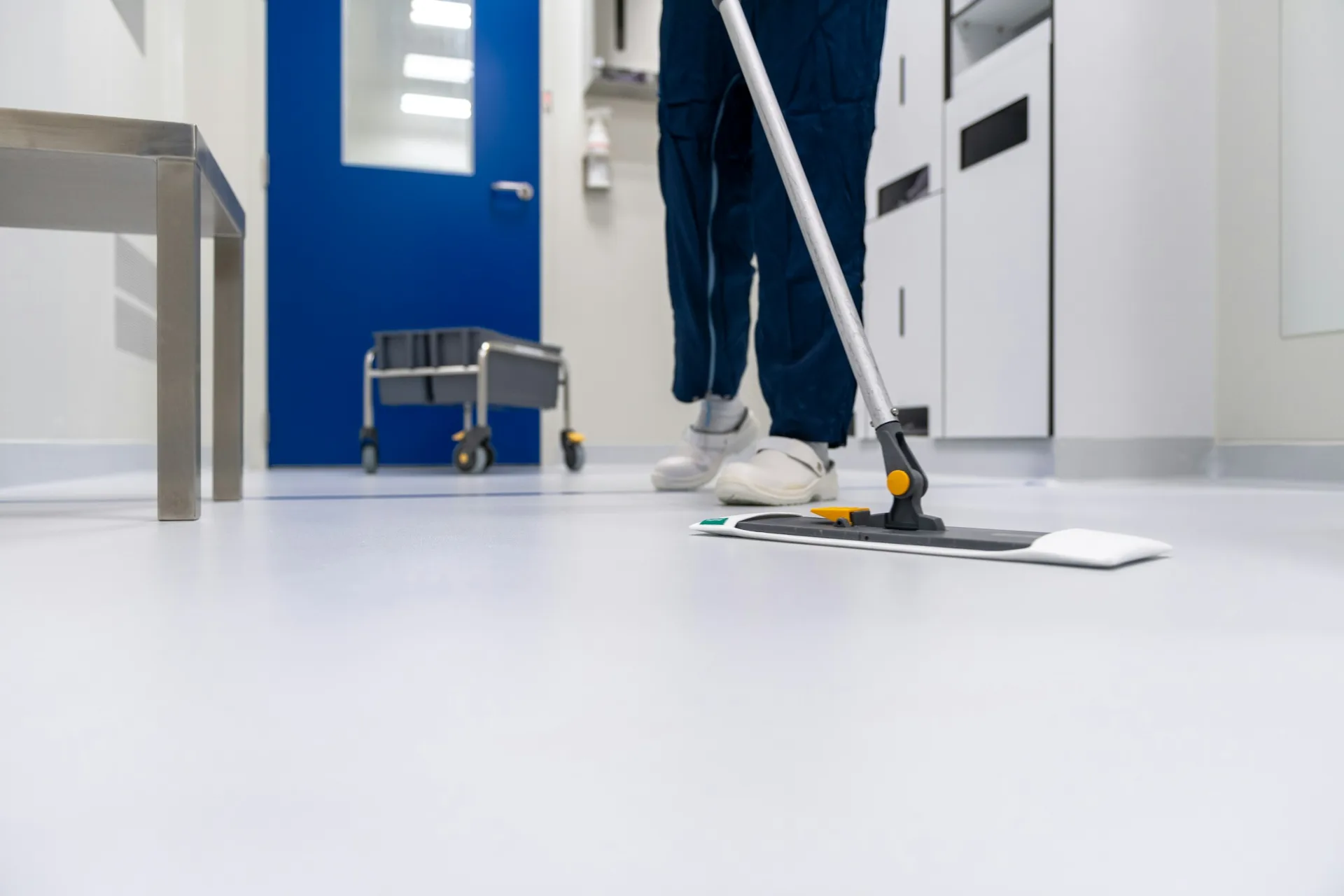
In healthcare areas, what is expected of the floor is that it leaves no joints or pores for microorganisms to cling to. When self-leveling epoxy is joined to a coved skirting detail at the base of the wall, no sharp corner is left between floor and wall and the surface becomes suitable for frequent disinfection. In laboratories, spilled stains and solutions are wiped off the surface. In the cleanrooms of pharmaceutical and cosmetics production, a floor that does not dust or shed particles is the basic requirement. In rooms where static electricity is a problem, the conductive version of the system, anti-static epoxy, is used. We describe these areas in detail on the hospital epoxy flooring page.
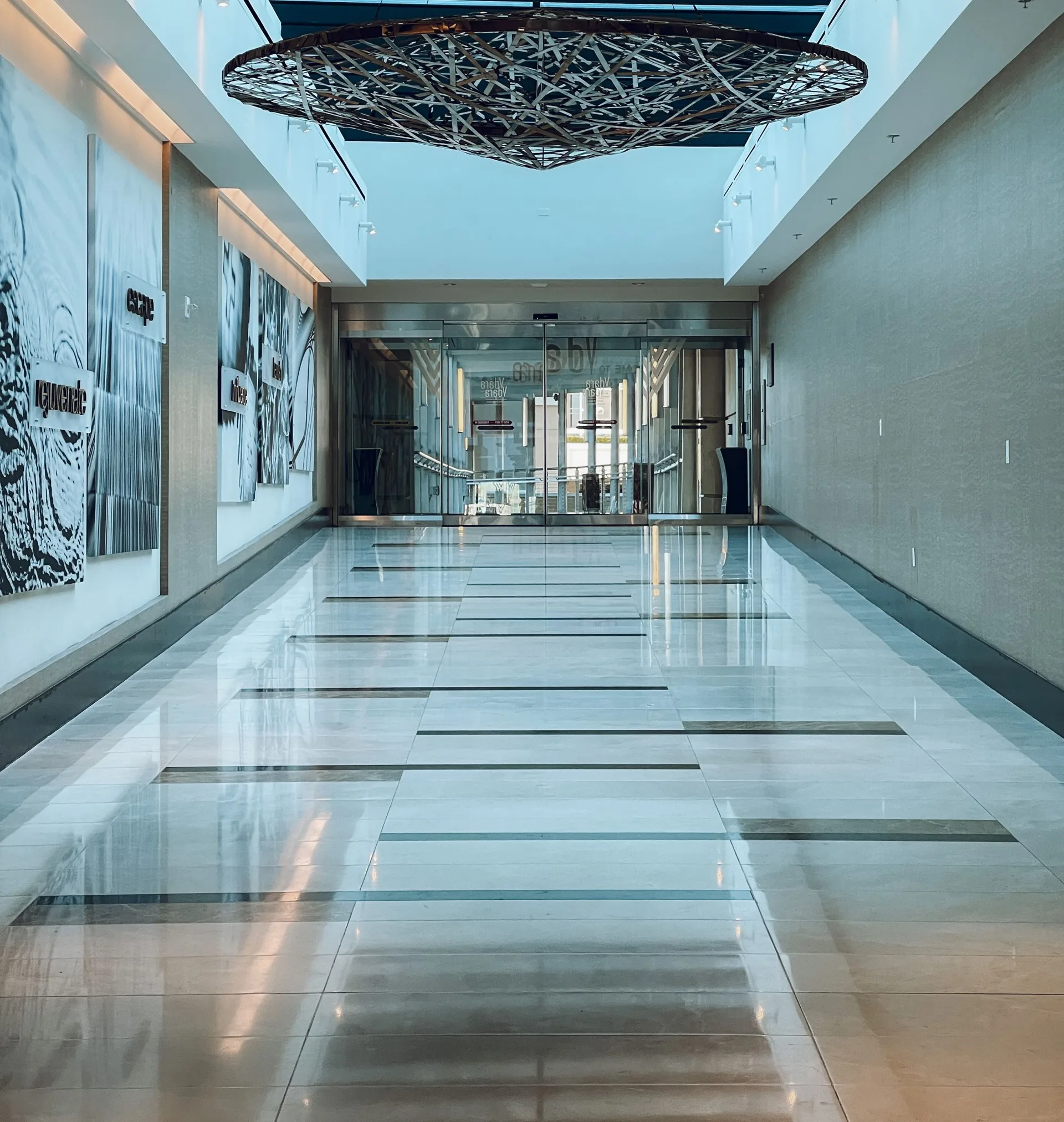
In commercial spaces, self-leveling epoxy gives a plain floor whose seamless, single-color look lets the product stand out. Shopping carts roll without rattling, and a corporate color can be repeated in the same shade at every branch. Here the conversation is about appearance more than durability: a glossy surface multiplies the light but also shows fine scratches; under heavy foot traffic a matte or satin topcoat is usually the better choice. The fact that it can be applied over sound ceramic tiles without any demolition shortens the refurbishment time. For details, see the shopping mall and retail store epoxy flooring page.
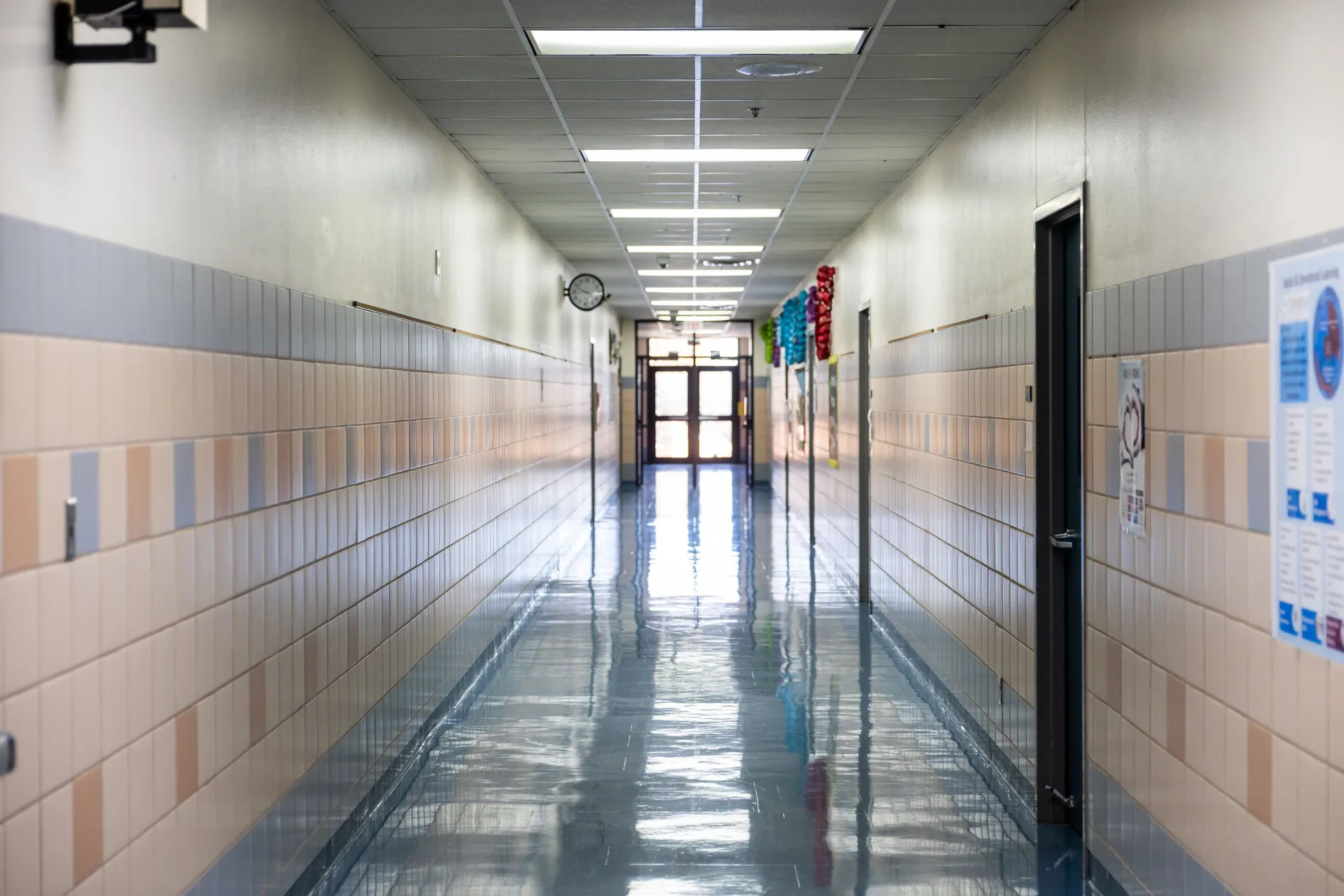
In corridors, classrooms, workshops, dining halls and office floors, self-leveling epoxy offers a floor that is easy to clean, seamless and quiet under wheels. In these spaces the deciding factor is fitting the work into the holiday period; the phases are therefore planned from the outset with the curing times in mind. Because sand carried in on shoes dulls the surface under heavy student traffic, we recommend entrance matting and a matte finish. In wet rooms and on entrance landings we switch to a textured finish. The details are on the school epoxy flooring page.
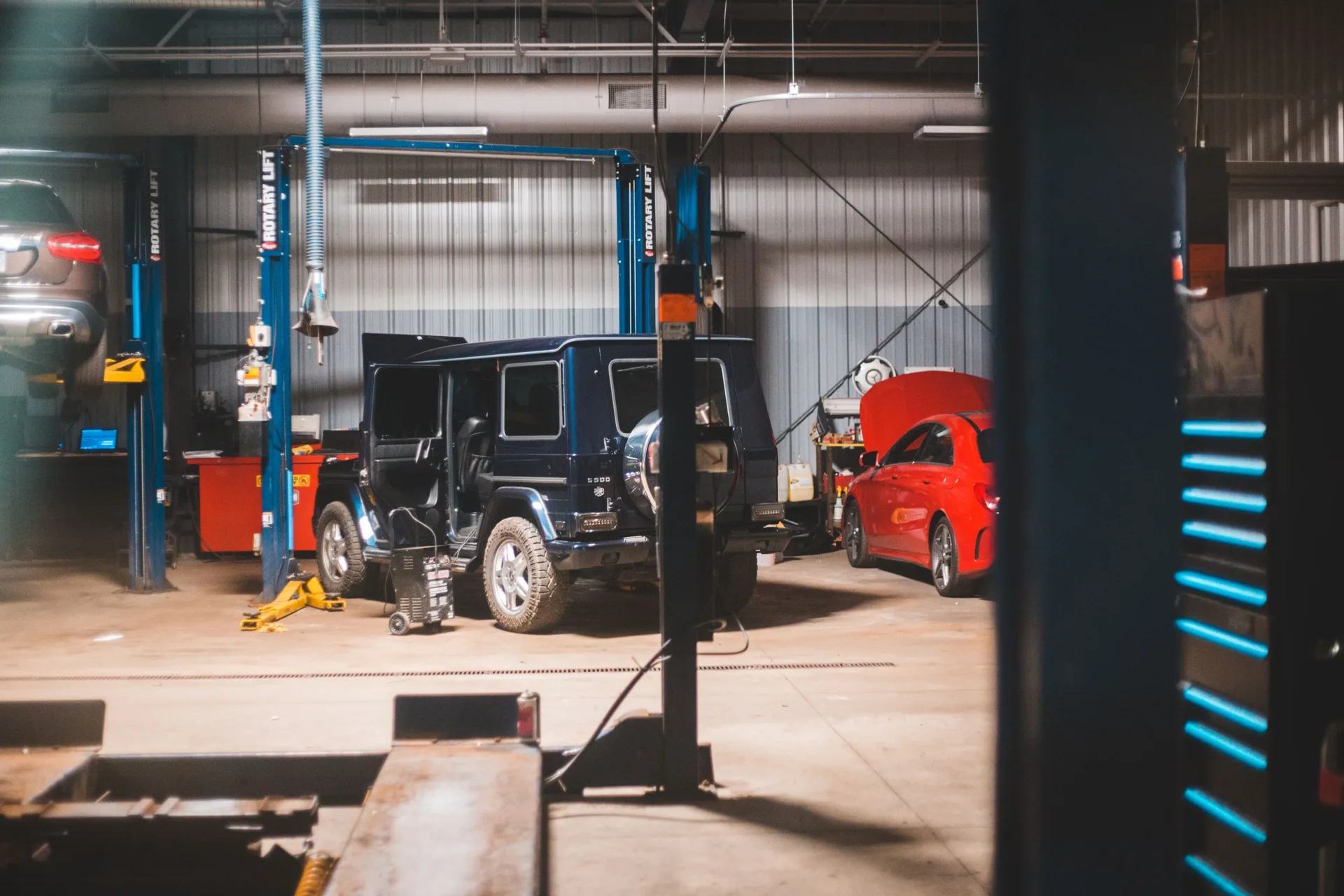
In service reception areas, mechanical workshops and spare parts stores, the floor meets engine oil, fuel and antifreeze. Self-leveling epoxy does not absorb these liquids; when a spill is wiped up without delay no mark is left, and the reception area that the customer sees looks well kept. Because the areas under lift posts and the points where jacks are used carry point loads, the soundness of the concrete in these zones is checked separately. For the wash bay and the ramps the textured system is chosen. The details are on the auto repair shop epoxy flooring page.
The success of self-leveling epoxy depends largely on the work done before the pour. The application proceeds in the following order:
Site conditions affect the result directly. When the floor temperature drops below 10 °C, curing slows down markedly, the material thickens and it becomes harder to spread. In very hot weather, on the other hand, the working time of the mix is shortened. Throughout the application, doors and windows are kept closed against dust and drafts; dust and insects that land on the wet surface stay in it once it has cured.
In premises that are in operation, the area is divided into zones and the work is carried out phase by phase. In each phase one section is closed off while work continues in the neighboring sections. Making the phase boundaries coincide with a joint line or a door threshold keeps the day joint from catching the eye.
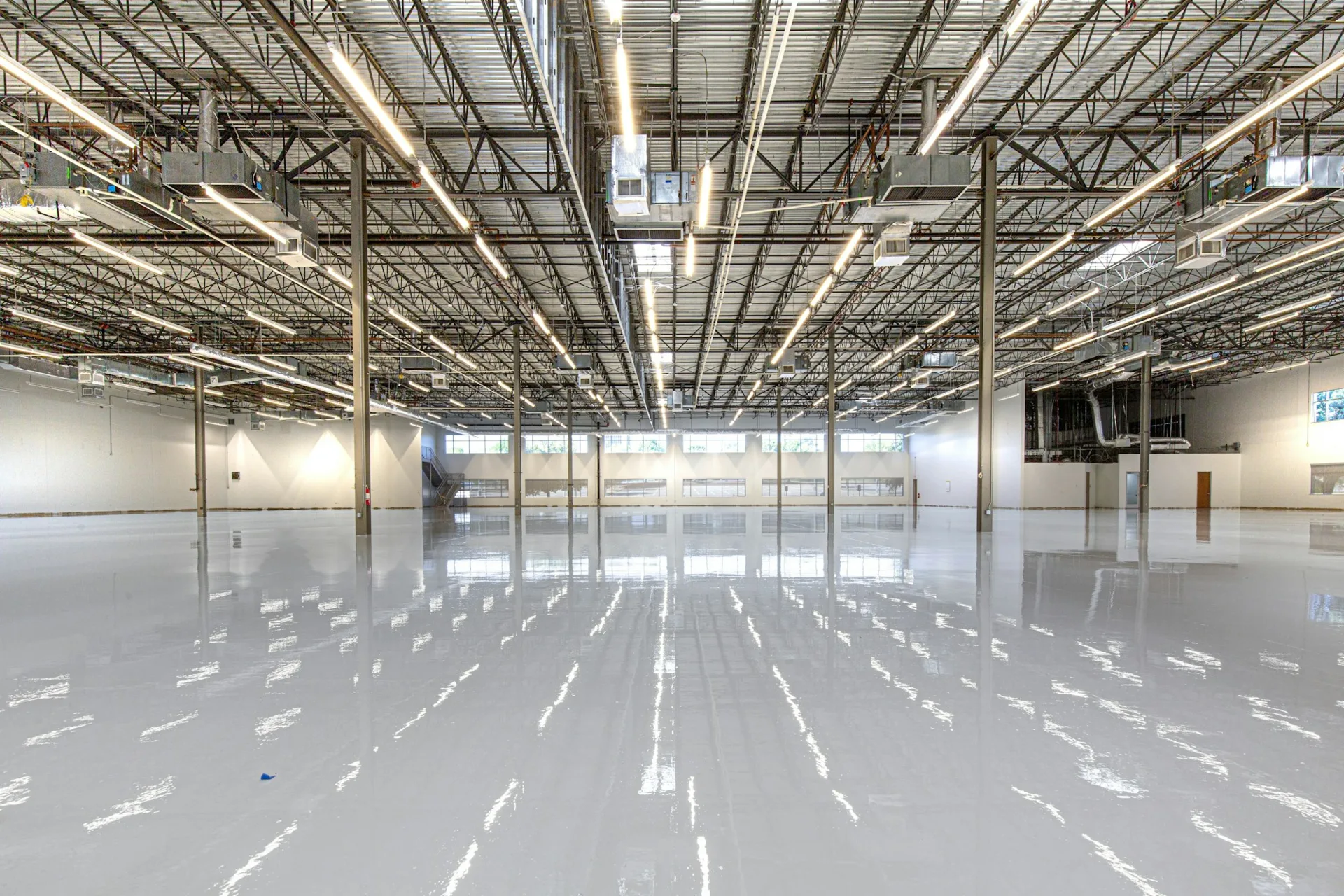
Self-leveling epoxy is applied in a wide choice of colors from the RAL chart. In industrial areas light and mid-gray shades are preferred most; these are the colors that show dust and wheel marks the least. Very light colors accentuate tire marks, while very dark, glossy colors accentuate dust and fine scratches. Deciding on the color by looking at it under the lighting of the space itself reduces the chance of a mistake.
There can be small differences in shade between different production batches of the same color. For this reason we take care to pour a single room with material from the same batch and, if possible, in one go.
There are three options for the finish:
The thickness is determined by the load in use. In areas such as offices and classrooms, with foot traffic and light trolleys, 1.5–2 mm may be sufficient. In production and warehouse areas where pallet jacks and forklifts operate, the standard is 2–3 mm. Under heavier wheel loads the thickness can be increased up to 5 mm. As the thickness increases, strength and service life increase, and material consumption rises in the same proportion.
Markings such as walkways, forklift routes, stacking limits, direction arrows and numbers can also be worked into the floor. The lines are painted on top of the coating; under wheels they last far longer than adhesive tapes.
Each of the five systems we apply answers a different need. In most facilities it is not one system but two or three that are used together, section by section.
The basic difference is thickness. Epoxy floor paint is a thin film of 0.3–0.5 mm applied by roller; self-leveling is a poured coating of 2–3 mm. Paint shows the texture and small defects of the concrete just as they are, whereas self-leveling covers them and forms a flat surface. Under heavy forklift and pallet jack traffic paint wears quickly; self-leveling carries the same traffic for far longer. On the other hand, in low-traffic storerooms, archives and plant rooms where the only aim is to stop dusting, paint is markedly more economical. The decision is made by what passes over the floor and how often.
The two systems belong to the same resin family; the difference is at the surface. Self-leveling is smooth, while the textured system is rough with quartz sand. A smooth surface is easier to clean and looks more even, but it can become slippery when wet. A textured surface grips feet and wheels in wet and oily conditions and, with its thick body, is more resistant to impact; in return, cleaning it calls for a machine fitted with brushes. Self-leveling is the right choice in dry areas, the textured system in wet areas and on ramps. In the same facility the two systems can be applied side by side in the same color.
Self-leveling is a plain, single-color floor; metallic epoxy, by contrast, is a decorative coating that uses metallic pigments to give a marble or cloud effect. Although their build-ups are similar, their purposes are different: self-leveling is for functional areas that carry loads, metallic for the front-of-house areas that the customer sees. Using metallic in the sales area of a showroom and self-leveling in the storeroom and service workshop behind it is a common combination.
In appearance anti-static epoxy closely resembles a self-leveling floor; the difference lies inside the coating. Standard self-leveling epoxy does not conduct electricity, and a static charge can build up on it. In the anti-static system, copper tape, a conductive primer and a conductive body coat carry this charge to the grounding line. An anti-static system is required where static discharge poses a risk, such as electronics manufacturing, data centers, operating rooms and explosive atmospheres; in all other areas standard self-leveling is sufficient.
A smooth surface makes maintenance easy. For daily cleaning a dust mop or an industrial vacuum cleaner is enough, and for the weekly clean a scrubber-dryer with a soft pad and a neutral detergent. Spilled oil and chemicals should be wiped up without delay; the coating does not absorb them, but a liquid left on the surface for a long time can leave a stain and makes the floor slippery.
What wears a self-leveling floor most is sand. Grains of sand carried in on shoes and wheels dull the surface like sandpaper. Mats placed at the entrances and regular sweeping are the most effective measures for preserving the gloss. Pallets and metal crates should not be dragged but lifted and carried; the nail of a dragged pallet will scratch any hard coating.
Abrasive powder cleaners, wire brushes and hard pads should not be used. The black marks left by forklift tires are mostly on the surface and come off by machine with a suitable detergent. If a piece of the coating breaks away as a result of an impact, the spot should be repaired without delay; oil and water that soak into the exposed concrete can travel under the coating from its edge.
If dulling or thinning is seen along the main traffic lanes over the years, the floor is not ripped out. The surface is sanded, local repairs are made if necessary and a new coat is applied on top. This renewal takes less time than the original application.
For a daily, weekly and yearly maintenance schedule and cleaning tips for each type of stain, see our guide Epoxy Floor Maintenance and Cleaning.
The cost of self-leveling epoxy cannot be stated as a single figure; it varies with the factors below.
When comparing two quotations, it is necessary to look not only at the total amount but also at the stated thickness, the surface preparation method and the number of layers. Of two jobs offered under the same name, one may be 1 mm and the other 3 mm.
We explain what to look for when comparing quotes in our article 7 Factors That Determine the Cost of Epoxy Flooring per m².
For self-leveling epoxy flooring, all you need to do is fill in the quotation form. The following information speeds up the assessment:
With this information we prepare our itemized written quote; once the quote is approved, we finalize the application plan with a site survey and measurement. For the other systems you can look at the services page, and for details specific to your sector at the sectors page.
| Thickness | 2–3 mm (1.5–5 mm depending on requirements) |
|---|---|
| System | Primer + (filler coat if needed) + self-leveling coat |
| Application | Notched trowel and spiked roller |
| Substrate condition | Concrete at least 28 days old, moisture below 4% |
| Open to foot traffic | Approx. 24 hours |
| Full cure | 7 days (20 °C) |
| Finish | Gloss, satin or matte |
Self-leveling epoxy is generally applied at a thickness of 2–3 mm. In areas with foot traffic only, such as offices and classrooms, it can go down to 1.5 mm, and on floors that carry heavy wheel loads it can go up to 5 mm. The thickness is set by the notch height of the trowel and the amount of material poured per square meter. A coat drawn thinner cannot flow out properly and leaves trowel marks, so the thickness is not a matter for bargaining but a condition for the system to work. Having the thickness clearly stated in the quotation makes comparison easier.
The floor can be walked on about 24 hours after the pour; it reaches its full strength in 7 days at 20 °C. Light foot traffic is possible in the days in between, but forklift traffic, racking installation, the positioning of heavy machinery and chemical contact should wait for the full cure. These times lengthen as the temperature falls; below 10 °C curing slows down markedly. The total duration of the job varies with the size of the area and the extent of the surface preparation, because waiting time is needed between the layers as well.
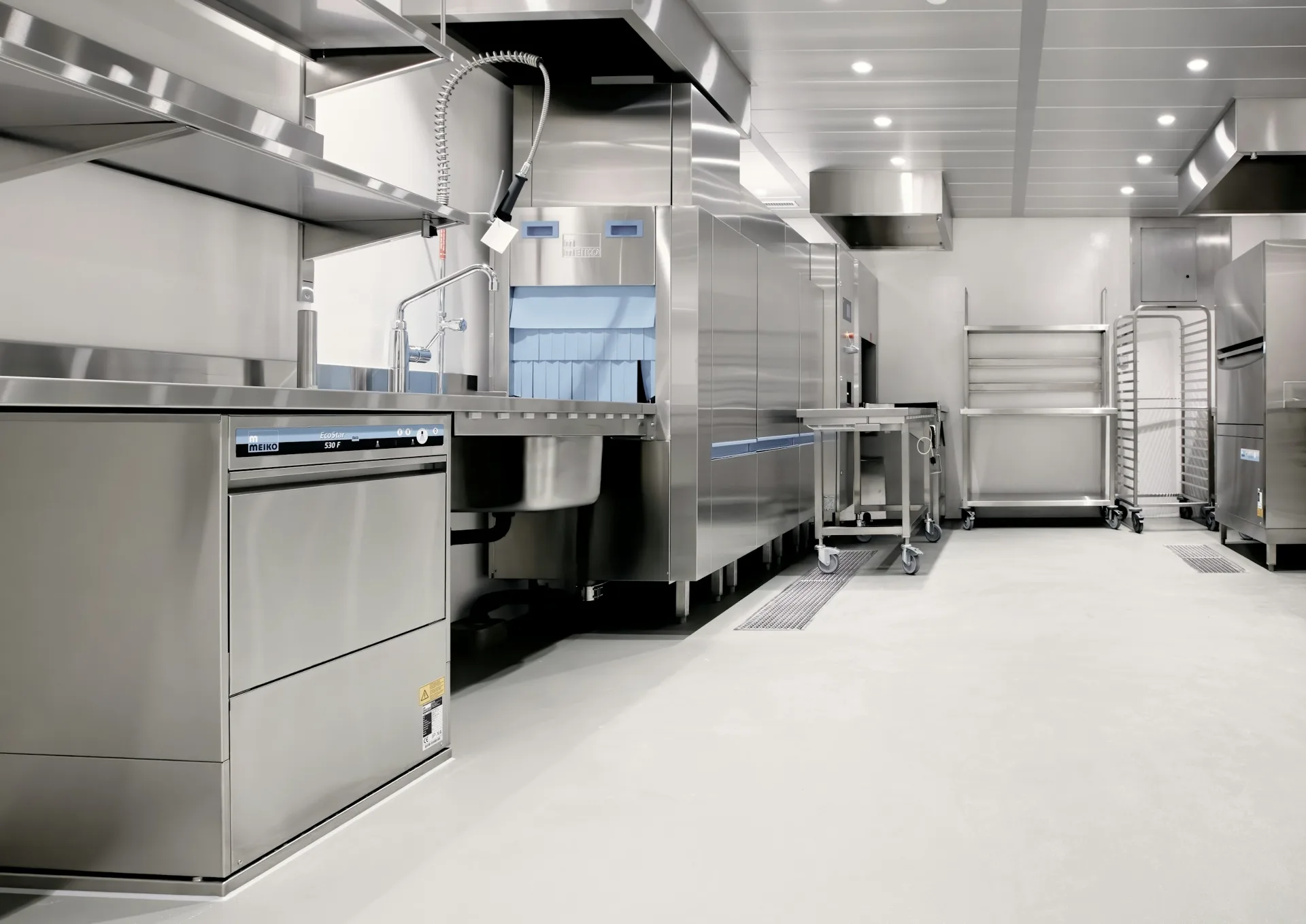
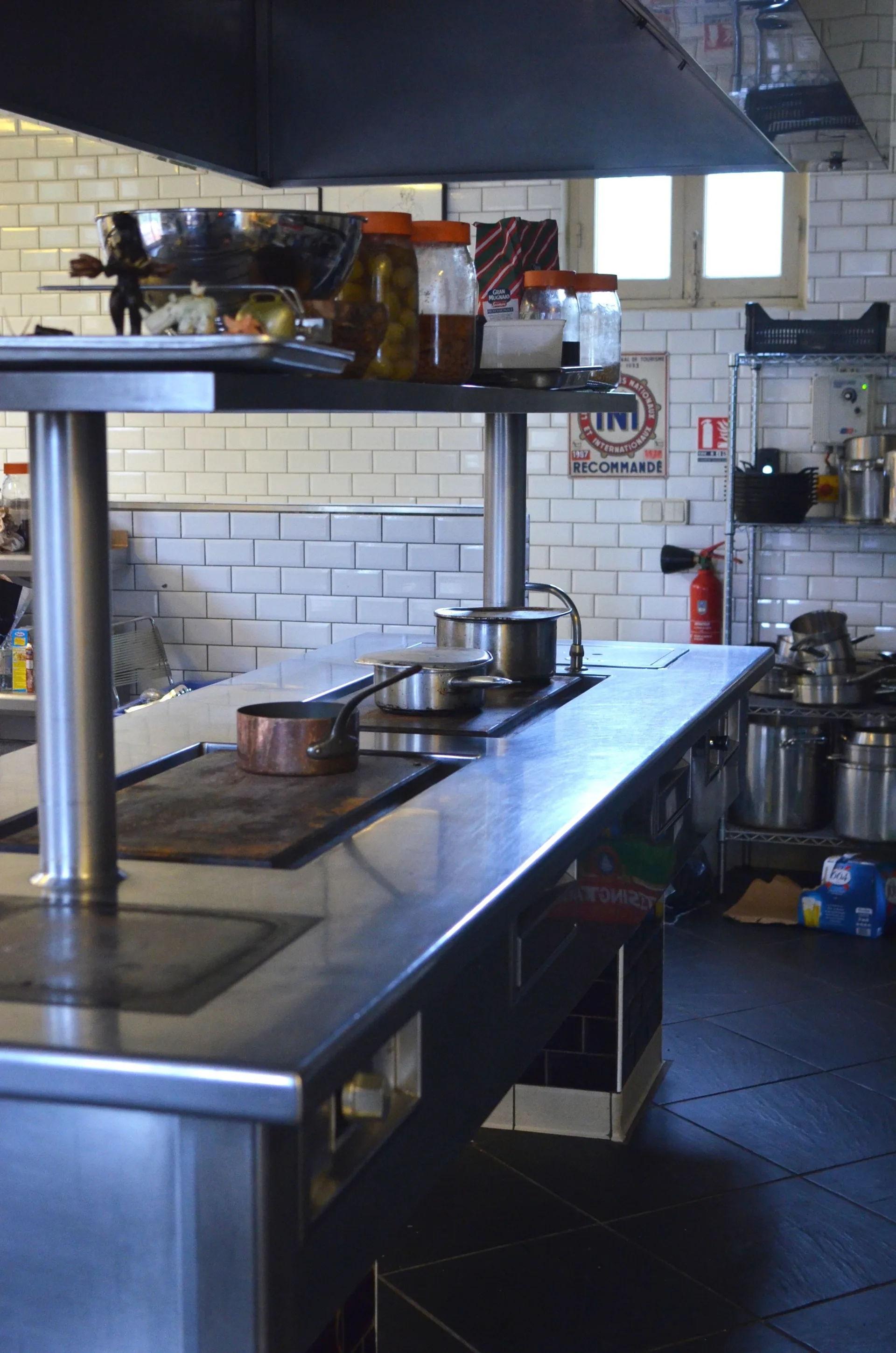
When dry it is not slippery; it can be walked on safely in ordinary shoes. Because its surface is smooth, however, it can become slippery with water, oil or detergent on it. For this reason, in production sections that are constantly wet, in wash-down areas, in back-of-house kitchen areas and on ramps, textured epoxy with quartz sand is used instead of a smooth coating. At entrances that get wet only occasionally, matting and a matte topcoat are usually enough. In the same facility the dry sections can be smooth and the wet sections textured, with the two surfaces joined in the same color.
Yes, if the tiles are sound it can be applied over them without demolition. First the tiles are tapped one by one to identify those that sound hollow; loose or hollow tiles are removed and the gap is filled. The glazed surface is roughened mechanically, the joints are filled and a primer suited to the surface is selected; otherwise the joint lines may show through the coating over time. When applying over old epoxy or paint, the existing coat must be well bonded to the concrete; blistered or peeling areas are stripped back to the concrete.
No, a 2–3 mm coating does not remove large differences in level or hollows; it covers minor roughness and follows the general shape of the concrete. On undulating or pitted floors repairs are carried out first, the surface is trued up with a filler coat if necessary, and then the coating is poured. Because the material is fluid, it tends to run downhill on surfaces with a pronounced slope; this is why a textured system is used on ramps instead of self-leveling. The preparation required is listed as a separate item in the quotation; the flatness of the floor is measured and confirmed during the site survey carried out once the quotation is approved.
Because self-leveling epoxy contains no solvent, its odor is far lower than that of solvent-based paints and disperses quickly with ventilation. The work can be done while the business is operating; the area is divided into zones, and while one section is closed off and coated, work continues in the others. Two points need attention: the dust produced during surface preparation, and the fact that the wet floor cannot be stepped on for about 24 hours. The grinding machines run connected to industrial vacuum cleaners; sensitive products and machines are covered all the same. Odor-sensitive products such as food are moved away from the application zone.
Every stage of an epoxy flooring installation from survey to handover: surface preparation, repairs, primer, coating layer and curing.
We explain in plain language what epoxy flooring is, which types are available and why it is chosen for different kinds of spaces.
Why do epoxy flooring prices vary so much from one project to the next? We explain the items that make up the price so that you can compare quotes…
The two coatings look alike but behave differently. We compare epoxy and polyurethane in terms of hardness, flexibility, and UV and heat resistance.
When can you walk on an epoxy floor, and when can it take loads? Curing times by temperature and the conditions that affect the process.
An epoxy floor needs little maintenance, but it should not be neglected. Everything you need to know, from daily cleaning and stain removal to the…
Our priority is
Tell us about your project, and together we will pin down the right epoxy system for your floor, the application time and our quote.
Get a Quote5-year workmanship and 10-year product warranty. We respond to all requests within 24 hours. We work in all 81 provinces.