
How Long Does Epoxy Flooring Take to Cure? Curing Times
When can you walk on an epoxy floor, and when can it take loads? Curing times by temperature and the conditions that affect the process.
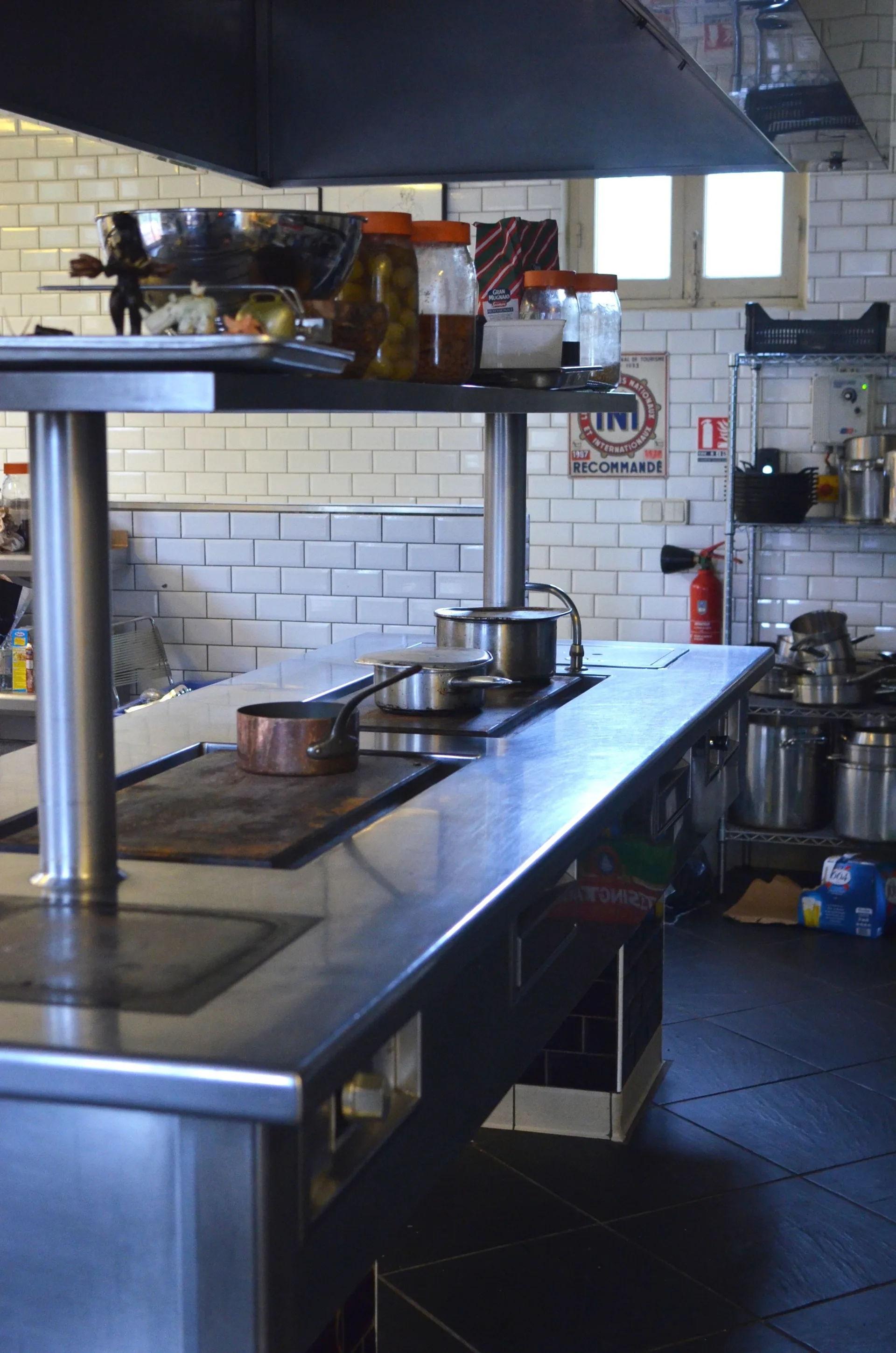
Seamless, anti-slip and easy-to-wash epoxy flooring for hotel kitchens, laundries, service corridors and plant rooms, plus decorative epoxy floors for lobbies and restaurants.
Hotel epoxy flooring is used mostly in back-of-house areas such as the kitchen, laundry, service corridors and plant rooms; its seamless surface holds no dirt and withstands frequent washing. Wet and greasy sections get 3–5 mm textured (anti-slip) epoxy, corridors and storerooms get 2–3 mm self-leveling epoxy, plant rooms get epoxy paint and the lobby gets metallic epoxy. The work is scheduled section by section for the off-season or for days when occupancy is low. Epoxy is not the right choice for points where hot water and steam are discharged continuously or for outdoor surfaces.
Mention hotel epoxy flooring and a gleaming lobby is the first thing that comes to mind; yet the places where a hotel floor is under the most strain are the back-of-house areas that guests never see. The kitchen, the dishwashing area, the laundry, the storerooms, the service corridors and the plant rooms work twenty-four hours a day. In these areas the floor is constantly wet and greasy, loaded carts roll over it, and it is washed down several times a day.
Ceramic tile, which is common back of house, loses out to this pace at its joints. The grout is washed out, grease and food residue settle into the gaps, and odor and pest problems begin. The wheels of service carts chip the edges of the tiles, and a broken tile is both a trip hazard and a hygiene problem. In plant rooms left as bare concrete, meanwhile, dust is carried to the pumps and electrical panels.
An epoxy coating covers these areas with a single, liquid-tight surface. With no joints, dirt has nowhere left to hide; the anti-slip texture protects staff working on a wet floor; and the coved skirting at the base of the walls makes the corners washable. In front-of-house areas, its seamless and decorative surface gives the architect more to work with in lobbies, restaurants and spa entrances.
Another decisive factor in a hotel is time. Noise, dust and odor are unwelcome while guests are in the building, and the kitchen cannot close for even a single day. That is why the work program matters as much as the choice of system on hotel projects. On this page we deal with the two together.
Every part of a property wears its floor in a different way. Below you will find the areas we work in most often in hospitality facilities, what stresses the floor in each of them, and which system is chosen and why.
City hotels are open twelve months of the year and are mostly tight, multistory buildings. The kitchen is in the basement, the laundry is one level below it and the loading door opens onto the back street; all service traffic passes through narrow corridors and freight elevators. In a building like this, flooring work is almost always carried out while the hotel is operating, and section by section.
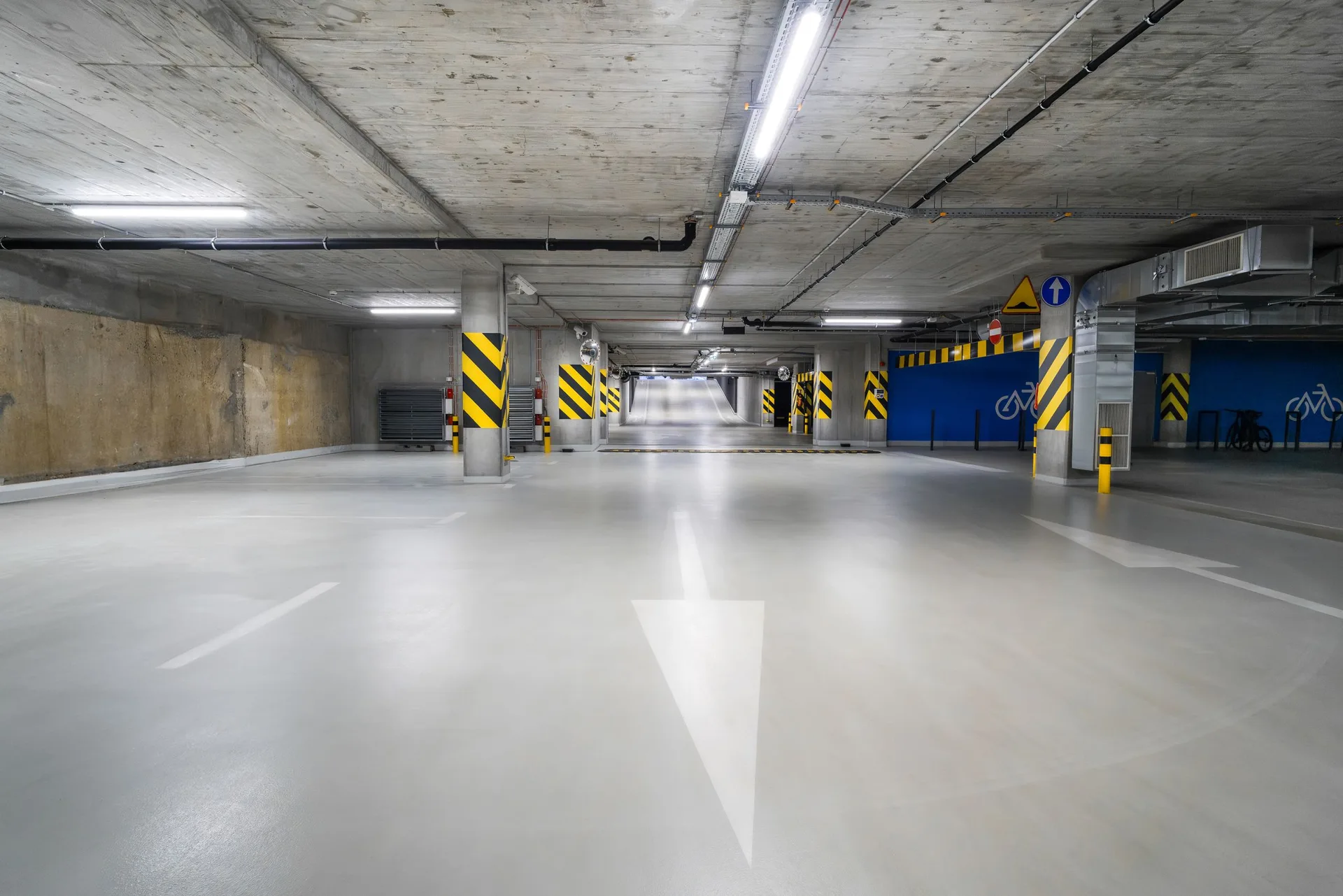
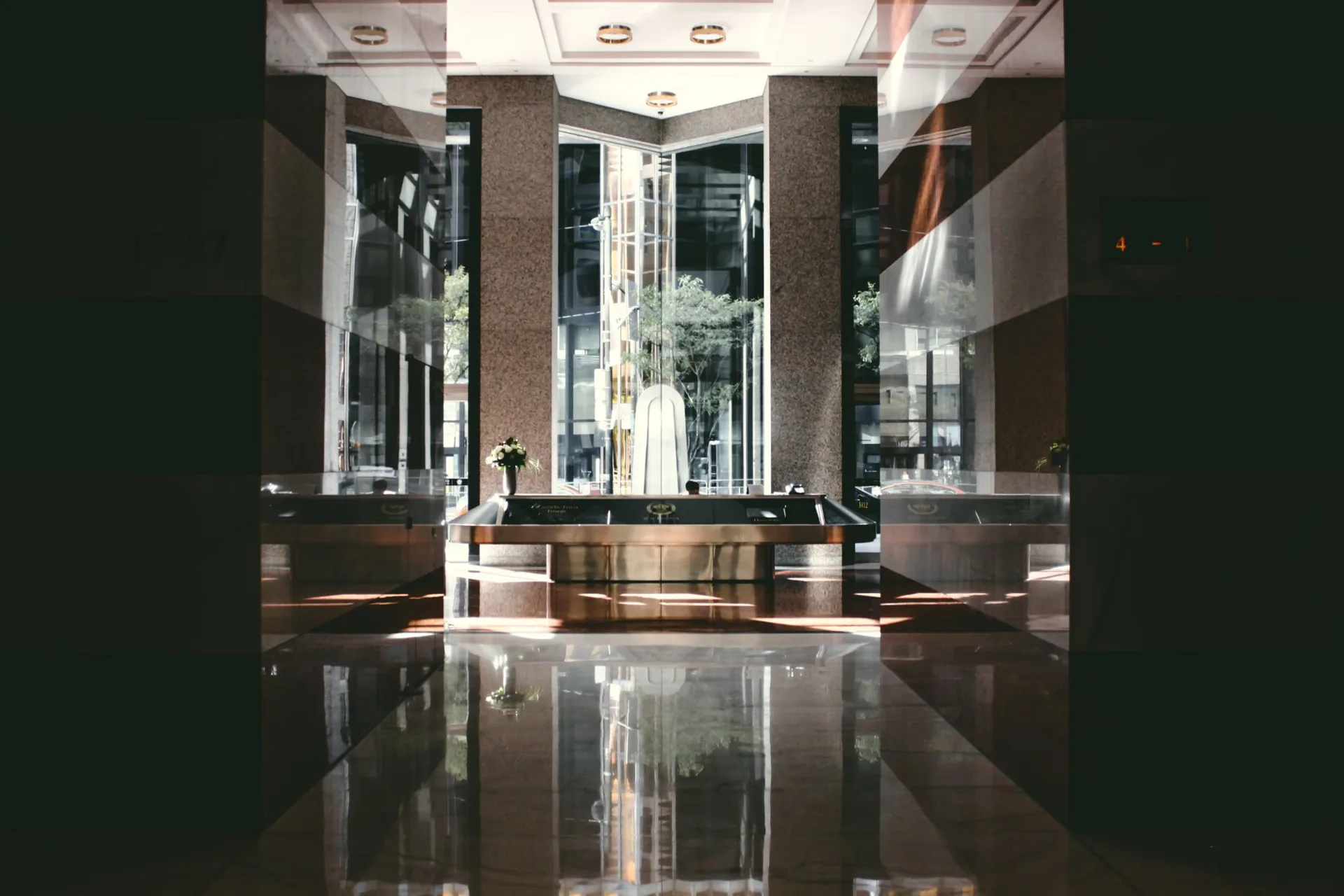
In most of the back-of-house areas, textured epoxy and self-leveling epoxy are used together; floor pantries, staff locker rooms and dry stores are handled within the same scope. In the lobby, the meeting room foyer and the restaurant entrances that guests see, metallic epoxy gives a seamless and distinctive look. In these areas, suitcase wheels and sand carried in on shoes scratch the surface; for this reason a protective polyurethane topcoat is applied and a good mat is placed at the entrance. If the hotel has an enclosed parking garage, the systems on our parking garage epoxy flooring page apply.
Resorts are spread over a large site: the central kitchen, several restaurants, bars, the laundry, the staff dining hall, storerooms and plant buildings are a long way from one another. A central kitchen that turns out thousands of meals a day is, as far as the floor is concerned, no different from a food production plant. At properties close to the shore, the groundwater level can be high; in basement and semi-basement back-of-house areas, the moisture content of the concrete must always be measured.
Most of a resort is outdoor space, and here we need to be clear. Epoxy is not the right choice for surfaces exposed directly to sun and rain, such as pool surrounds, open terraces and the outdoor roads used by service vehicles; it yellows in the sun and its surface chalks. Epoxy is used in enclosed spaces such as kitchens, storerooms, laundries, the indoor kids' club, the game room and the spa. At properties that operate seasonally, the application is scheduled for the period between closing and reopening.
A hotel kitchen floor faces water, grease, heat and impact all at once. Grease spatters in front of the cooking line, the floor in the dishwashing area never dries, pots and gastronorm pans are dropped, and loaded service carts grind into the floor as they turn. For this reason, textured epoxy with quartz sand is applied in the kitchen at a thickness of 3–5 mm. In sections that are constantly wet and greasy, a coarser texture is chosen; in cold preparation areas and service passes, it is kept finer.
Three details determine the result in a kitchen: an adequate fall toward the drains, watertight detailing around drains and channels, and coved skirting at the base of the walls. We also state one limit from the outset: at points where water and steam above 60 °C are discharged continuously, such as in front of tilting skillets, boiling kettles and steam ovens, thermal shock wears epoxy down; under these conditions epoxy is not the right choice, and we state this plainly at the quotation stage. For hygiene criteria, see our food processing plant epoxy flooring page.
In a hotel laundry the floor is permanently damp. Water overflowing from the washers, alkaline and chlorinated chemicals such as detergent and bleach, steam from the ironing section and lint drifting in the air all share the same space. Carts full of wet linen are heavy, and on their small wheels they put high pressure on the floor. In this environment the joints of ceramic tiles empty out quickly and trap lint.
Here, anti-slip textured epoxy is applied together with a fall toward the drains. The texture is chosen fine enough that lint does not stick to the surface and carts can be pushed with ease. Washers and extractors vibrate as they run, and most of them are fixed to concrete plinths; the coating is turned up over the plinth, and the area around the anchor points is sealed so that no water gets in. The inside of the open channels into which the machines discharge hot water is assessed separately, because it is exposed to constant thermal shock. If the clean and soiled linen zones are coated in different colors, the workflow can be read from the floor.
The boiler room, pump room, generator room, air handling unit room, water tank room and electrical panel rooms are the hotel's unseen infrastructure. Foot traffic in these spaces is light; the problem is dust. Dust from bare concrete is carried to fans and filters, pump seals and electrical panels. In addition, fuel, oil and water leaks soak into the concrete and leave lasting stains and odors.
In plant rooms, epoxy floor paint is usually sufficient: it stops dusting, makes leaks visible and wipeable, and gives the maintenance team a clean place to work. On a light-colored floor, dripping oil or water is noticed straight away, which helps a fault to be caught early. Machine plinths and walkways can be painted in a different color. At points where spills are likely, such as around the generator and the fuel tank, a thicker system is considered. The insulating mats used in front of electrical panels are a separate occupational safety measure; the floor coating does not take their place.
Service corridors are the arteries of a hotel. Housekeeping carts, food and dish carts, laundry cages, beverage crates and waste containers travel back and forth along the same line all day long. Because the wheels always follow the same track, wear develops in strips; the areas in front of the elevators and the turning points are where the floor suffers most. On ceramic tile, each joint jolts the wheel as it passes: this is where the rattling of plates and the noise come from.
In corridors, 2–3 mm self-leveling epoxy provides a seamless rolling surface; carts are quieter and take less effort to push. In sections that people leave the kitchen through with wet wheels and shoes, the surface is given a light texture. Skirting is formed at the base of the walls together with the coating. At the wet and sloped points the corridor connects to, such as the waste room and the loading ramp, a textured system is used. Direction arrows and the separation of clean and soiled routes can be marked on the floor in color; this makes the job easier for newly hired staff.
In a hotel there is no floor that can be solved with a single system. Three questions determine the choice: how wet does the floor get, what passes over it, and do guests see it?
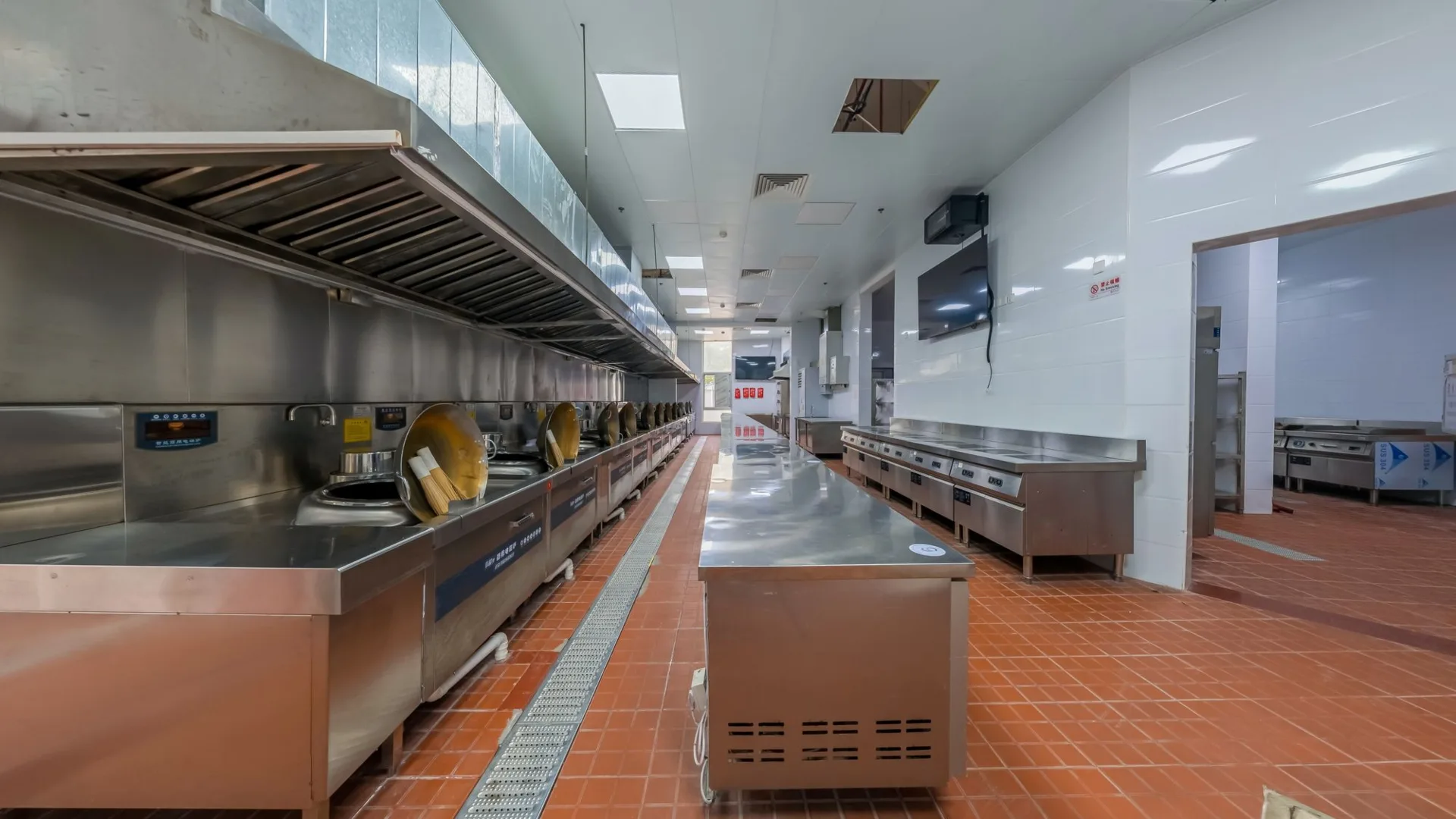
The schedule for flooring work in a hotel is set up differently from the start, depending on the type of property.
At seasonal properties the easiest period is between closing and reopening. The entire kitchen and laundry can be cleared at the same time, and odor and noise disturb no one. The point to watch is temperature: in unheated enclosed spaces in the winter months, the floor gets cold and epoxy cures slowly. If the floor temperature is low or condensation is forming on the surface, no application is carried out; if necessary, the space is heated and dehumidified. The weeks before the season are when every property is renovating; scheduling the work for right after closing eases both the calendar and the curing time.
At hotels that are open all year round the work is carried out by splitting it across low-occupancy days and across sections:
The systems we use are solvent-free and low in odor. Even so, the ventilation of kitchens and corridors is often connected to the guest areas; during application the relevant grilles are closed and the area is ventilated separately. The grinding machines run with dust extraction, and noisy preparation work is moved to daytime hours when guests are out of their rooms.
A coating applied in the wrong place causes problems in a short time, even with the best material. These are the situations we come across most often on hotel projects:
An epoxy floor is easy to maintain, but the cleaning method differs for each section. The wrong method shows itself most on textured surfaces.
At the end of each season or once a year, the areas around drains, the door thresholds and the points where carts turn should be inspected. Minor damage is repaired on the spot. A worn topcoat can be renewed by lightly sanding the surface; this operation fits into a few days of low occupancy.
For a daily, weekly and yearly maintenance schedule and cleaning tips for each type of stain, see our guide Epoxy Floor Maintenance and Cleaning.
On hotel projects, the same number of square meters calls for very different amounts of labor from one section to another. These are the main items that make up the cost:
The way to use the budget efficiently is to give each section the system it needs. Installing a kitchen system in a plant room is unnecessary spending; making do with paint in the kitchen means having the job done again before long.
We explain what to look for when comparing quotes in our article 7 Factors That Determine the Cost of Epoxy Flooring per m².
We set out the right system and a workable work program for your property in a written quote prepared from the information and photos you send us; once the quote is approved, we survey and measure the area on site. To get started, you can fill in the quote request form. The following information makes our work easier:
You can see similar jobs on the projects page and the full range of systems we install on the services page. For anything you are unsure about, you can write to us through the contact page.
| Kitchen and laundry | Textured (anti-slip) epoxy, 3–5 mm |
|---|---|
| Service corridors and storerooms | Self-leveling epoxy, 2–3 mm |
| Plant rooms | Epoxy floor paint, 0.3–0.5 mm |
| Lobby and restaurant | Metallic epoxy with a polyurethane topcoat |
| Details | Coved skirting, detailing around drains and channels |
| Open to foot traffic | Approx. 24 hours |
| Full cure | 7 days (20 °C) |
It withstands grease, detergent and the warm to hot water used when washing down a kitchen; the textured system is designed for these conditions. The limit is continuous thermal shock: at points where a boiling kettle or tilting skillet discharges water above 60 °C directly onto the floor, and in channels cleaned with steam, epoxy wears over time. If there are such points, we flag them separately at the quotation stage and make our recommendation by setting apart the sections where epoxy is suitable.
It can; at hotels that are open all year round, this is how the work is done anyway. The area is divided into sections, and each section is closed on days when occupancy is low. Solvent-free systems are low in odor, and the ventilation grilles of the section being coated are closed to keep the odor from reaching the guest floors. Grinding is done with dust-extraction machines and during daytime hours. The only work that affects guests directly is in front-of-house areas such as the lobby; this is solved by working at night.
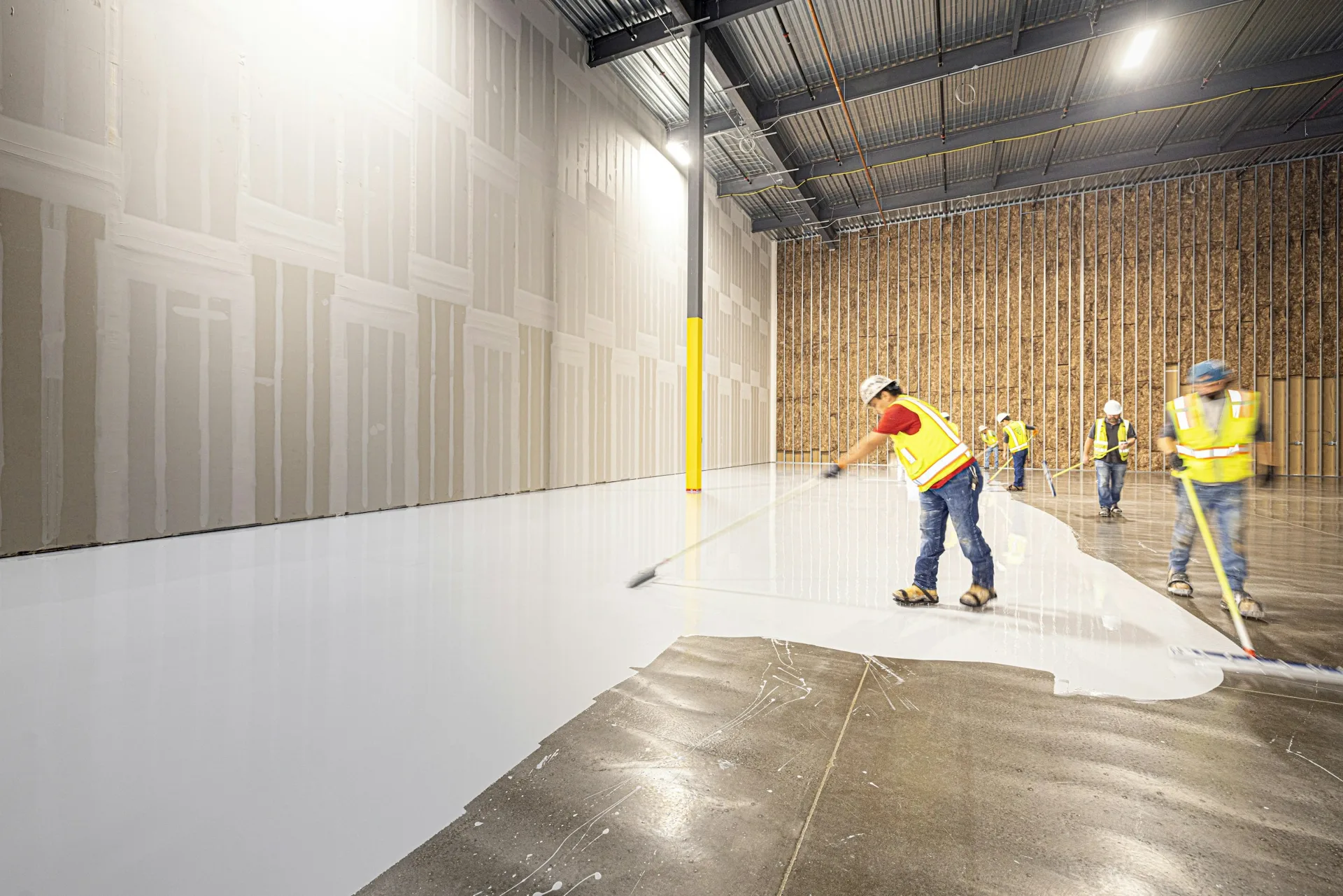
The duration depends on the size of the area, whether the ceramic tile is to be removed and whether the fall needs correcting; this is why the exact number of days is given after a site survey. The general framework is as follows: preparation, primer and the coating layers are spread over consecutive days, and the floor can be walked on about 24 hours after the final coat. A few more days are needed before heavy equipment is put back and before intensive washing. When the work is done section by section, the whole kitchen is never closed at the same time.
No, we do not recommend epoxy for outdoor surfaces. Epoxy yellows in direct sunlight and its surface dulls; rain and temperature swings also put the coating under strain. A polyurethane topcoat delays yellowing in sunlit enclosed spaces, but it does not make a fully open pool surround suitable for epoxy. Epoxy is considered for enclosed areas such as the plant rooms of an indoor pool, the spa and the locker room sections.
If the ceramic tile is firmly bonded to the floor, epoxy can be applied over it without removal. The tiles are checked one by one, hollow and broken ones are taken out and the gaps filled, and the surface is roughened by diamond grinding and degreased. In kitchens, however, water may have seeped through the joints for years and left voids under the tiles; in such cases, removing the ceramic tile completely is the sounder option. And if the existing fall is inadequate, coating over the tile will not solve that problem.
It is not slippery when dry; when wet, like any glossy surface, it can become slippery. That is why a long mat that traps water and sand needs to be placed at the entrance and the floor kept dry on rainy days. If desired, a matte topcoat can be chosen to reduce slipperiness and glare. Against scratching, a clear polyurethane protective coat is applied over the metallic layer. Suitcase wheels and sand can leave fine marks over time; these marks are removed by renewing the topcoat.
When can you walk on an epoxy floor, and when can it take loads? Curing times by temperature and the conditions that affect the process.
We explain in plain language what epoxy flooring is, which types are available and why it is chosen for different kinds of spaces.
Why do epoxy flooring prices vary so much from one project to the next? We explain the items that make up the price so that you can compare quotes…
Every stage of an epoxy flooring installation from survey to handover: surface preparation, repairs, primer, coating layer and curing.
The two coatings look alike but behave differently. We compare epoxy and polyurethane in terms of hardness, flexibility, and UV and heat resistance.
An epoxy floor needs little maintenance, but it should not be neglected. Everything you need to know, from daily cleaning and stain removal to the…
Our priority is
Tell us about your project, and together we will pin down the right epoxy system for your floor, the application time and our quote.
Get a Quote5-year workmanship and 10-year product warranty. We respond to all requests within 24 hours. We work in all 81 provinces.