
How Is Epoxy Flooring Installed? Application in 7 Steps
Every stage of an epoxy flooring installation from survey to handover: surface preparation, repairs, primer, coating layer and curing.
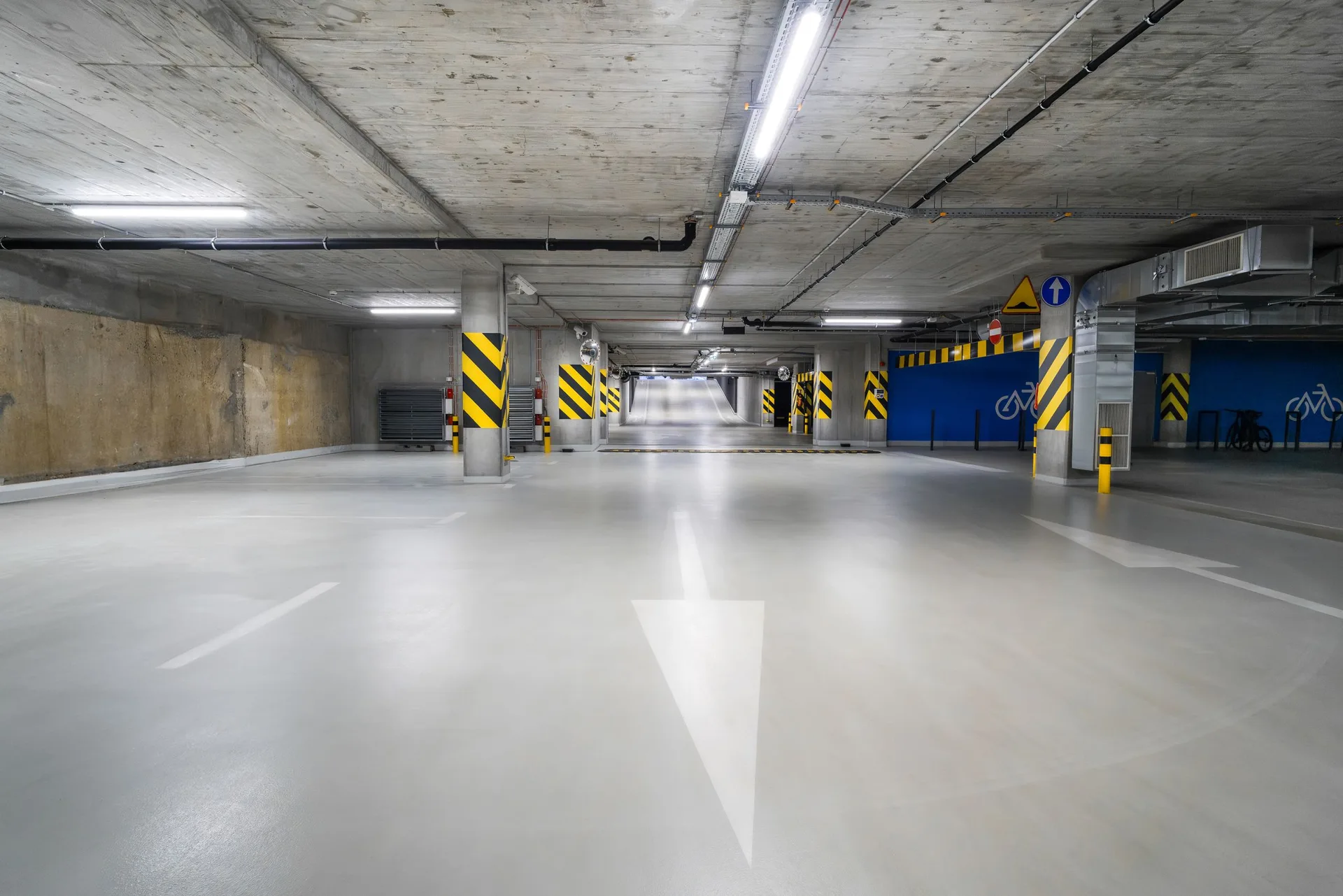
An anti-slip epoxy floor coating that is textured by broadcasting quartz sand or with a texture roller, giving safe footing in wet and oily areas and on ramps.
Textured anti-slip epoxy flooring is a non-slip epoxy floor whose surface has been given a rough texture. The texture is obtained in two ways: quartz sand is broadcast onto the wet epoxy coat and locked in with a topcoat, or the coating is left with an orange-peel finish using a texture roller. It is used in wet, oily and sloping areas; the coarser the texture, the higher the slip resistance and the harder the cleaning.
Textured epoxy flooring is an epoxy floor whose surface has deliberately been given a rough texture. In everyday language it is known as "anti-slip" or "non-slip epoxy"; in technical documents it also appears as textured or quartz-broadcast epoxy. Its purpose is to create a surface that shoe soles and wheels can grip in places where the floor gets wet, gets oily or slopes.
Flat, glossy epoxy surfaces are safe when dry. Once water, oil or detergent comes between them, however, a thin film of liquid forms between the sole and the floor and the grip drops. On a textured surface this film is broken at the peaks of the grains; the sole rests on the grains, not on the liquid.
The material is still a two-component, solvent-free epoxy made up of resin and hardener; once cured it gives a seamless, hard and liquid-tight layer. What makes the difference is the quartz sand embedded in the surface, or the texture given with a roller. The word "anti-slip" should not be taken as an absolute promise: no floor prevents slipping completely in every condition; a correctly chosen texture reduces the risk markedly.
A textured surface is produced in two different ways. The two differ from each other in appearance, level of slip resistance and ease of cleaning; which one is chosen depends on how wet the area gets.
An epoxy coat is applied to the primed floor and, while this coat is still wet, kiln-dried quartz sand is broadcast onto it. The sand is broadcast until the surface will take no more grains; the grains become embedded in the wet resin. After curing, the excess sand that has not bonded is swept off and the surface is covered with a topcoat. The topcoat locks the grains in place, fills the gaps between them and seals the surface against liquids.
This method produces a hard, quartz-filled body 3–5 mm thick. It is the method with the highest level of slip resistance; it is preferred in areas that are constantly wet and oily, on ramps and in sections that see heavy-duty service. When a thicker build is wanted, the broadcast is repeated in two coats.
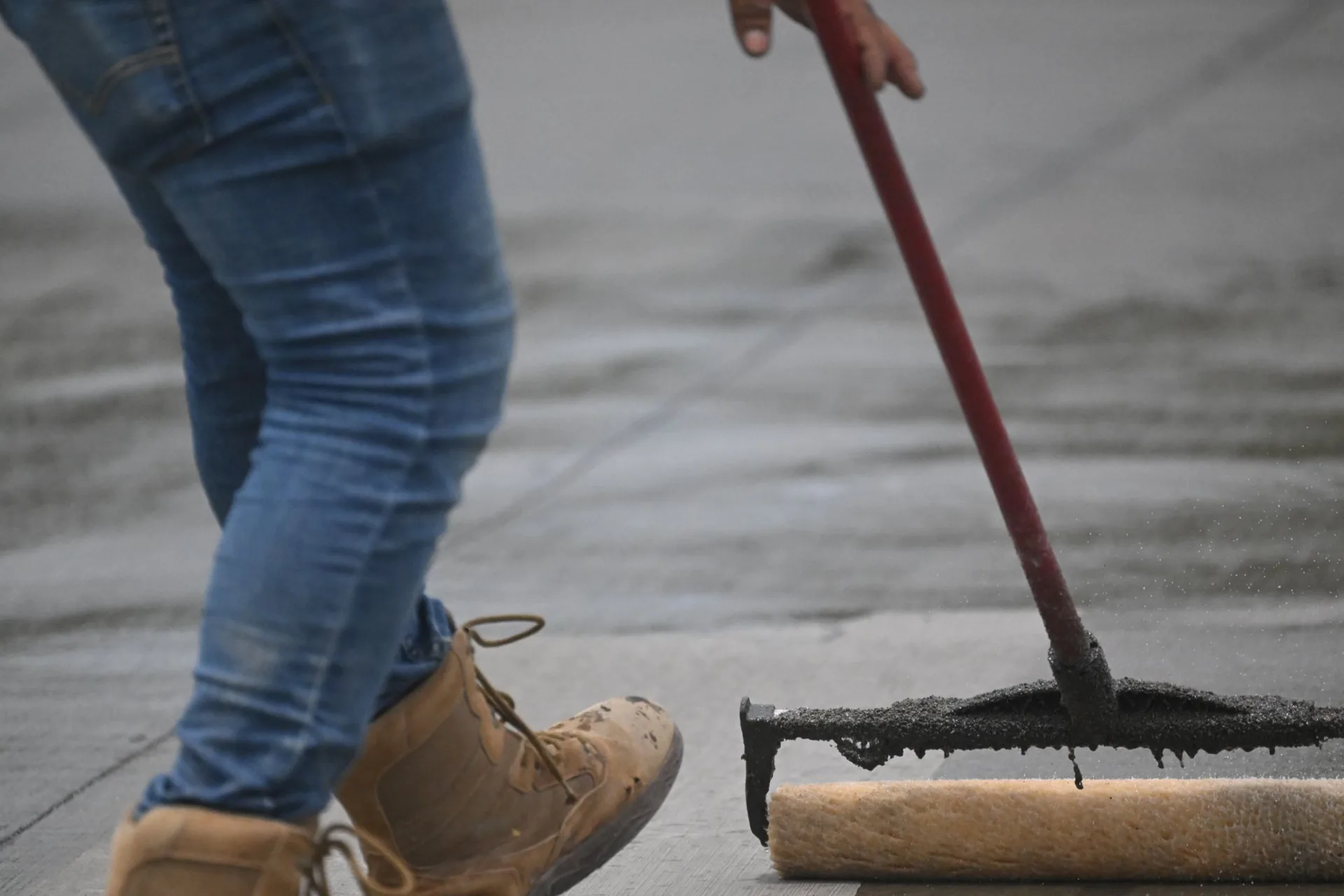
In the second method no sand is broadcast. A thick, non-sagging epoxy coat is spread on the floor and worked with a coarse-pored texture roller. The roller lifts the wet material into small peaks; once cured, a rounded texture resembling orange peel remains.
The orange-peel texture has no sharp grains. For this reason it is easier to clean than a quartz-broadcast surface, its appearance is more uniform and wheels run over it more quietly. On the other hand, its level of slip resistance is more limited: it suits corridors that get wet occasionally, parking decks and walkways; it is not sufficient for a floor that is constantly oily or works under water. Hiding small undulations and defects in the concrete is a side benefit of this texture.
The quartz-broadcast textured system is built up from the following layers, from the bottom up:
With the texture roller method the sequence is shorter: the primer is followed by an intermediate coat if necessary, and on top of that comes the coat that is textured with the roller. In sections that receive sunlight, a polyurethane topcoat can be used against yellowing with either method.
The most important decision to be made with this system is how coarse the texture will be. The rule is simple: the coarser the texture, the higher the slip resistance and the harder the cleaning. Applying the coarsest texture to every area is therefore not the right approach; a texture that is coarser than necessary holds dirt, shreds mops and is uncomfortable for bare feet and small wheels.
The texture is set by two adjustments: the grain size of the sand that is broadcast and the amount of topcoat applied over it. Preparing a small trial area before deciding, and having the cleaning team try out this area with its own equipment, prevents complaints later on.
The common factor is wetness, oil or a slope. In the spaces below, the textured system very often stands out as the only option.
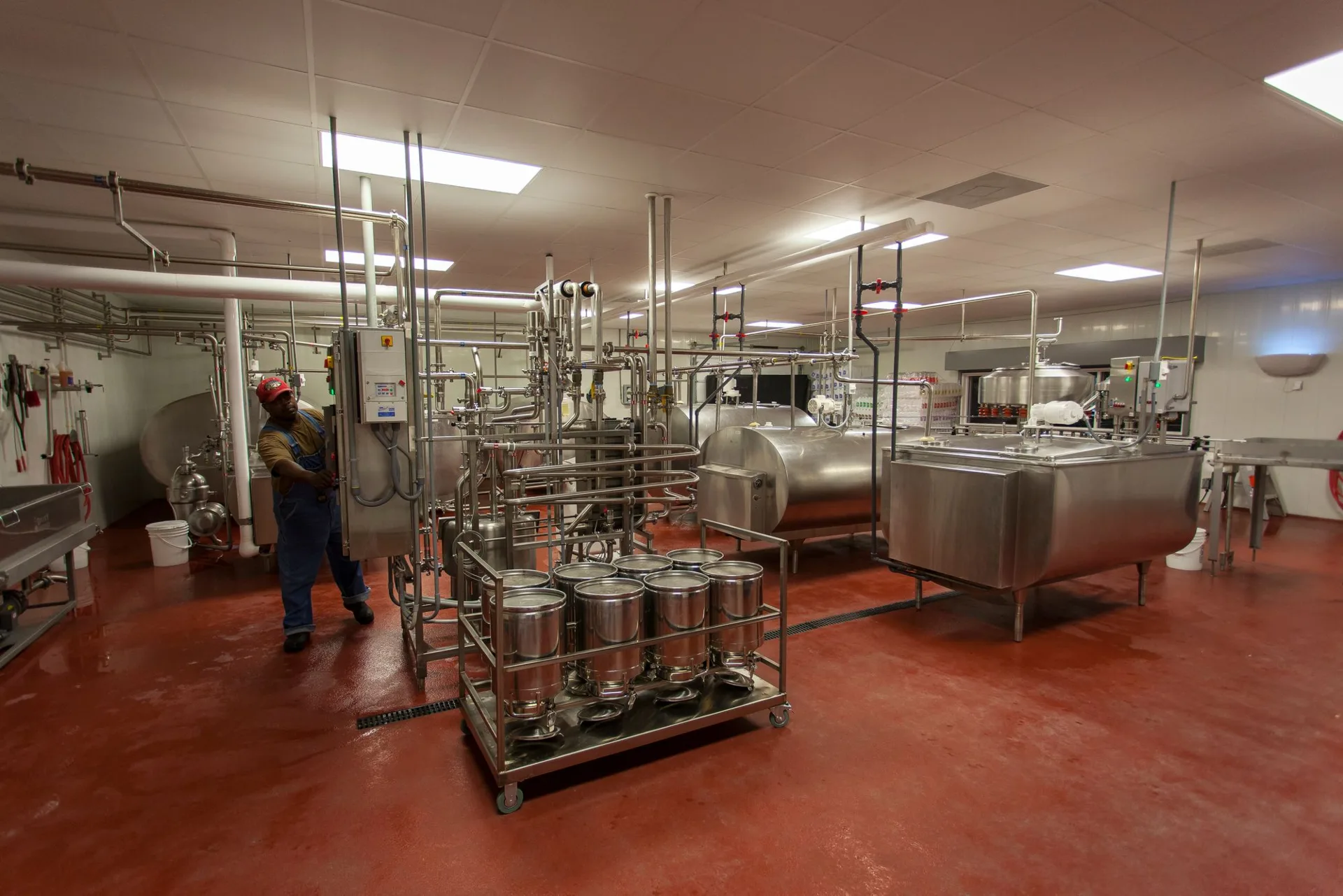
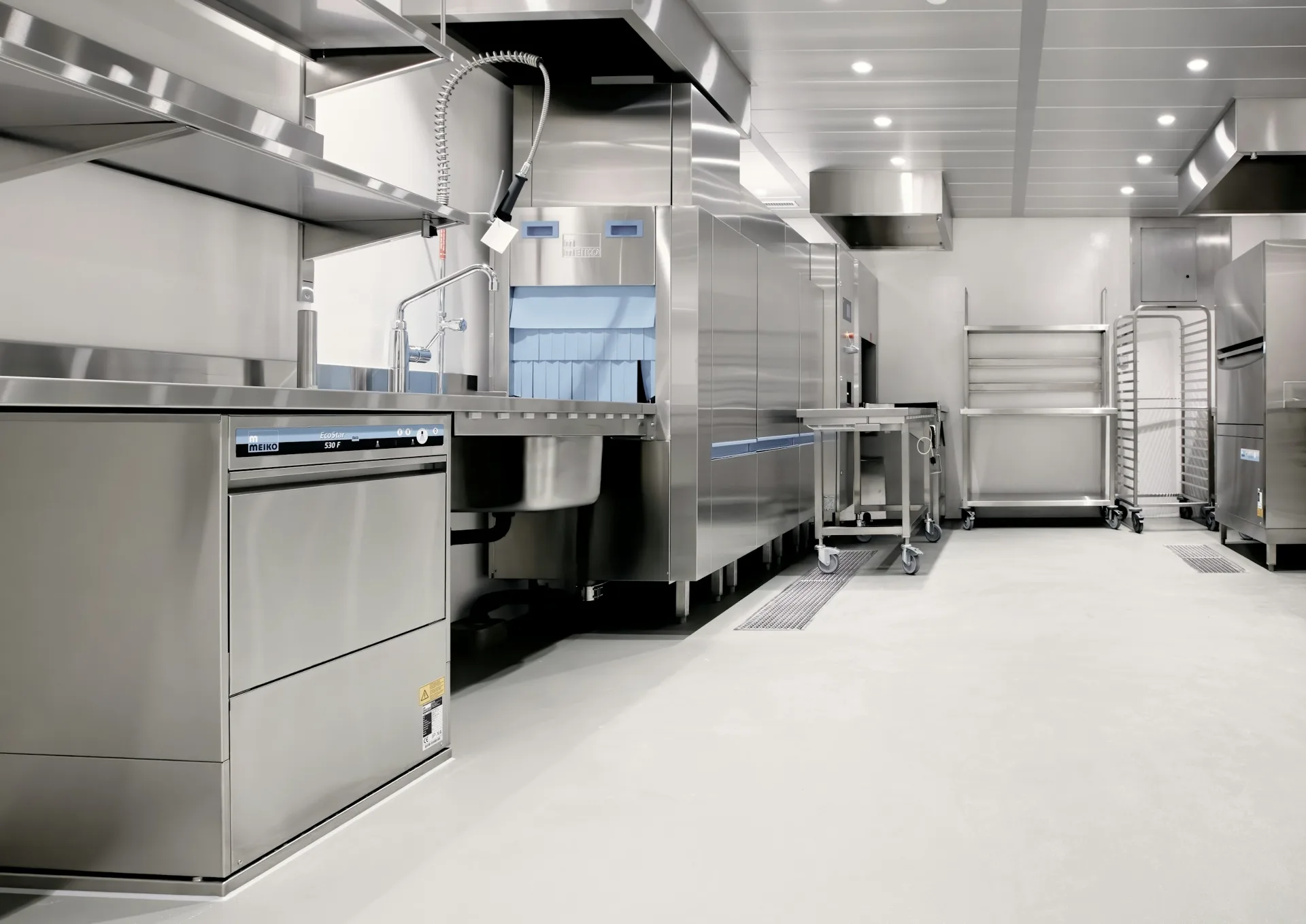
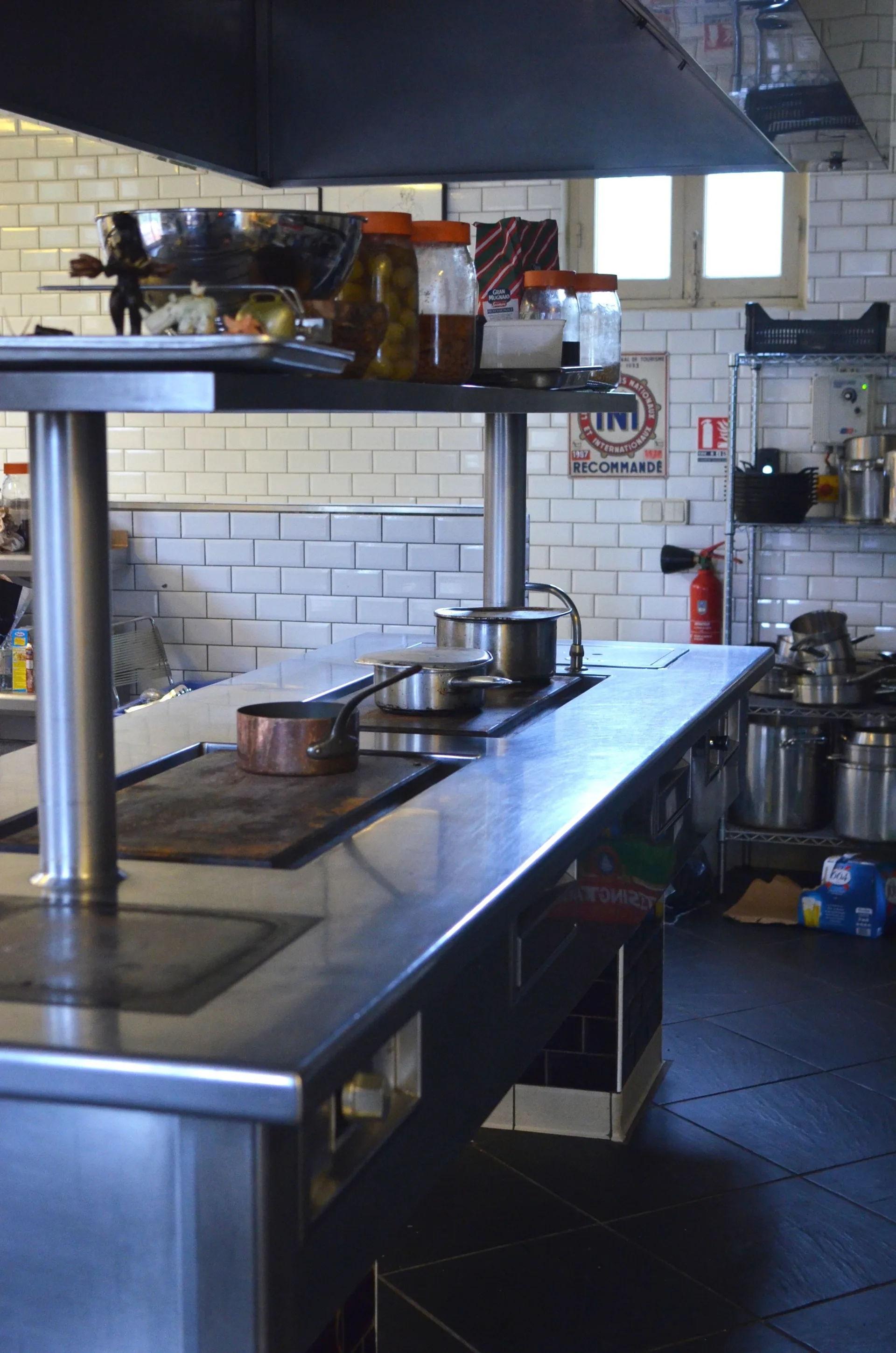
In kitchens, dishwashing areas, preparation rooms and filling sections the floor meets water, fat and food residue all day long, and is washed down at the end of the shift. A medium or coarse texture is used here; the base of the walls is turned up with a coved skirting, and the areas around drains and channels are detailed with care. In choosing the texture, the balance between hygiene and slip resistance is kept in view: a texture that is coarser than necessary holds residue. Points where hot oil and boiling water are constantly spilled, such as in front of fryers and under kettles, are assessed separately. The details are on the food processing epoxy flooring page.
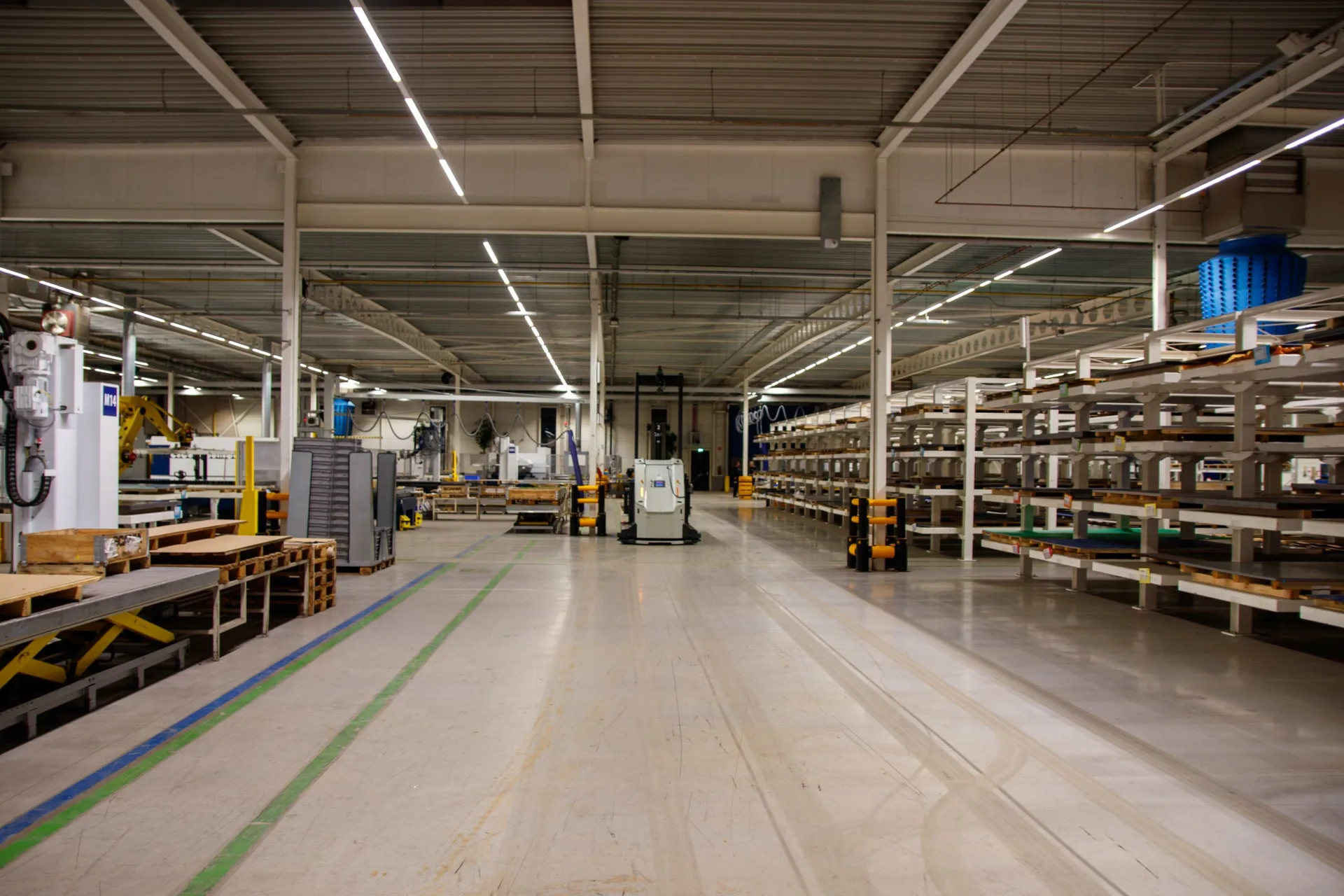
Cutting fluid in machining, oil on press lines and water in washing cabins keep the floor permanently wet. In these sections the workstations where the operator stands and the walkways are coated with the textured system. The thick quartz-filled body is also an advantage against dropped parts and metal crates. The dry sections of the factory are continued with a smooth coating in the same color. See factory epoxy flooring.
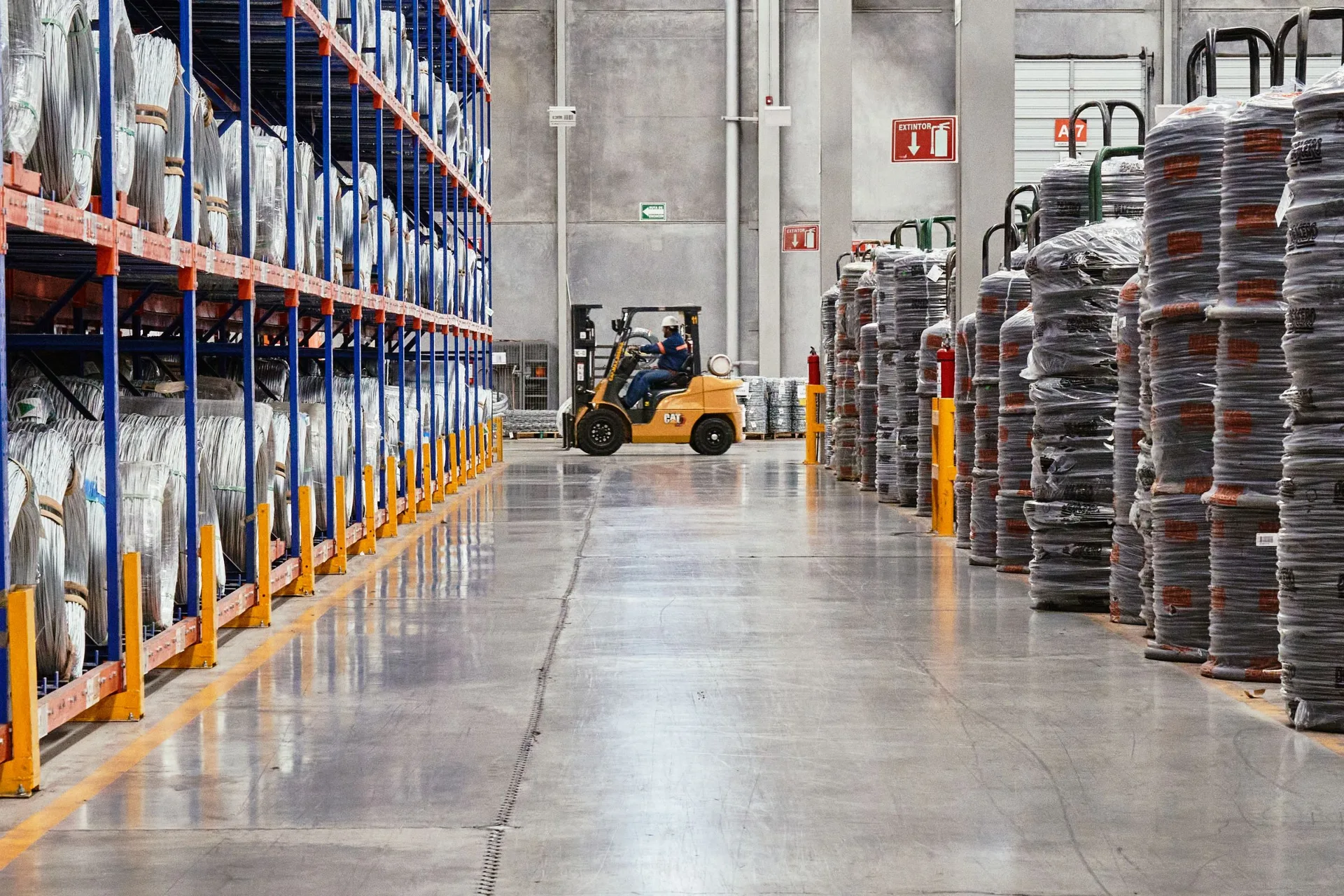
Ramps are where loaded forklifts brake and turn, and in rainy weather water is carried inside on the vehicles. A coarsely textured coating both gives the tires grip and withstands the friction. At cold storage entrances, condensation forms in the strip where warm and cold air meet and the floor is constantly damp; these strips are textured as well. Inside the cold rooms, application can be carried out while the room is out of service and after the floor has been brought to a suitable temperature. The details are on the warehouse epoxy flooring page.
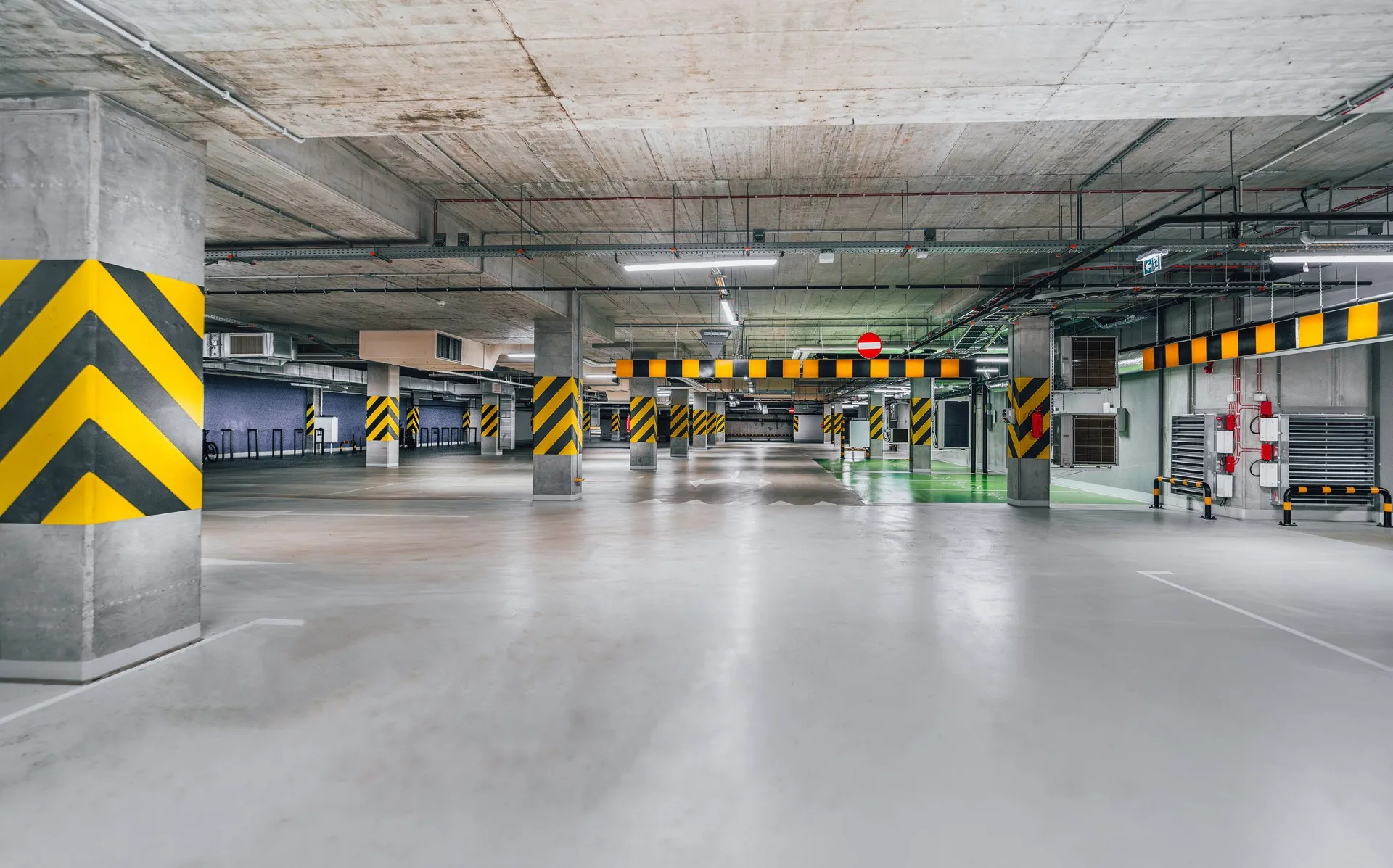
In indoor parking garages, the ramps between levels, the entrances and exits and the turning points are where wet tires slip the most. On ramps a coarse quartz-broadcast texture is used, and on the parking decks an orange-peel texture or a paint system. A textured surface also reduces the squeal of turning tires. In vehicle wash bays the floor is constantly under water and shampoo; here a medium-to-coarse texture and the correct fall are considered together. See parking garage epoxy flooring.
The back-of-house areas of hotels, which the guest never sees, work wet: the kitchen, the dishwashing area, the laundry and the service corridors that connect them. In the laundry, soapy water makes the floor slippery; in the service corridors, food and linen trolleys are constantly on the move. So that the trolleys can run easily, a fine texture is preferred in the corridors and a medium texture in the kitchen and dishwashing area. The details are on the hotel epoxy flooring page.
In the changing rooms of gyms, factories and schools, people walk on the floor in bare feet. A coarse texture is uncomfortable here; a fine texture both provides grip and is kind to the feet. The seamless surface eliminates the blackening and odor problems seen in tile joints. In shower areas the fall is checked before application so that the water runs to the drain. See gym epoxy flooring.
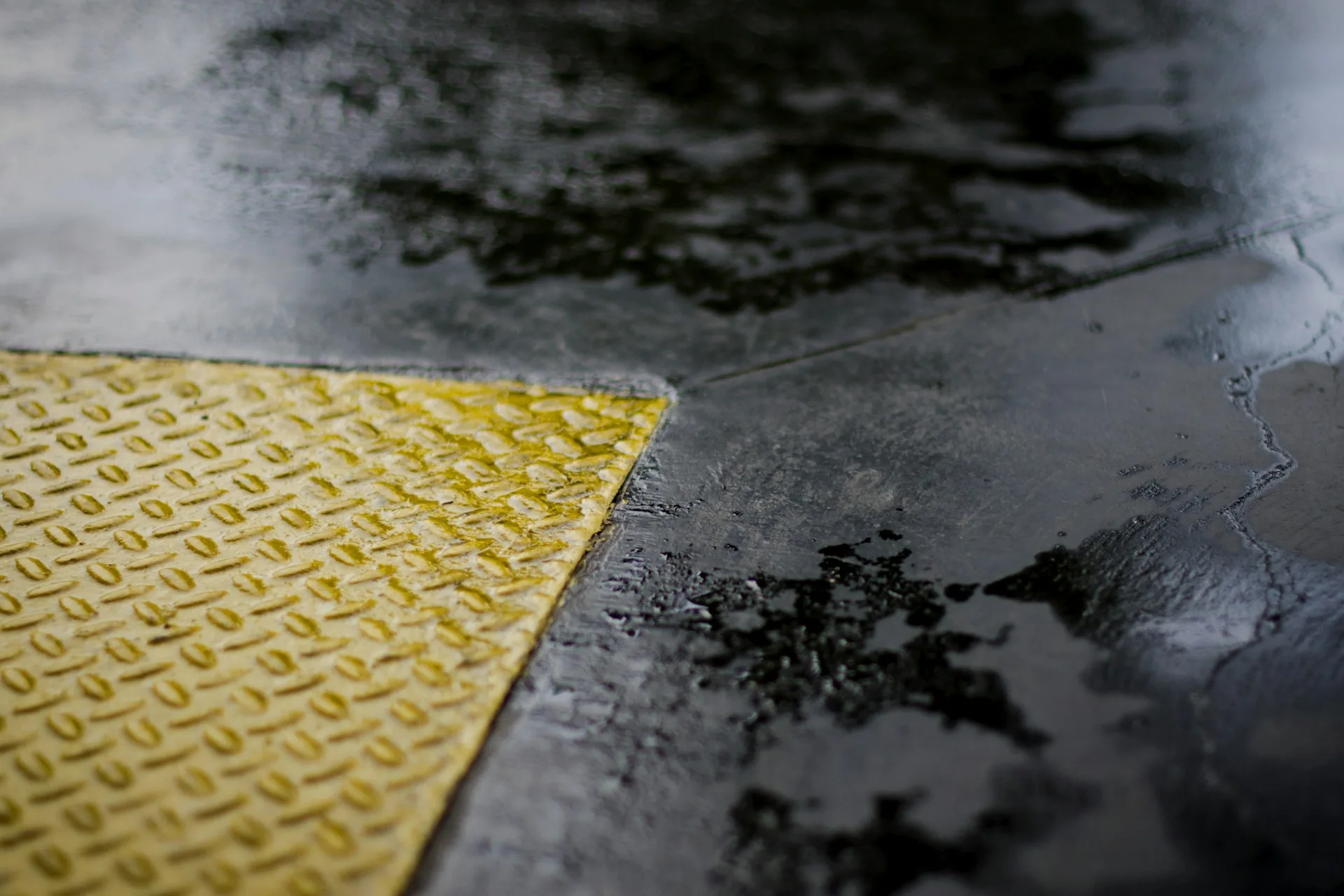
With the orange-peel texture there are no sand broadcasting and sweeping steps; in their place the thick epoxy coat is spread and worked with the texture roller. Drawing the roller always in the same direction and with even pressure ensures that the texture looks uniform.
In plants that work wet, the timing is planned separately. Before application, washing down of the section is stopped and the concrete is left to dry; the phases are sequenced according to the production schedule.
Textured epoxy is applied in the color chosen from the RAL chart; the natural color of the quartz stays beneath the topcoat. A textured surface looks matte by nature. In wet areas mid-tones are preferred: very light colors show dirt, and very dark colors show limescale and detergent residue.
Color is used functionally here too. The edges of ramps, walkways and hazardous zones can be set apart with a different color; the textured floor of the wet section can be distinguished from the dry section by color.
The thickness of the quartz-broadcast system is 3–5 mm. The lower limit is chosen for medium traffic and pedestrian use, the upper limit for sections that see forklifts and heavy impact. The orange-peel texture is a thinner coating and is intended for light to medium use.
Self-leveling is a smooth, glossy coating 2–3 mm thick; the textured system is rough and matte and 3–5 mm thick. Self-leveling is easier to clean and looks more elegant, but it can become slippery when wet. The textured system provides grip on wet and oily floors and is more resistant to impact, while cleaning it takes more effort. Self-leveling is chosen for dry production, warehouse and sales areas; the textured system for wet areas, ramps and sections exposed to heavy impact.
Epoxy paint is a thin film of 0.3–0.5 mm. A slight roughness can be given to it by adding fine sand to the final coat; but because the film is thin, this roughness wears away quickly under heavy traffic and does not provide enough grip in areas that are constantly wet. In the textured system the grains are embedded in a thick body, and the texture is retained for far longer. In a low-traffic area that gets wet only occasionally, paint may be sufficient; on ramps and in wet production the thick system is required.
Anti-static epoxy is a smooth coating that conducts static electricity to ground through copper tape and conductive layers; its purpose is not slip resistance but the control of static charge. The textured system, for its part, has no electrical function. The two needs arise in different sections of the same plant: the electronics assembly area is made anti-static, while the wash-down section and the ramp of the same plant are textured.
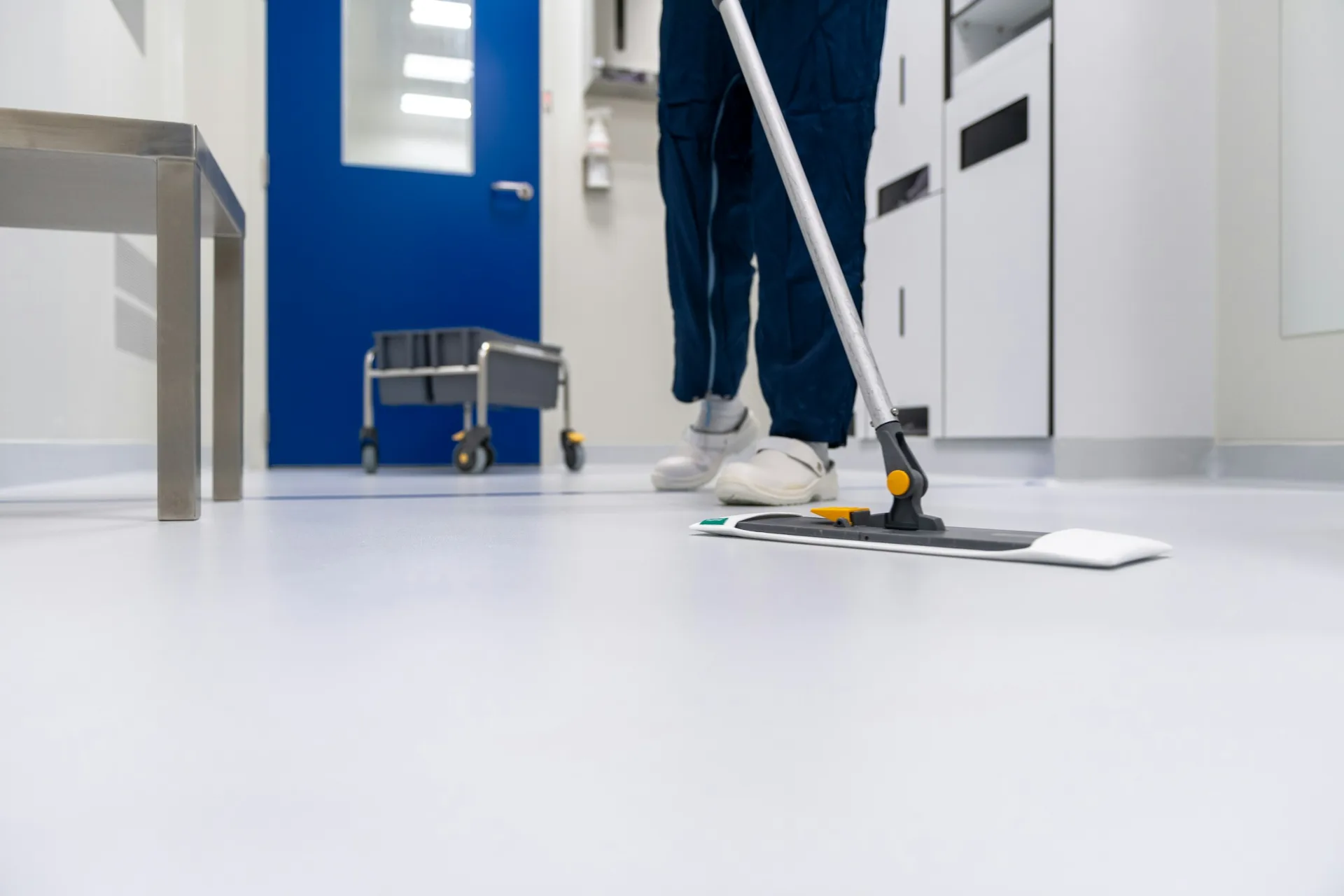
A textured surface is not cleaned with a mop; the mop snags on the grains, sheds lint and pushes the dirt into the texture. The right tool is a scrubber-dryer fitted with brushes or a stiff long-handled brush. The brush lifts the dirt out from between the grains, and suction or a squeegee collects the dirty water.
In oily areas a degreasing detergent is used and is allowed to stand on the surface for a few minutes. The floor must then be rinsed with plenty of water; a film of detergent left on the surface forms a slippery layer when it dries and reduces the effect of the texture. Pressure washing is possible; continuous washing with very hot water and steam, however, wears the coating.
With this system regular cleaning is a matter not only of hygiene but of safety. When the spaces between the grains fill with oil and dirt, the surface flattens out and the grip drops. On a floor whose slip resistance is thought to have declined, the first thing to do is a deep clean; in most cases the texture is still there and has simply become clogged.
Along heavy traffic lanes and in the braking zones of ramps, the grains may wear down over the years. In that case the floor is not ripped out: the surface is sanded, sand is broadcast again and a topcoat is applied. The renewal can also be carried out only in the strip that has worn.
For a daily, weekly and yearly maintenance schedule and cleaning tips for each type of stain, see our guide Epoxy Floor Maintenance and Cleaning.
In most plants the textured system is applied not to the whole area but to the sections that really do get wet and to the ramps. Using a smooth coating or paint in the dry sections both balances the budget and makes cleaning easier.
We explain what to look for when comparing quotes in our article 7 Factors That Determine the Cost of Epoxy Flooring per m².
For textured anti-slip epoxy flooring you can fill in the quotation form. The following information makes it easier for us to identify the right system:
After the site survey and measurement, we finalize the coarseness of the texture together with you on a small trial area. You can compare the other systems on the services page, and for your questions you can reach us through the contact page.
| Thickness | 3–5 mm (quartz-broadcast system) |
|---|---|
| System | Primer + quartz-broadcast epoxy coat + topcoat |
| Texture | Fine, medium or coarse (depending on sand grain size and amount of topcoat) |
| Alternative method | Orange-peel texture with a texture roller |
| Open to foot traffic | Approx. 24 hours |
| Full cure | 7 days (20 °C) |
| Suitable traffic | Medium to heavy |
Yes, the two describe the same system; "anti-slip" refers to the function of the coating, while "textured" describes the feel of its surface. What they have in common is that the surface is not left smooth but is made rough with quartz sand or a texture roller. Even so, not every textured floor provides the same level of grip: a finely textured corridor and a coarsely textured ramp go by the same name but behave very differently. For this reason, simply saying "anti-slip epoxy" when asking for a quotation is not enough; you also need to state what wets the floor and how it is cleaned.
A textured epoxy floor is cleaned with a brush; a scrubber-dryer fitted with brushes or a stiff long-handled brush is used. A mop is unsuitable because it snags on the grains, sheds lint and pushes the dirt into the texture. In oily areas a degreasing detergent is left to work for a few minutes, scrubbed in and rinsed off with plenty of water. If rinsing is skipped, the dried film of detergent makes the surface slippery. Finely textured surfaces take less effort in daily cleaning; on coarsely textured surfaces pressure washing makes the job easier.
A textured floor that is properly looked after keeps its texture for a long time; slipperiness mostly results not from wear but from the spaces between the grains filling up with oil and dirt. On such a floor, a deep clean with a degreaser and brushes largely restores the grip. Real wear may be seen over the years along lanes with heavy wheeled traffic and in the braking zones of ramps. In that case the floor is not ripped out; the surface is sanded, quartz is broadcast again and a topcoat is applied. The renewal can be limited to the worn zone alone.
Yes, a smooth epoxy floor that is sound and well bonded to the concrete can be given a texture without being removed. The surface is sanded to roughen it, a new epoxy coat is applied, quartz sand is broadcast while it is wet and it is locked in with a topcoat. This raises the level of the floor slightly; the clearance under doors, the thresholds and the drain levels should be checked beforehand. If the existing coating has blistered or is peeling, those areas are first opened up down to the concrete. In most cases it is enough to texture only the strip that gets wet, or the ramp, and not the whole area.
On ramps a medium or coarse texture obtained by the quartz broadcast method is used; the steeper the slope and the wetter the ramp, the coarser the texture is made. On vehicle and forklift ramps a coarse texture is used so that the tires do not spin; on gently sloping ramps used only by pedestrians a medium texture is usually enough. The orange-peel texture produced with a texture roller does not provide enough grip for wet ramps. The top and bottom of a ramp are the places that wear the most because of braking and turning; in these zones the thickness is kept at the upper limit.
The quartz-broadcast system is chosen for areas that are constantly wet, oily or sloping; the orange-peel texture for areas that are mainly dry and get wet only occasionally. The quartz-broadcast system is 3–5 mm thick, gives the highest grip and impact resistance, and needs a brush for cleaning. The orange-peel texture is thinner, contains no sharp grains, is easier to clean and is quieter under wheels; on the other hand, its slip resistance is limited. The first is the typical choice for kitchens, wash areas and ramps, the second for parking decks and pedestrian corridors.
Every stage of an epoxy flooring installation from survey to handover: surface preparation, repairs, primer, coating layer and curing.
We explain in plain language what epoxy flooring is, which types are available and why it is chosen for different kinds of spaces.
Why do epoxy flooring prices vary so much from one project to the next? We explain the items that make up the price so that you can compare quotes…
The two coatings look alike but behave differently. We compare epoxy and polyurethane in terms of hardness, flexibility, and UV and heat resistance.
When can you walk on an epoxy floor, and when can it take loads? Curing times by temperature and the conditions that affect the process.
An epoxy floor needs little maintenance, but it should not be neglected. Everything you need to know, from daily cleaning and stain removal to the…
Our priority is
Tell us about your project, and together we will pin down the right epoxy system for your floor, the application time and our quote.
Get a Quote5-year workmanship and 10-year product warranty. We respond to all requests within 24 hours. We work in all 81 provinces.