
Epoxy Floor Maintenance and Cleaning: How to Extend Its Service Life
An epoxy floor needs little maintenance, but it should not be neglected. Everything you need to know, from daily cleaning and stain removal to the…
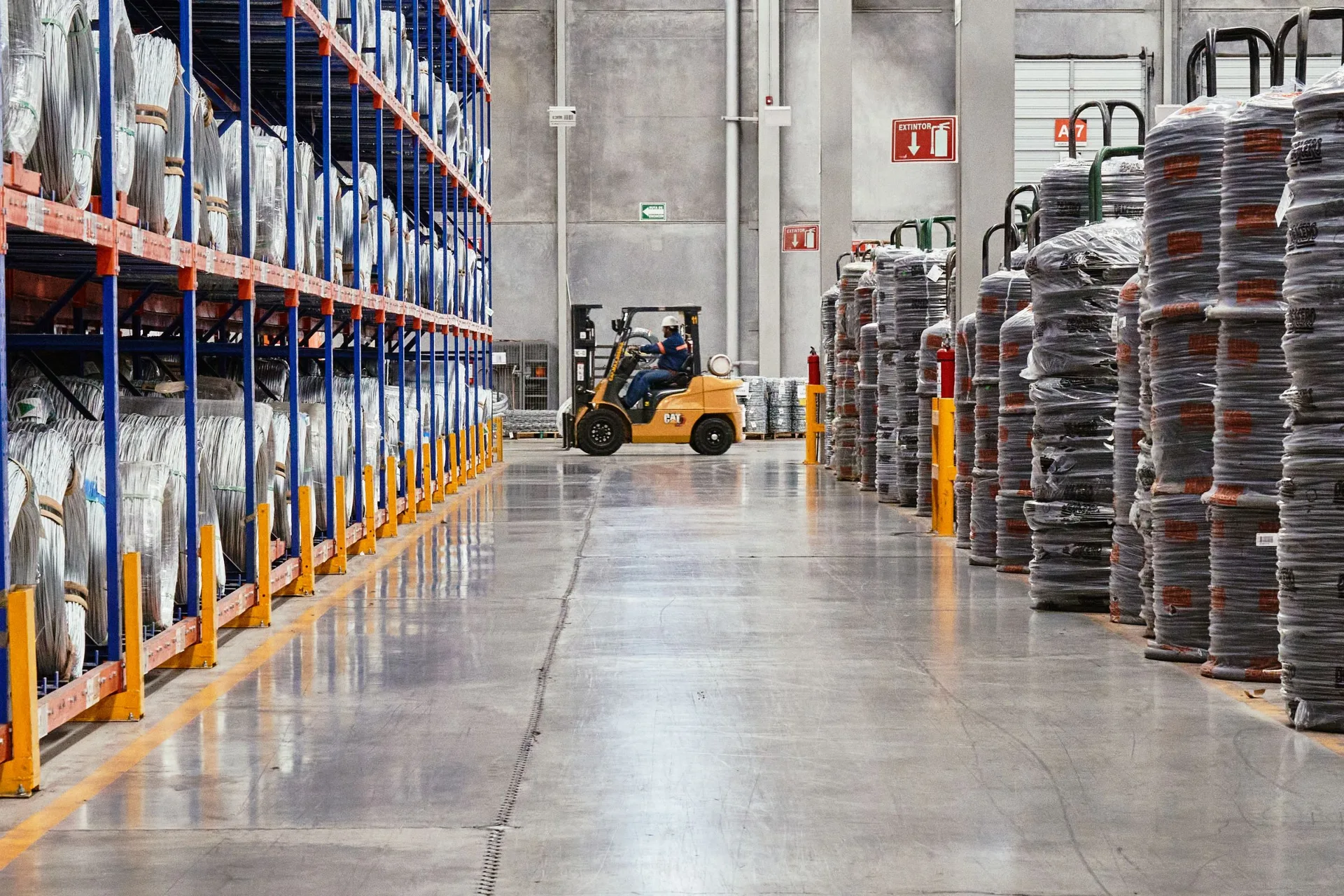
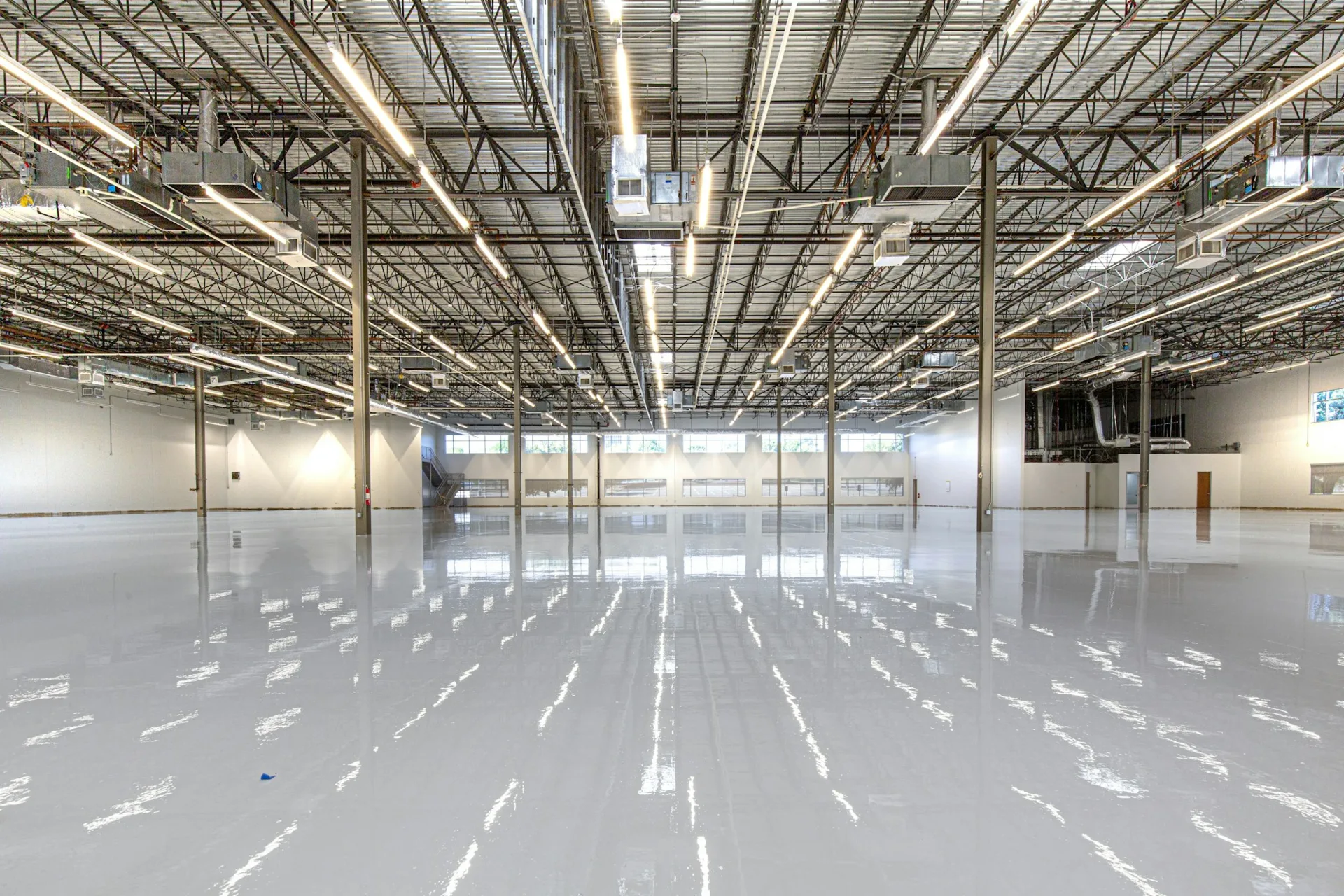
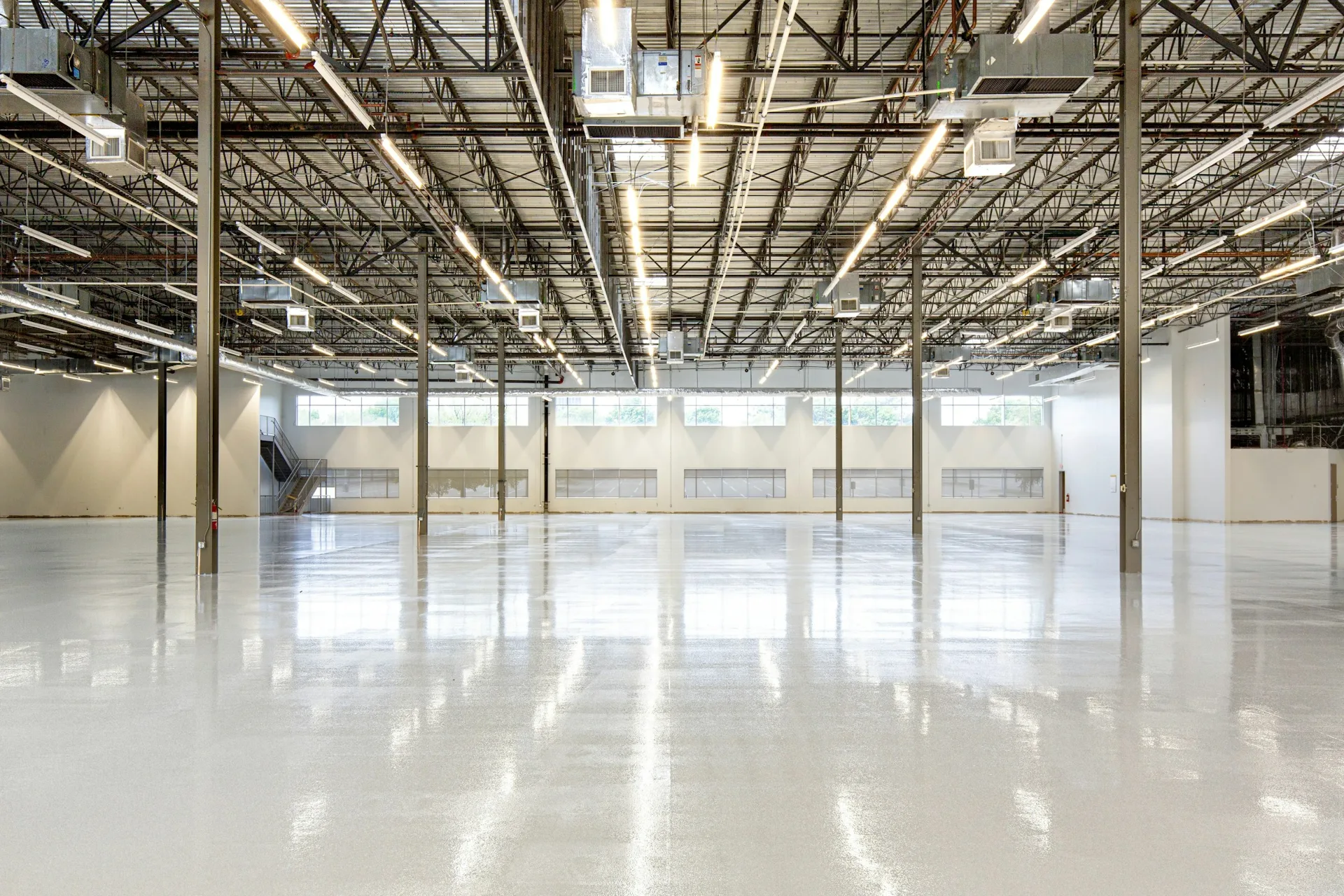
Dust-free epoxy floors for racking aisles, storage areas and loading docks that stand up to forklift wheels. Epoxy paint, self-leveling and textured systems are combined according to the traffic map.
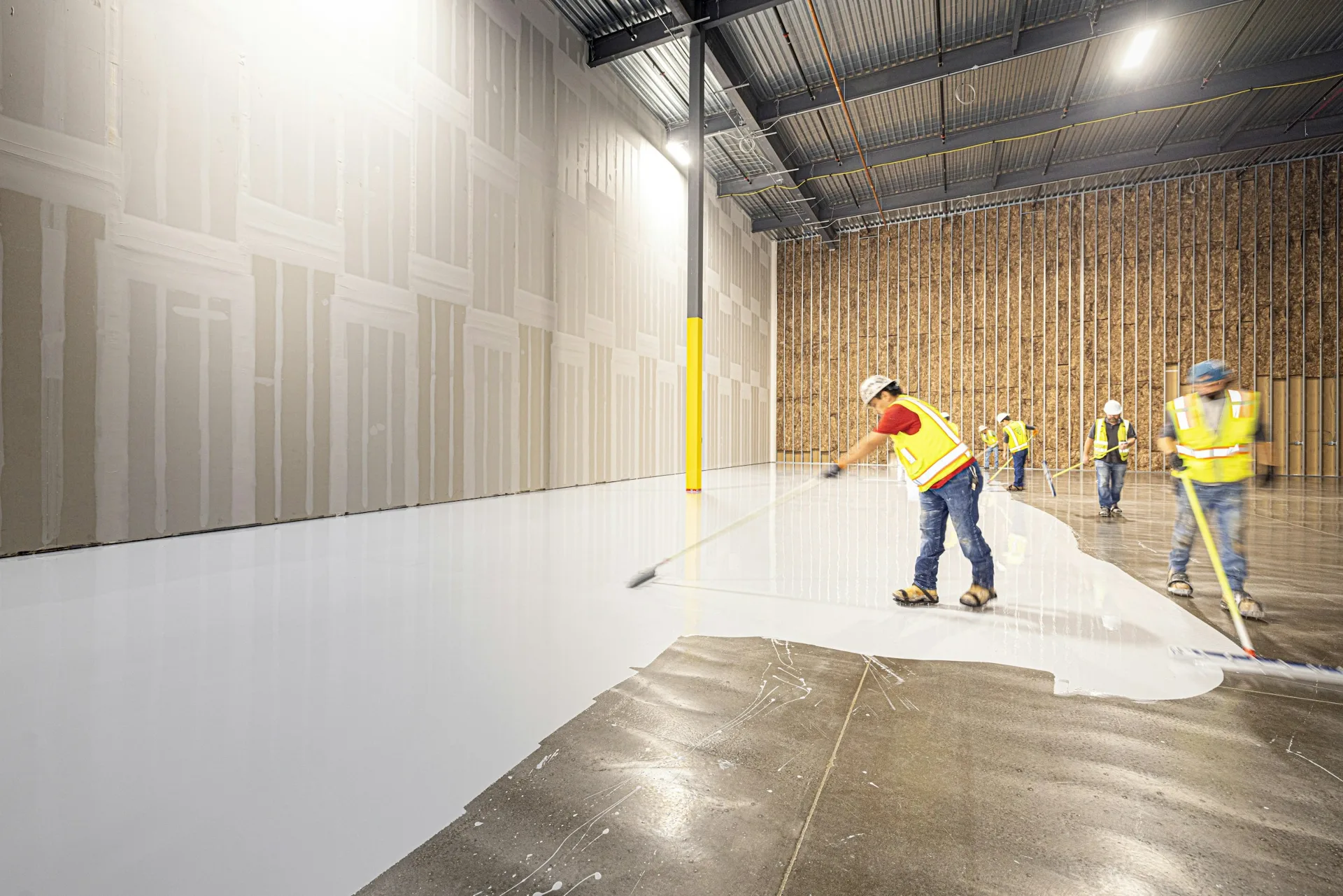
Warehouse epoxy flooring stops concrete dusting, which keeps products and racking clean, and it withstands the wear of forklift and pallet jack wheels. A 0.3–0.5 mm epoxy floor paint is chosen for large storage areas, a 2–3 mm self-leveling epoxy for main aisles and a 3–5 mm textured epoxy for loading docks. The floor can be walked on after about 24 hours and opens to forklift traffic in 3–7 days; the work can be done while the warehouse is operating, by emptying the racking blocks in turn.
Warehouse epoxy flooring protects both the product and the equipment by creating a surface that stops concrete dusting and stands up to wheel abrasion. In a warehouse the floor works differently from the floor of a production area: no machines stand on it, but the wheels never stop. Forklifts, reach trucks and pallet jacks move along the same aisles and around the same turning points all day long.
Uncoated concrete breaks down in two ways under this traffic. First its surface starts to dust; fine cement dust settles on cartons, stretch film, racking and barcode labels. Dusty products go out to the customer, and scanners and sensors need cleaning more often. Then the joint edges break up. A small, hard wheel strikes the broken joint on every pass; this impact shortens the life of wheels and bearings and jolts the load being carried.
An epoxy coating seals the surface, cutting off the dust at its source, and forms a wear layer on top of the concrete that stands up to wheels. A light-colored floor also helps the lighting: between high racks, light struggles to reach the floor, and a light gray surface reflects that light back so that the aisles look brighter.
Another factor that sets a warehouse apart from a factory is scale. Because the area is very large, coating all of it to the same thickness is unnecessary most of the time. The right approach is to separate the lanes where traffic is concentrated from the areas where pallets wait for weeks, and to distribute the budget accordingly.
As the type of warehouse changes, so does what is expected of the floor. Below, we describe seven different types of warehouse and area, how each of them stresses the floor and which system provides the solution.
In logistics warehouses, especially in facilities that serve more than one customer, the layout changes often: an area used for block stacking today may become a racked section a few months from now. The floor has to keep pace with this flexibility. The main aisles and the areas in front of the doors are under constant traffic; in the storage areas, on the other hand, pallets stay in place for a long time and traffic is sparse.
For this reason a mixed solution is applied in most logistics warehouses: 2–3 mm self-leveling epoxy on the main flow lanes and epoxy floor paint in the large storage areas. The lines are planned with this variability in mind as well; the main aisle boundaries that are meant to be permanent are laid together with the coating, whereas the storage islands that change from customer to customer are marked in a way that allows them to be renewed later. In block stacking areas a large load bears on the feet of the bottom pallet; this is why the stacking height is always asked about during the survey.
In e-commerce warehouses the traffic is people more than forklifts. Picking staff walk between the shelves all day, and picking carts with small wheels and roll cages are constantly on the move. A small, hard wheel feels every irregularity and joint in the floor; a flat, seamless surface both makes the cart easier to push and reduces noise. Dust, meanwhile, travels from these warehouses directly to the end customer.
At packing stations, along conveyor lines and in sortation zones, self-leveling epoxy is preferred. In the shelved picking areas beneath a mezzanine, epoxy paint is sufficient most of the time. In the returns processing section, spills of liquids and cosmetic products from opened cartons are a frequent sight; a closed surface allows them to be wiped away without leaving a trace. If transport robots that navigate by reading markers on the floor are in use, the flatness and gloss level of the surface are chosen according to the recommendation of the robot manufacturer; a very glossy surface can mislead some sensors. Because the warehouse cannot be shut down during peak sales periods, the application schedule is built around the quiet months.
In cold storage warehouses, what tires the floor is the difference in temperature. Every time the door opens, the humid air that enters condenses on the cold floor; a thin layer of water or ice forms in the entrance zone, creating a slip risk for forklifts and pedestrians alike. This is why textured epoxy is applied in anterooms, in front of the doors and at the dock connections. Inside the chamber, a seamless, easy-to-clean surface suited to pallet traffic is sufficient.
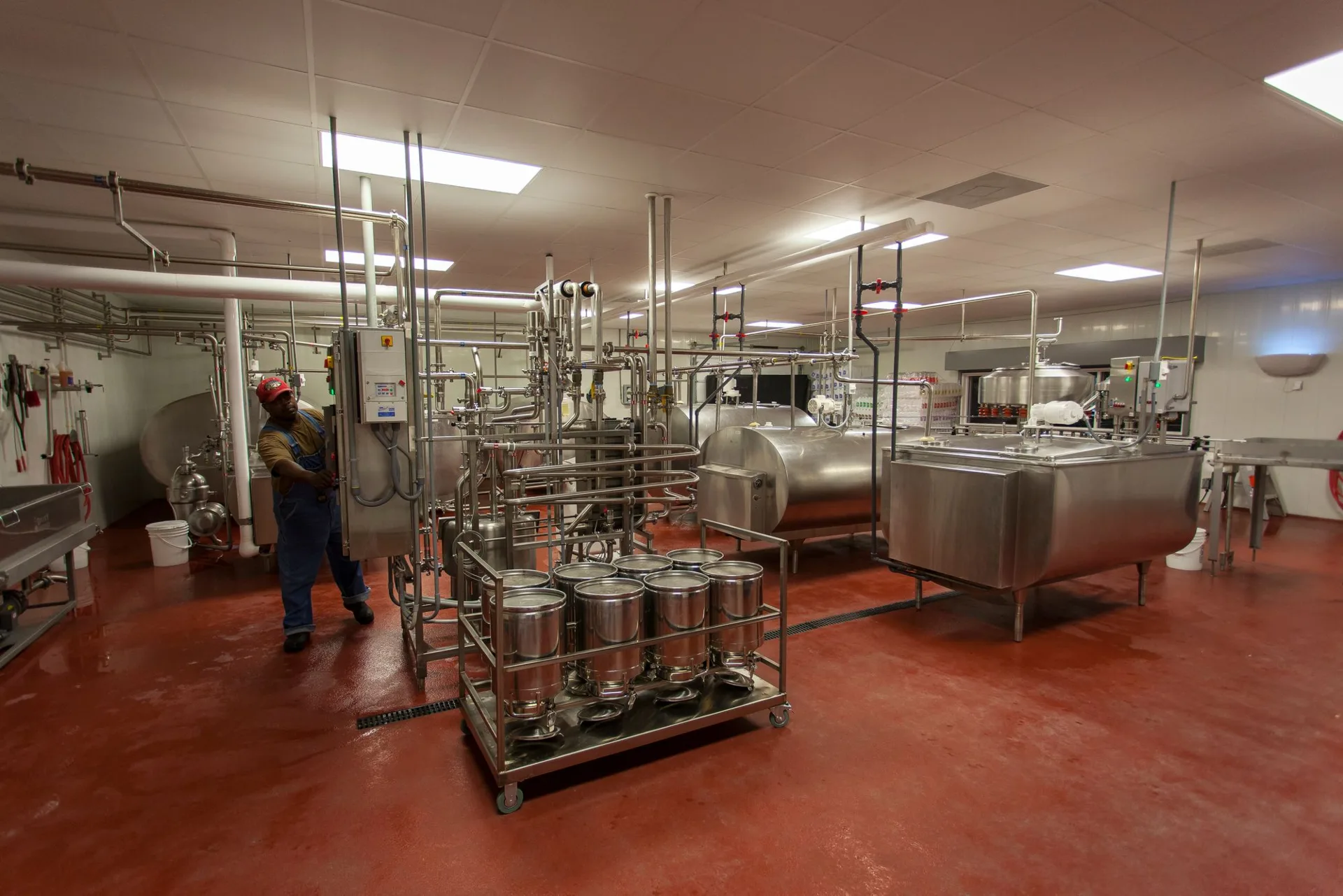
As far as application is concerned, one fact has to be stated at the outset: epoxy does not cure at low temperatures. The coating is applied after the chamber has been taken out of service, the floor temperature has been raised to a level at which the resin can work and the moisture on the surface has been dried out completely. Cooling the chamber down again must also be gradual; a sudden drop in temperature puts the concrete and the coating under stress. We have described what is expected of the floor in chambers where food is stored on our food and beverage plants page.
In bonded warehouses goods wait under customs supervision, sometimes for months. This places two particular requirements on the floor. The first is order and traceability: so that different consignments do not get mixed up, the zones are separated by clear boundaries, and bay numbers and counting aisles are marked on the floor. Epoxy lines and colored zoning make the work noticeably easier during stock counts and inspections.
The second is the variety of loads: one day it is consumer goods in cartons, the next day machinery crates, coiled sheet steel or drums. In sections where heavy loads and point loads are kept, a thick quartz-filled system is chosen; in sections holding light cartoned goods, epoxy paint. It is important that the floor stays impermeable and dry beneath pallets that remain in the same place for a long time. For sections set aside for flammable or hazardous substances, the criteria on our chemical and energy facilities page apply.
In distribution centers goods do not wait, they flow. A pallet that comes in through the receiving door in the morning leaves through the shipping door on the opposite side within a few hours. In this cross-docking arrangement almost the whole of the floor is a traffic area; pallet jacks pick up speed on long, straight runs, and in front of the doors there is constant turning and braking.
For this reason the share of thin-film paint is kept small in distribution centers; the main flow lanes and the areas in front of the doors are coated with a self-leveling or quartz-filled system. Because the number of lanes and zones is large, the color code here is a management tool: every shipping lane, every staging bay and every pedestrian crossing is marked with a different color or number. Since the legs of conveyor and sortation lines are fixed to the floor, the coating is completed before the equipment is installed wherever possible. The short gaps between shifts are put to use for phasing.
Loading and unloading areas are the most battered zone of a warehouse. Every time a pallet jack goes in and out of a truck body over the dock leveler, an impact occurs at the threshold, and a loaded pallet is sometimes set down hard on the floor. Because the doors are open, rainwater, mud and, in winter, road salt are carried inside, and the floor gets wet.
In these zones a textured epoxy 3–5 mm thick is used: its quartz filler stands up to impact and hard wheels, and its texture reduces slipping on a wet floor. The junction between the metal frame of the dock leveler and the concrete has to be detailed with care; if the coating is finished by feathering it out thin here, that will be the first place to break away. For open yards that lie outside the door threshold and are exposed directly to sun and rain, epoxy is not the right choice; we say so clearly at the quotation stage. In semi-open sections under a canopy, a polyurethane topcoat can be used against yellowing.
In warehouses with racking systems, floor flatness is a safety matter. When a stacker truck working in a narrow aisle lifts a load many meters into the air, a slope of a few millimeters in the floor turns into a far larger deviation at the top of the mast. An honest distinction has to be made here: self-leveling epoxy evens out minor undulations and surface irregularities, but it does not correct the overall difference in level of the concrete. If there is a marked slope or settlement along the aisle, this has to be dealt with separately before the coating.
The best result is obtained when the coating is applied before the racking is erected; the rack feet sit on the finished floor and no seam is left around the anchors. If the racking is already in place, the aisles are coated with a self-leveling system, the areas under the racks are made dust-free with paint and the surrounds of the feet are worked one by one. Since the joints that fall in the middle of an aisle lie on the line the wheels follow, their edge repair and filling are carried out with particular care.
In warehouses the system is selected not for the area as a whole but according to the traffic map. The place where wheels turn the most and the place where a pallet waits for weeks do not need the same coating.
It is quite normal for two or three systems to be used together in the same warehouse. The transitions between systems are made to coincide with a joint or an aisle line wherever possible; in this way the appearance is tidy and no lip that would jolt the wheels is left between the different thicknesses.
The choice of color is part of the function too. Light gray shades increase brightness and show little dust; very light colors make tire marks stand out, while very dark colors make dust stand out. For walkways and for zones that must not be entered, vivid colors that contrast with the floor are chosen.
On a warehouse floor the job is won or lost before the coating, in the joints and on the surface of the concrete. The process moves forward in the following steps.
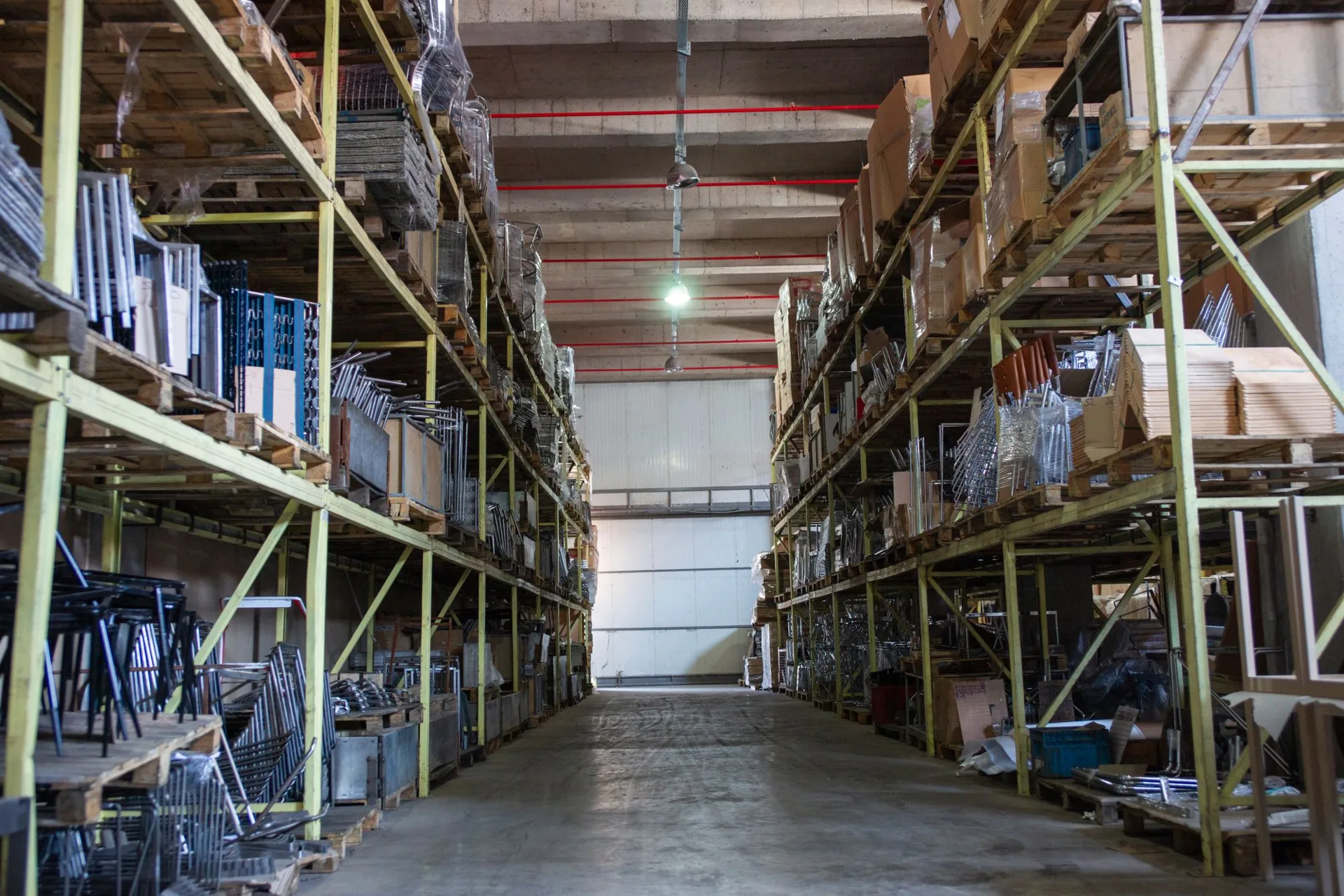
Emptying a full warehouse is not possible most of the time, so the work moves forward block by block. A stock relocation plan is prepared together with the warehouse management: which racking block or which storage island will be emptied in which week, and where the goods will be moved temporarily, is decided in advance.
The schedule is built around the rhythm of shipments. The busy days of the week, month-end closings and peak sales periods are left out; the main aisles can be worked on at night or over the weekend, and the storage areas during the day. In aisles with a single way in and out, the coating can be applied in two stages at half width, but because the seam will be visible this method is chosen only when it is unavoidable.
Most warehouses are not heated, and in the winter months this has a direct effect on the duration. When the floor temperature drops below 10 °C, curing slows down markedly. In addition, the humid air that comes in through open doors in the morning hours can condense on the cold floor, and no application is made on a surface with condensation. The hours of application are therefore chosen with an eye on the weather.
The materials used are solvent-free and their smell is slight. Even so, products that can absorb odors, for example unpackaged textiles or exposed food, are moved away from the section being worked on or are covered.
The most common defect on a warehouse floor is not wear but tire marks. Forklift tires leave black marks when braking and turning, and on a light-colored floor these catch the eye at once. Regular machine scrubbing prevents the marks from setting in. Using non-marking tires reduces the problem to a large extent.
In daily maintenance the main job is sweeping. Pieces of broken pallet, nails, scraps of stretch film and sand scratch the coating under the wheels. Pushing a pallet along the floor and the fork tip scraping the surface are also the most common causes of scratches; operator training on this point is the cheapest maintenance that can be carried out.
The joint fillers should be inspected at regular intervals. If a filler that has come loose or has hardened and cracked is not renewed, the joint edge starts to break up again. In busy aisles a surface that has gone dull is refreshed by sanding it and applying a new coat; the lines are repainted at the same time. Liquid spilled at charging stations should be washed away with plenty of water without delay. In the winter months the salty water carried to the dock apron on truck tires leaves a white film when it dries; the areas in front of the doors need to be washed more often during this period.
For a daily, weekly and yearly maintenance schedule and cleaning tips for each type of stain, see our guide Epoxy Floor Maintenance and Cleaning.
We do not publish prices on this page, because in warehouses the cost is determined less by the square meters than by the system with which those square meters will be coated. The main items that affect a quotation are these:
We explain what to look for when comparing quotes in our article 7 Factors That Determine the Cost of Epoxy Flooring per m².
To receive a recommendation and a price for your warehouse, you can use the quotation form. It speeds up the assessment if you state the total area, the racking layout plan if there is one, the vehicles in use and their wheel types, the highest stacking level, whether the warehouse is heated, and which sections can be emptied and when.
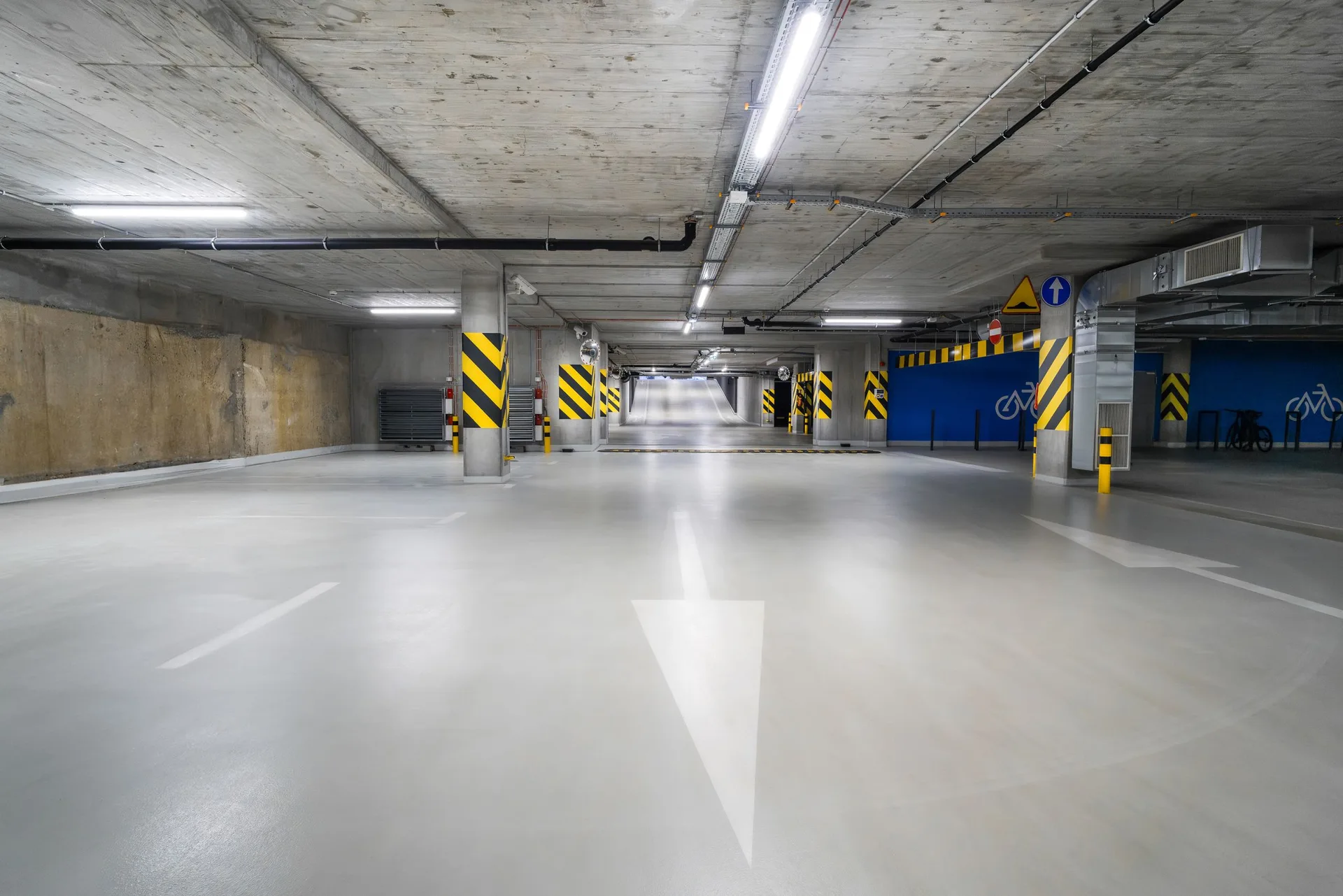
With this information we prepare our written quote, which includes the distribution of systems by zone and the phasing schedule; once the quote is approved, a site survey and measurement follow. If the warehouse is part of a production plant, you can look at our factories and industrial facilities page, and for enclosed areas that vehicles drive into, at our parking garages and vehicle areas page. Examples of completed jobs are on the projects page.
| Recommended system | Epoxy paint in storage areas (0.3–0.5 mm), self-leveling in aisles (2–3 mm), textured epoxy on docks (3–5 mm) |
|---|---|
| Surface preparation | Shot blasting; diamond grinding along edges and at the base of racking |
| Joint treatment | Broken edges are repaired, movement joints are sealed with a flexible filler |
| Concrete condition | At least 28 days old, moisture content below 4% |
| Open to foot traffic | Approx. 24 hours |
| Open to forklift traffic | 3–7 days, depending on system and temperature |
| Full cure | 7 days (20 °C) |
In most warehouses the two are used together: epoxy paint in the storage areas where pallets wait, and self-leveling epoxy in the aisles that forklifts pass along constantly. Paint is 0.3–0.5 mm thick, prevents dusting and is economical over large areas; under heavy wheel traffic, however, it wears quickly. At 2–3 mm thick, a self-leveling system carries that traffic. Which zone goes to which system is decided according to the traffic map drawn up during the site survey.
Yes, the coating can be applied without dismantling the racking; however, the pallets in the section to be worked on have to be moved somewhere else temporarily. The work is phased by racking block or by aisle; once each phase has cured, the goods are put back and the next block is emptied. The surrounds of the rack feet are worked one by one. This method takes longer than working in an empty warehouse, which is why it is important to draw up the stock relocation plan in advance together with the warehouse management.
It corrects it in part: self-leveling epoxy evens out minor undulations, irregularities and surface defects, but it does not remove the overall slope or settlement of the concrete. The coating is only a few millimeters thick. If the floor has to meet a particular flatness for high-lift stacker trucks working in narrow aisles, this need is established by measurement and is dealt with before the coating as a separate leveling job.
It can, but not while the chamber is cold. Because epoxy does not cure at low temperatures, the refrigeration is switched off, the floor temperature is raised to a level at which the resin can work and the moisture on the surface is dried out completely; the coating is applied after that. Once curing is complete, the chamber is cooled down again gradually. Because the floor gets wet from condensation in front of the doors and in the anterooms, a textured system with an anti-slip finish is preferred in these zones.
Forklift traffic can start within 3–7 days, depending on the system used and the floor temperature. The coating becomes walkable after about 24 hours and reaches its full strength in 7 days at 20 °C. In unheated warehouses these times become longer in the winter months. Putting the pallets back is tied to the same schedule as forklift traffic; a loaded pallet placed too early can leave a footprint in a coating that has not yet hardened.
Yes, tire marks mostly come off with a scrubber-dryer and a suitable detergent; the mark does not penetrate the coating, it stays on the surface. Marks that are not cleaned for a long time, however, build up on top of one another and set in, and cleaning becomes harder. This is why machine scrubbing of busy aisles at regular intervals is recommended. Using non-marking tires on the forklifts and cutting down on sudden braking and turning on the spot ease the problem at its source.
An epoxy floor needs little maintenance, but it should not be neglected. Everything you need to know, from daily cleaning and stain removal to the…
We explain in plain language what epoxy flooring is, which types are available and why it is chosen for different kinds of spaces.
Every stage of an epoxy flooring installation from survey to handover: surface preparation, repairs, primer, coating layer and curing.
The two coatings look alike but behave differently. We compare epoxy and polyurethane in terms of hardness, flexibility, and UV and heat resistance.
Our priority is
Tell us about your project, and together we will pin down the right epoxy system for your floor, the application time and our quote.
Get a Quote5-year workmanship and 10-year product warranty. We respond to all requests within 24 hours. We work in all 81 provinces.