
Epoxy vs. Polyurethane Flooring: The Right Choice for Your Floor
The two coatings look alike but behave differently. We compare epoxy and polyurethane in terms of hardness, flexibility, and UV and heat resistance.
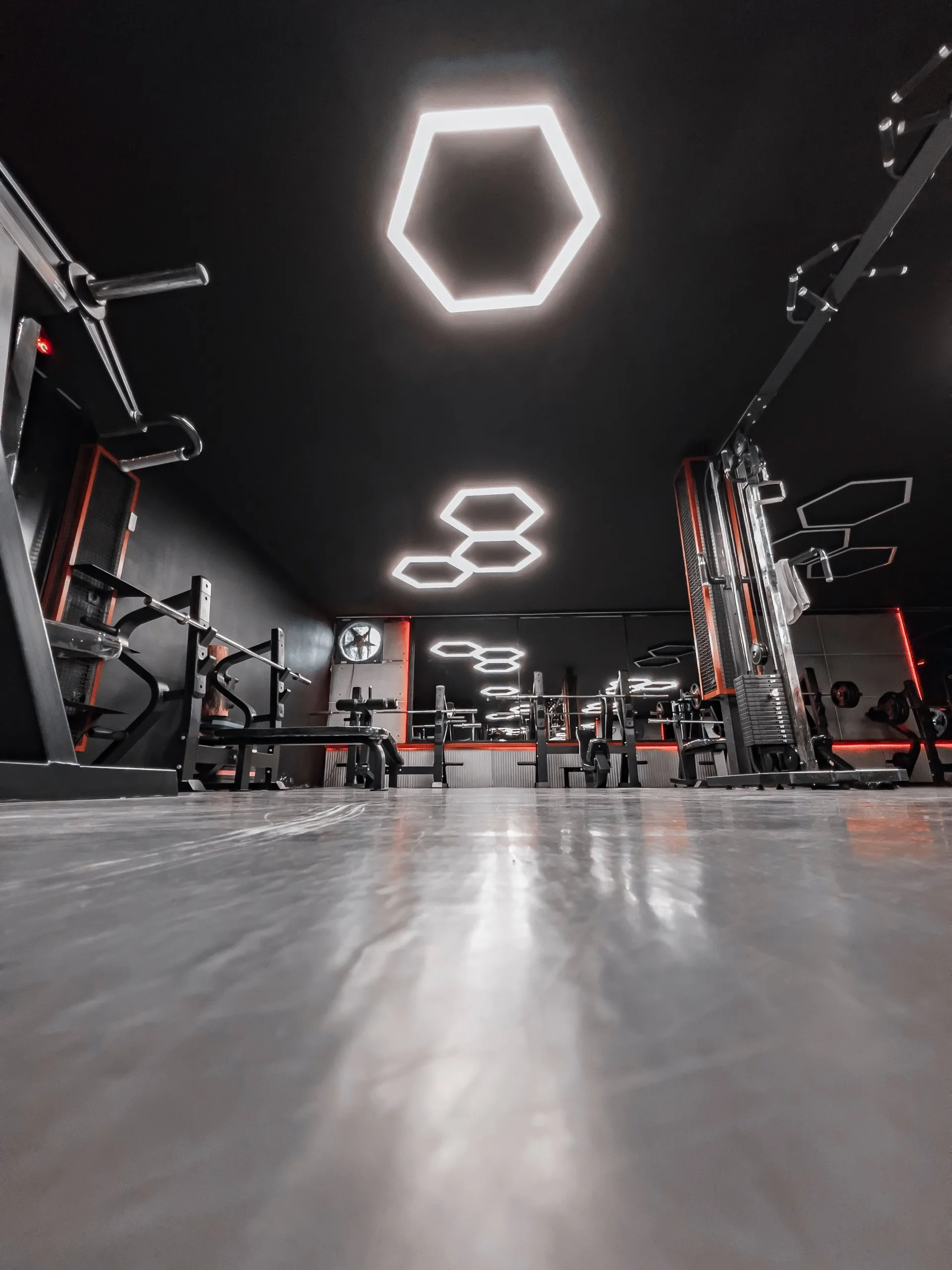
Seamless, easy-to-clean epoxy floors for the corridors, machine areas, locker rooms and social sections of fitness centers, sports complexes, bowling alleys, play areas and hobby workshops.
Gym epoxy flooring provides a seamless, dust-free and easy-to-clean surface in entrances, corridors, cardio and machine areas, locker rooms and social sections. Epoxy is a hard floor: on playing courts where shock absorption is required, in the fall zones of children's play structures and in areas where weights are dropped, it is no substitute for resilient sports flooring. Around those sections and in the service areas, however, it is the right choice.
Gym epoxy flooring is a practical solution for businesses whose floors have to cope with sweat, water, spilled drinks and foot traffic that goes on all day. In a sports and leisure facility the floor is mopped several times a day, comes into contact with disinfectant and is walked on in wet shoes and shower sandals. What is expected of the floor is that it does not absorb liquids, does not hold odors, cleans quickly and adds to the look of the facility.
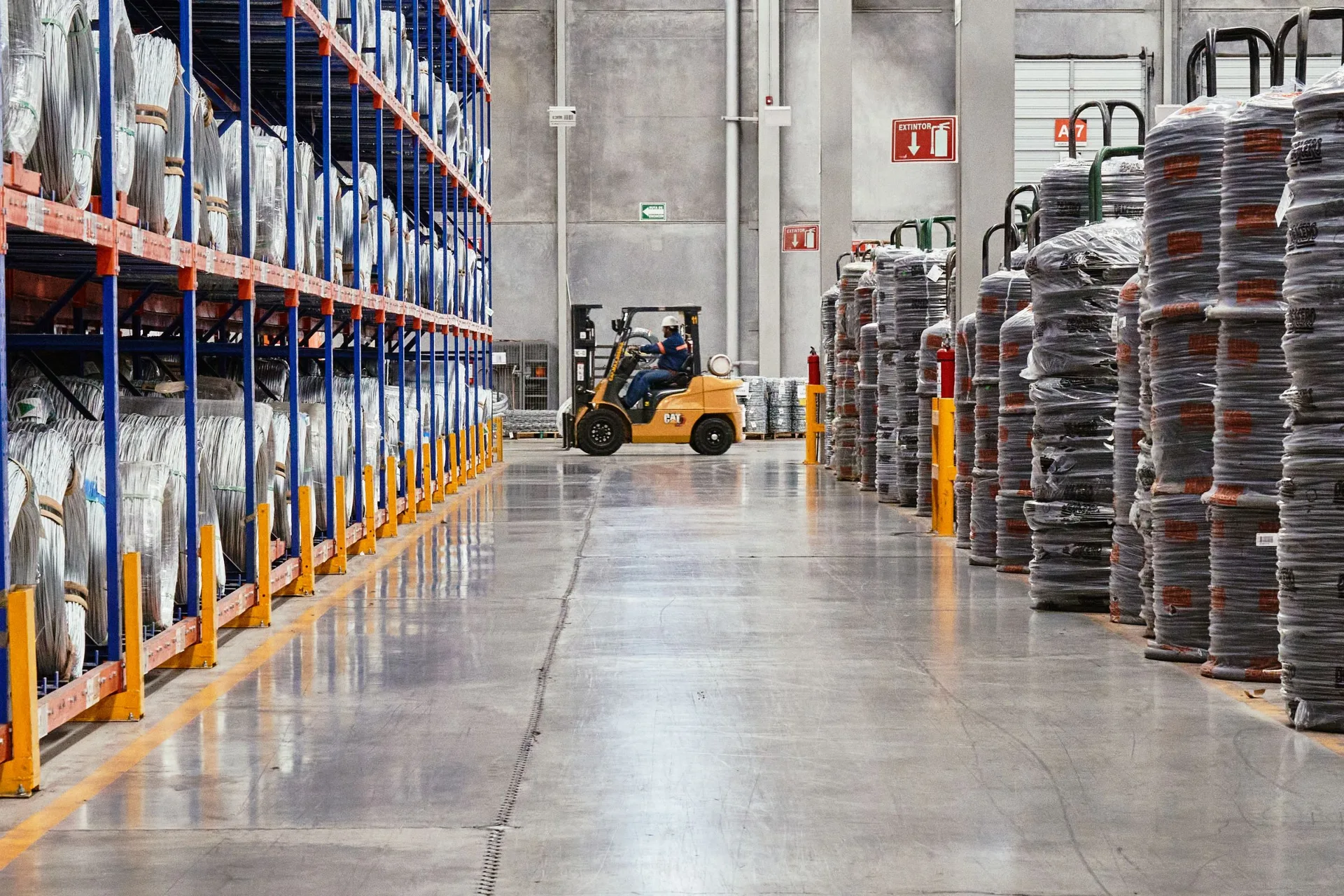
Conventional floor coverings meet this expectation only in part. Carpet absorbs sweat and odor, and on tiled floors the joints darken over time and become the place where dirt collects in locker rooms. Bare concrete, meanwhile, gives off dust; this dust is carried to the moving parts of treadmills and bikes, to the ventilation filters and onto members' shoes.
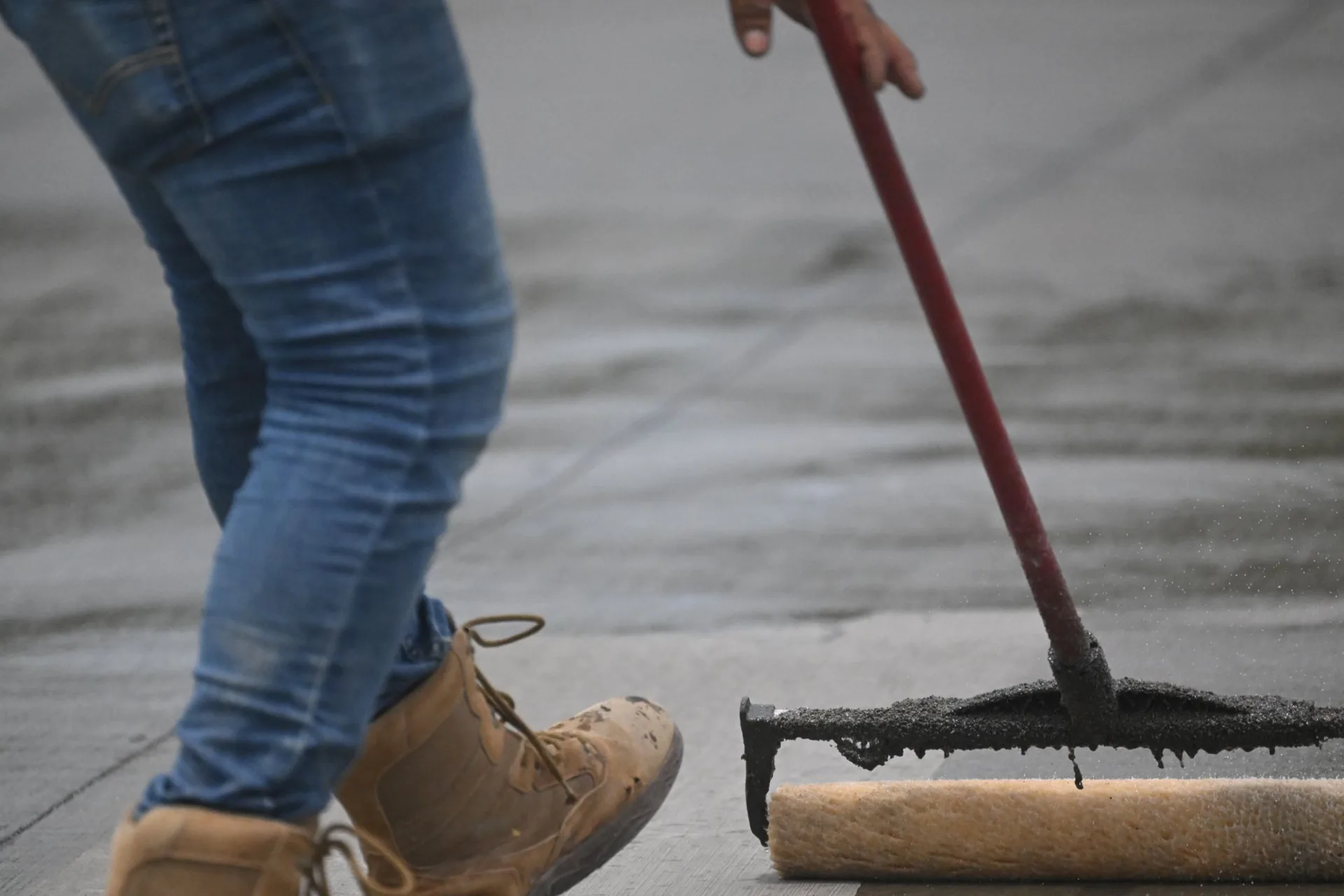
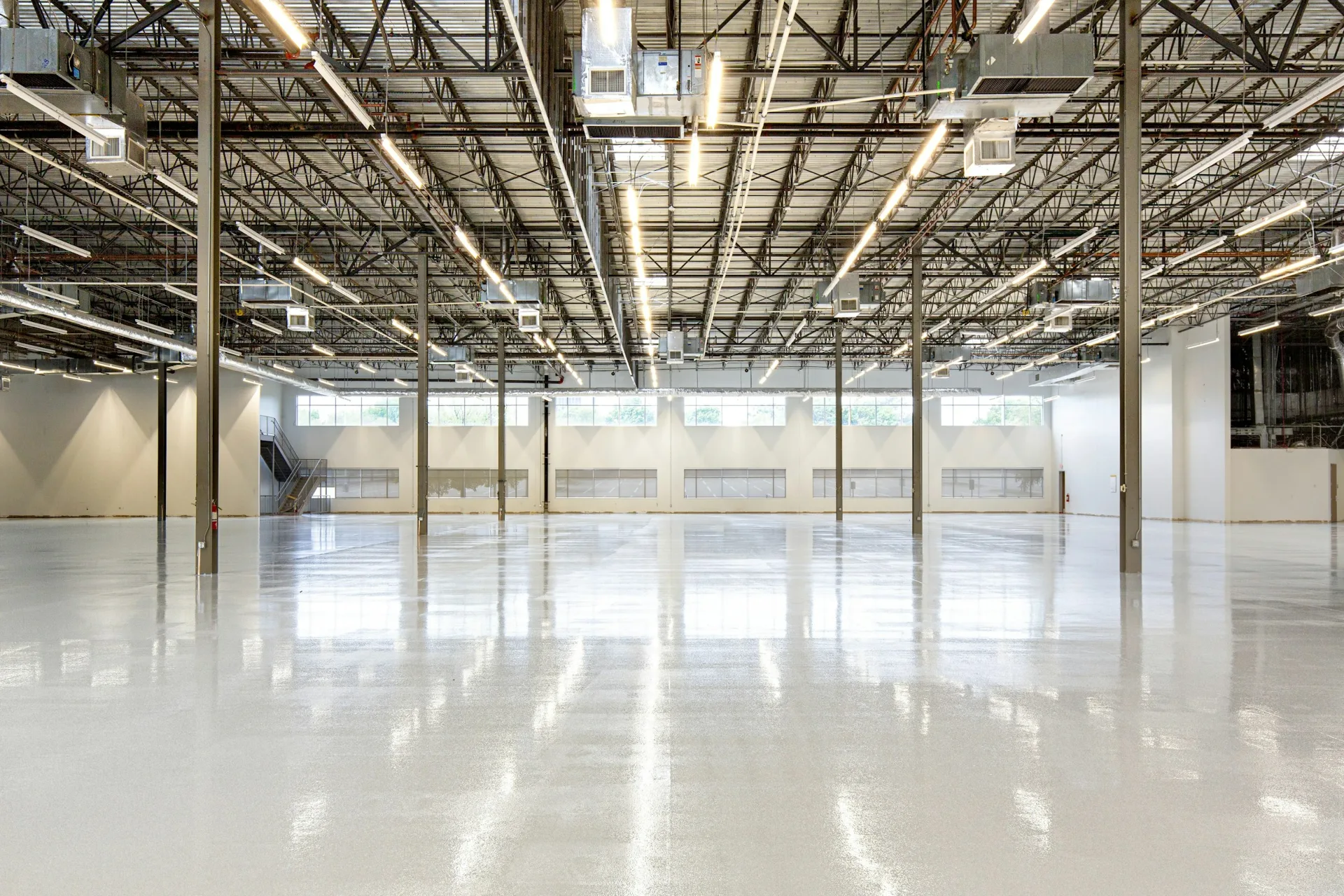
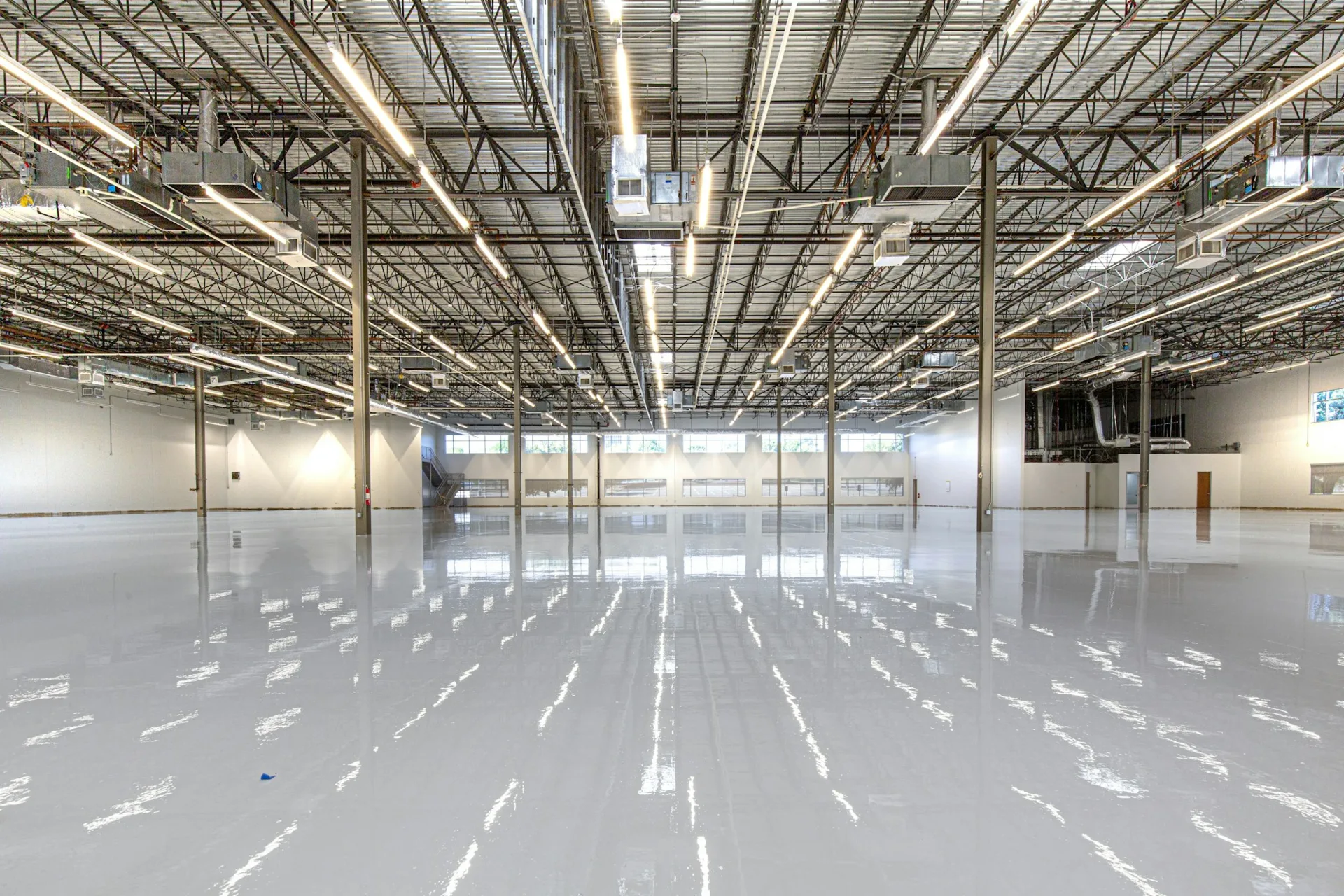
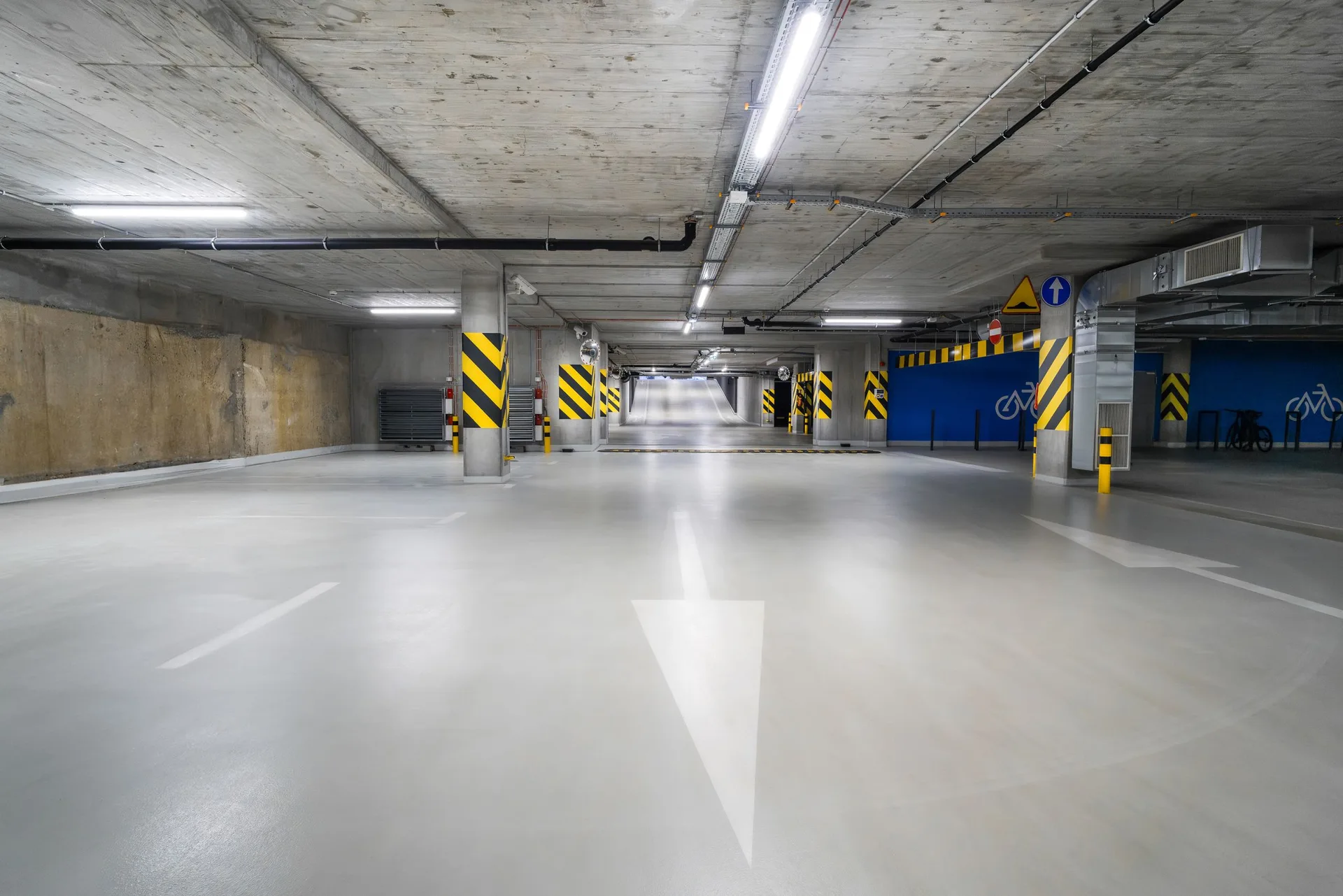
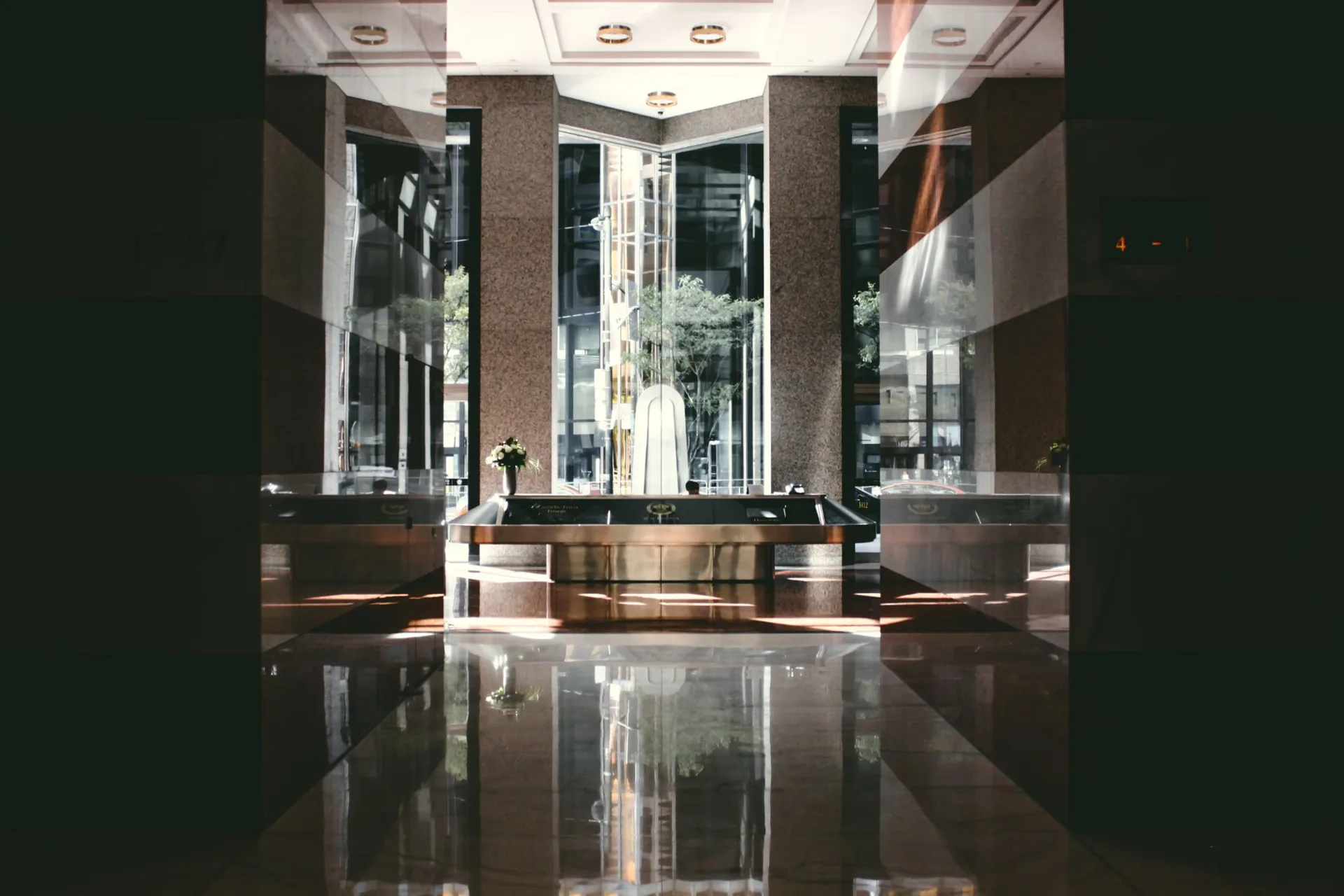
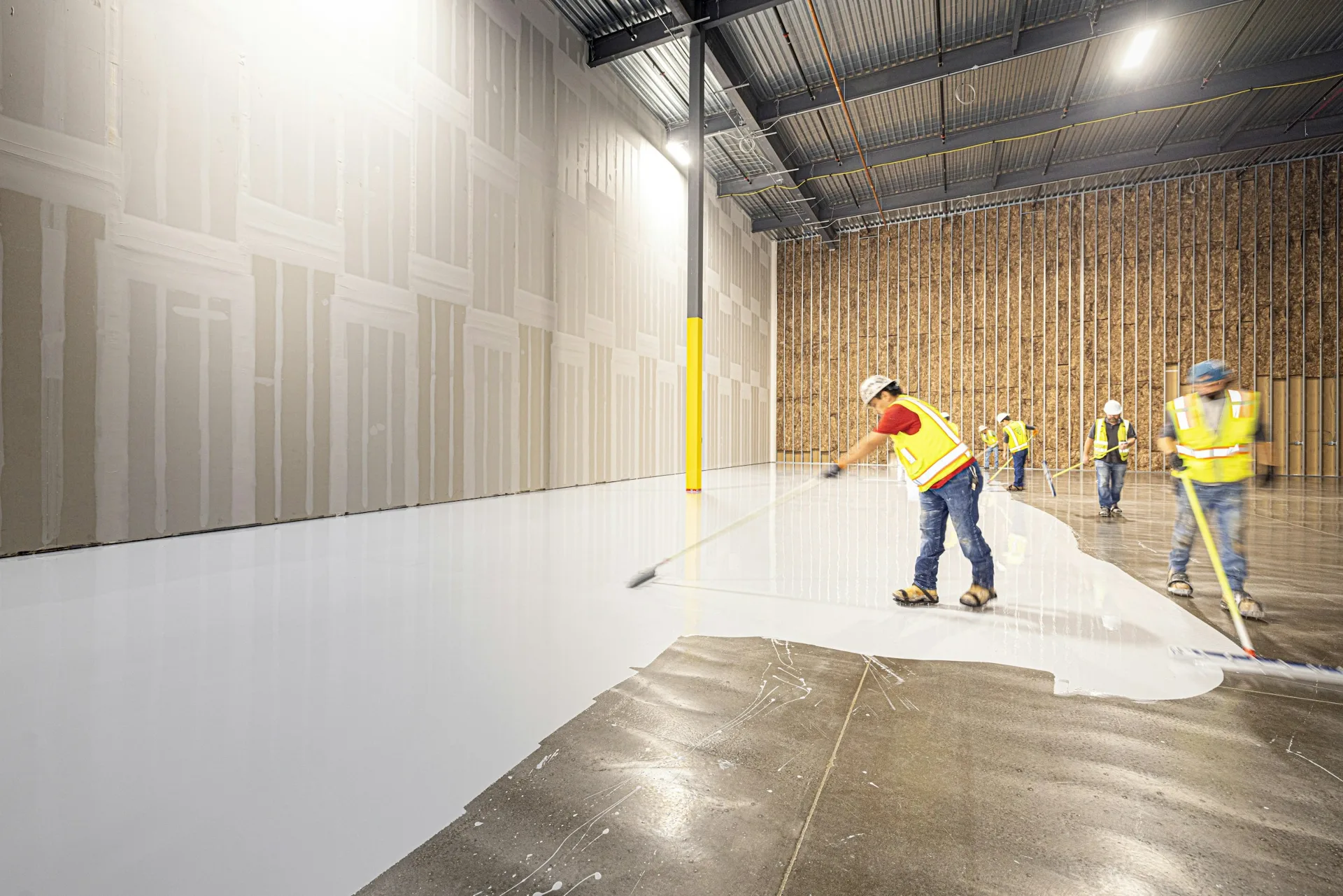
An epoxy coating forms a seamless, impermeable surface over the concrete. Spilled water or drinks stay on the surface and are picked up with a mop; there are no joints for dirt to hide in. The color range is wide: training zones can be separated by different colors, and running lanes, distance markers and the facility's logo can be worked into the floor. In social sections such as the entrance and the café, decorative options strengthen the identity of the space.
That said, epoxy is not suitable for every sports floor. Below we first draw this line plainly, and then describe one by one the sections where epoxy really does its job.
Epoxy is a thin coating that carries the hardness of the concrete; it does not absorb impact and it does not flex. In activities that involve running, jumping and falling, the floor needs to absorb part of the impact; otherwise the load goes straight to the athlete's joints. This is why resilient sports floors are used for indoor sports such as basketball, volleyball and handball. These floors provide shock absorption, ball bounce and the balance between slide and grip underfoot all together; epoxy is no substitute for them.
The same is true of play structures where children may fall. Under climbing frames and slides, an impact-absorbing surface suited to the fall height is essential. On weightlifting platforms where weights are dropped to the floor, the falling load can break both the coating and the concrete beneath it; here a thick rubber floor is needed.
We do not install resilient sports floors. On each project we work out with you which section will be epoxy and which will be sports flooring, and we state plainly in the quote the places where epoxy is not the right choice.
In sports and leisure facilities, the share that falls to epoxy is usually larger than people assume, because a significant part of a facility's square meters is not playing court but circulation, service and social space.
In fitness centers, what stresses the floor most is sweat, the point loads of heavy machines and foot traffic that goes on all day. The cardio section, with its treadmills, bikes and rowing machines, and the area of fixed-station machines are well suited to self-leveling epoxy: the surface is even, the machines sit steadily and the floor beneath them is easy to wipe. The same system also performs well in spinning studios; sweat dripping from the bikes is easily picked up from the seamless surface.
In the free-weight area the situation is different. The zones where dumbbells and barbells are dropped to the floor should be covered with rubber tiles, and epoxy should be used around this zone and on the walkways. An even, dust-free epoxy surface is also a good subfloor for the rubber tiles laid over it. The lanes set aside for sled pushing and pulling are not done on epoxy either; artificial turf or rubber is laid on these lanes. To reduce slipperiness from sweat, we recommend a matte or satin finish rather than gloss. Training zones, functional training lanes and wayfinding lines can be worked into the floor in different colors.
In indoor sports complexes, the floor of the playing court is a specialist job in its own right and is built with resilient sports flooring. Epoxy goes to work in the large service areas around the court: the foyer and the area in front of the ticket office, the corridors under the bleachers, the athletes' and referees' locker rooms, equipment storerooms, the medical room, the cafeteria and the plant rooms. On match days a large number of people pass through these areas in a short time; the floor has to resist wear and be quick to clean after the event.
Self-leveling epoxy is chosen for corridors and the foyer, and textured epoxy for locker rooms and the areas outside the showers. In equipment storerooms and plant rooms, epoxy floor paint is sufficient to prevent dusting. On stair landings, a fine-grained texture reduces slipping when crowds are leaving. Team colors, direction arrows and gate numbers can be worked into the floor to make spectator wayfinding easier. In complexes with a swimming pool, the pool surround is constantly wet and is used barefoot; we assess this section separately, and if we do not consider it suitable, we say so plainly. For school sports halls, see our educational institutions page.
In bowling alleys, the lanes and the approach area, where the player slides before the release, are surfaces whose slide characteristics have been specially tuned; epoxy is not applied to these sections. The place for epoxy is the sections outside the approach area: the circulation area behind the seating and scoring tables, the area in front of the shoe rental counter, the café and bar, the corridors, the restrooms and the machine room behind the lanes.
In the circulation area, a floor that does not dust also affects the game; dust or moisture carried onto the approach area spoils the player's slide. On a seamless epoxy surface, a spilled drink is wiped up straight away. In alleys that operate under dim light, metallic epoxy gives a look of depth under colored lighting. In the machine room, on the other hand, single-color self-leveling epoxy or epoxy floor paint is used against oil drips. Keeping the floor dry and clean in the section where shoes are changed also keeps the players' special-soled shoes from getting dirty. Leaving a carpet or rubber mat around the ball racks against the impact of a dropped ball protects the coating.
In indoor children's play areas, trampoline parks and game arcades, the floor should be thought of as two separate zones. In zones that carry a risk of falling, such as around climbing units, slides and trampolines, impact-absorbing flooring is used; epoxy on its own is not the right choice in these zones. The walkways, the café section where parents sit, the birthday party rooms, the entrance, the coat check and the restrooms, along with the areas where arcade machines are lined up, are suitable for epoxy.
In these spaces children mostly go around in socks, and a smooth, glossy surface is slippery in socks. That is why we recommend a matte finish or a light, fine-grained texture. Spilled fruit juice, cake frosting and crayon marks come off the seamless surface easily. Vivid colors, roadways worked into the floor and game lines make the space more appealing to children. Outdoor playgrounds are not suitable for epoxy, because they are exposed to sun and rain. For entertainment areas inside shopping malls, our retail and commercial spaces page is also a useful guide.
In the hobby workshops found in the community facilities of municipalities, clubs and residential complexes, the floor gets dirty in different ways depending on the work being done. In a ceramics workshop it is clay and water, in a woodworking shop sawdust, glue and varnish, and in a painting studio drips of paint. The shared expectation is that the floor can be swept and mopped easily at the end of the day.
In woodworking, model-making and painting workshops, self-leveling epoxy gives an even surface that is easy to clean; on a light-colored floor, a small part that falls to the ground is also easy to find. In workshops that see light use, epoxy floor paint is an economical option. In ceramics workshops where water is used, a fine-textured anti-slip system reduces slipping. Strong solvents such as thinner can spoil the gloss if they stay on the surface for a long time; when spilled, they should be wiped up without delay. If the places where heavy workbenches and vise stands will sit are decided beforehand, the floor is checked separately at those points. For hobby workshops in a home garage or basement, see our epoxy flooring for home garages and basements page.
Settling for a single system in a sports facility is usually not the right approach; each section differs in how wet it gets, the traffic it carries and the look that is expected of it.
In sports facilities the floor is also a wayfinding tool. Colors such as mid-tone gray and beige are the options that show dust and footprints the least; on very dark and very glossy surfaces, drops of sweat, dust and fine scratches stand out more. Using vivid colors at zone boundaries, in lanes and in the logo rather than across the whole floor both balances the look and makes maintenance easier.
Sprint lanes, an agility ladder, distance and start markers, the boundaries of the stretching zone and emergency exit directions can be applied over the coating. When lines and logos are left beneath the clear topcoat, they are not worn away by foot traffic. Placing the logo at the entrance slightly to one side, rather than right on the walking line, keeps it looking good for longer.
For a business that runs on memberships, closing the gym means lost income; that is why the schedule matters at least as much as the application. We usually divide the work into sections: first the cardio area, then the machine area, and the corridors last of all, for example. The equipment is moved to the section that is not being coated, and the gym carries on serving its members, even if in a reduced space. Locker rooms can be handled in two separate phases so that one part is always kept open.
Working only at night does not deliver the benefit people expect, because the floor needs about 24 hours before it can be walked on. Choosing the periods when the facility is quietest is more realistic: the summer months, public holidays or the days set aside for annual maintenance. For sports complexes the off-season is a suitable time, and for facilities attached to schools, the mid-year and summer breaks.
Self-leveling systems contain no solvent and their odor is limited; even so, the ventilation is kept running throughout curing and members are informed in advance. In wet rooms the floor has to dry out completely before application; the showers are closed for this period. In the winter months, keeping the heating on prevents curing from being delayed.
In sports facilities the essence of maintenance is frequency. Sweat is salty, and when it dries it leaves dull marks on the surface; this is why training areas should be cleaned every day with a damp mop and neutral detergent or with a floor scrubber. The lifting chalk used in the free-weight section is swept up first and then mopped; mopping it directly with a wet mop turns the powder into mud.
The textured surfaces in locker rooms are cleaned with a brush, not a mop; soap and limescale residue should be removed before it settles into the texture. Limescale removers are diluted at the ratio given on the label and used for a short time, and the surface is then rinsed. If you let us know which disinfectant you use, we will check its compatibility with the coating beforehand.
The machines should be lifted and the floor beneath them cleaned at regular intervals, and equipment that is being relocated should be carried rather than dragged. The fine scratches and dulling that develop over time in heavily used corridors are remedied by lightly sanding the surface and applying a fresh topcoat; the floor does not need to be redone in its entirety.
For a daily, weekly and yearly maintenance schedule and cleaning tips for each type of stain, see our guide Epoxy Floor Maintenance and Cleaning.
In sports and leisure facilities, the total cost is determined less by the square meters than by how many different sections the facility is made up of. The following items have an effect on the quote:
In our quote we show these items separately, section by section. That way you can decide, according to your budget, which section is done right away and which is left for a later phase.
We explain what to look for when comparing quotes in our article 7 Factors That Determine the Cost of Epoxy Flooring per m².
For us to prepare a recommendation that suits you, it is enough to state in the quote request form the type of facility, the sections to be coated and their approximate areas in square meters, what the existing floor is, whether there are any wet rooms and the dates on which the facility can be closed. An equipment layout plan and a few photos allow us to pin down which system we would recommend for which section in the very first conversation.
With this information we submit our written quote, which sets out the system and schedule section by section; once the quote is approved, we carry out a site survey and measurement. You can see the jobs we have completed on the projects page and the systems we install on the services page, and for questions you can write to us through the contact page.
| Recommended system | 2–3 mm self-leveling; 3–5 mm textured epoxy in wet sections |
|---|---|
| Social areas | Metallic or single-color decorative epoxy, polyurethane topcoat |
| Sections where epoxy is not suitable | Playing courts, fall zones, weight-drop platforms, bowling approach area |
| Surface preparation | Diamond grinding with dust extraction; crack and joint repair |
| Concrete condition | At least 28 days old, moisture content below 4% |
| Open to foot traffic | Approx. 24 hours |
| Placing heavy equipment | After full cure (7 days at 20 °C) |
It can, but leaving epoxy on its own in every section would not be right. The cardio and machine areas, the corridors, the entrance and the locker rooms are suitable for epoxy. In the free-weight zones where dumbbells and barbells are dropped to the floor, however, thick rubber tiles should be laid over the epoxy; a falling weight can break the hard coating and the concrete beneath it. In studios where group classes that involve jumping are held, a resilient floor that absorbs impact is also more suitable.
A smooth, glossy epoxy surface can become slippery when it gets wet, and drops of sweat have the same effect. That is why we use a matte or satin finish in training areas and a textured system with quartz sand in sections that are constantly wet, such as locker rooms and the areas outside showers. Fine-grained sand is chosen where people walk barefoot. Regular mopping matters too, because the salty film left by dried sweat reduces the grip of the surface.
No, we do not recommend epoxy for the playing courts of indoor sports. Epoxy is a hard coating; it does not absorb the impact generated in running and jumping, and the load goes straight to the athlete's joints. On these courts, resilient sports floors are used in which shock absorption, ball bounce and foot grip are tuned together. Epoxy is the right choice in sections of the same facility such as the corridors, foyer, locker rooms, storerooms and cafeteria.
Yes, locker rooms and the areas outside showers are among the places where textured epoxy does its job best. With no joints, there are no gaps left to hold dirt and mold, and the quartz sand texture reduces slipping with wet feet. Before application, the floor must be completely dry and the fall that takes water to the floor drain must be correct; epoxy follows the existing fall and does not get rid of ponding water by itself. Cleaning should be done with a brush, not a mop.
In most cases the gym does not need to close completely; the work is carried out by dividing it into sections. In each section, surface preparation and coating take a few days, and the floor can be walked on about 24 hours after the final coat. Light equipment is put back within a few days, and heavy machines such as treadmills after full cure, that is, at the end of seven days at 20 °C. The total duration is determined by the size of the area, the removal of the old floor covering and the number of phases.
Yes, an even, dust-free epoxy-coated surface is a good subfloor for rubber tiles. The tiles are laid in the free-weight zone and on weight-drop platforms, and the surrounding walkways are left as epoxy. The difference in level between the two floors is closed with ramped transition profiles. The rubber needs to be laid after the coating has fully cured, and it should be lifted and the floor beneath it cleaned at regular intervals; some rubbers can leave marks on a light-colored floor.
The two coatings look alike but behave differently. We compare epoxy and polyurethane in terms of hardness, flexibility, and UV and heat resistance.
We explain in plain language what epoxy flooring is, which types are available and why it is chosen for different kinds of spaces.
Why do epoxy flooring prices vary so much from one project to the next? We explain the items that make up the price so that you can compare quotes…
Every stage of an epoxy flooring installation from survey to handover: surface preparation, repairs, primer, coating layer and curing.
When can you walk on an epoxy floor, and when can it take loads? Curing times by temperature and the conditions that affect the process.
An epoxy floor needs little maintenance, but it should not be neglected. Everything you need to know, from daily cleaning and stain removal to the…
Our priority is
Tell us about your project, and together we will pin down the right epoxy system for your floor, the application time and our quote.
Get a Quote5-year workmanship and 10-year product warranty. We respond to all requests within 24 hours. We work in all 81 provinces.