
Epoxy Floor Maintenance and Cleaning: How to Extend Its Service Life
An epoxy floor needs little maintenance, but it should not be neglected. Everything you need to know, from daily cleaning and stain removal to the…
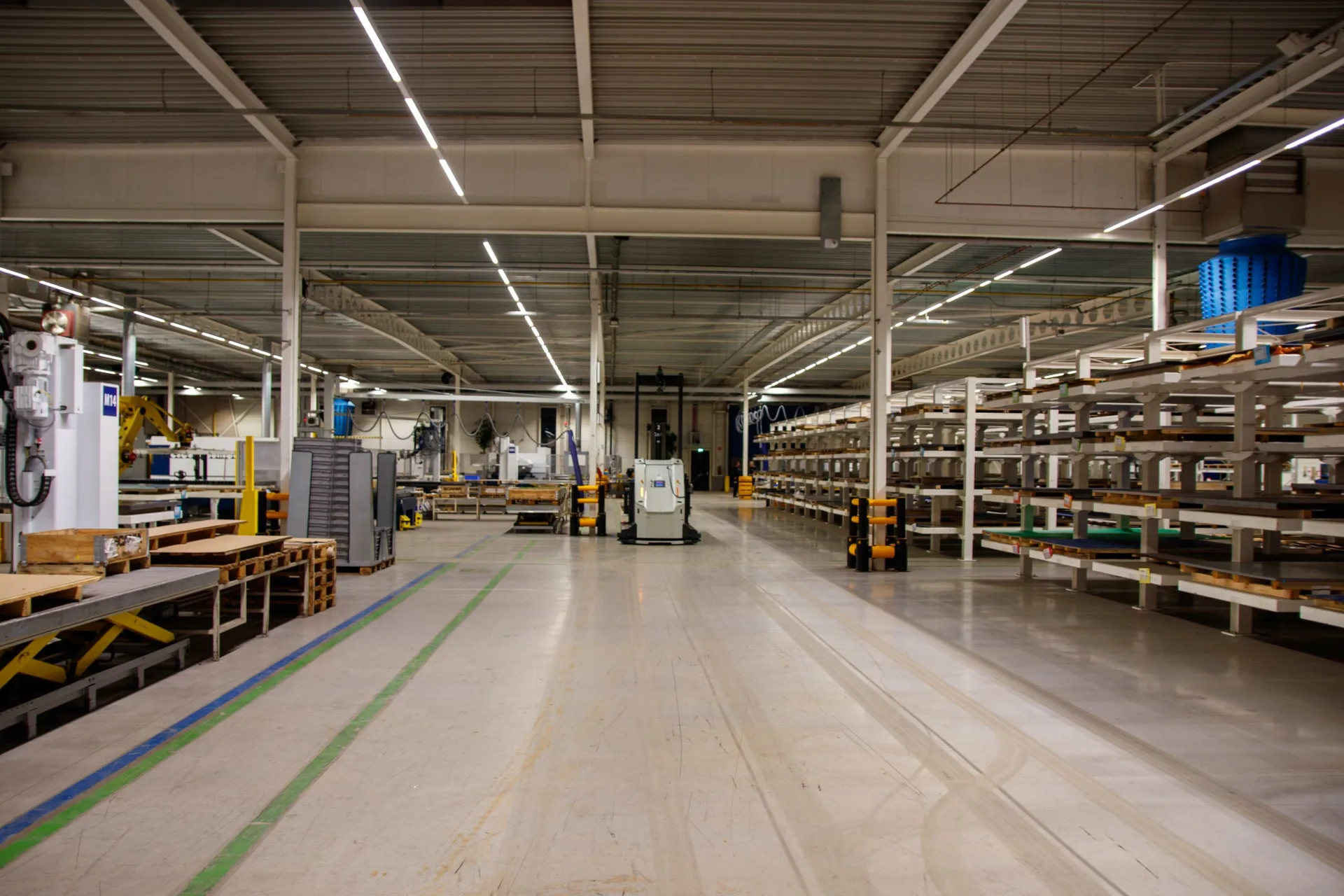
Seamless epoxy floors for production halls that stop concrete dusting and stand up to forklift traffic, oil and chemicals. Each section gets the system that matches its own load and exposure to moisture.
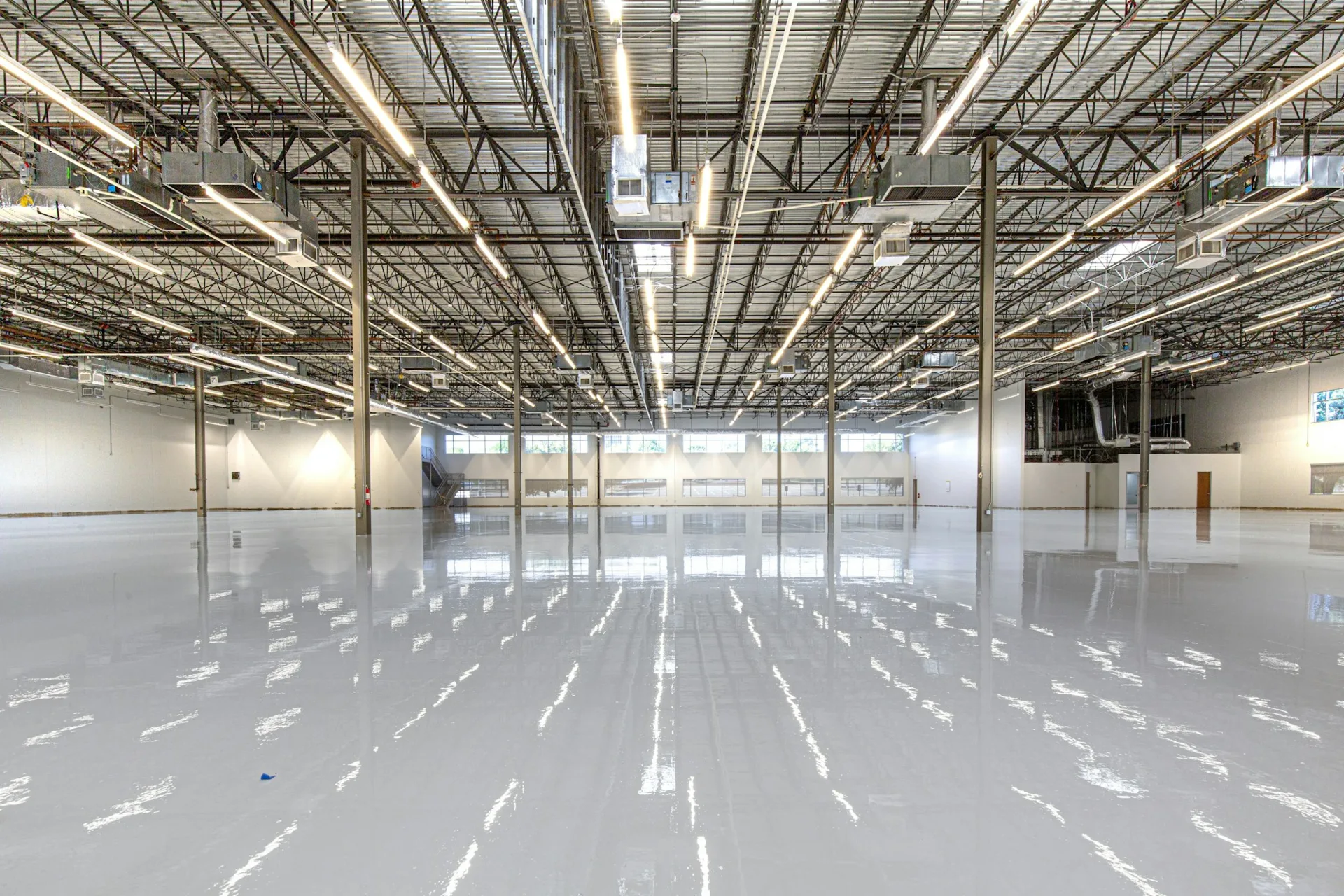
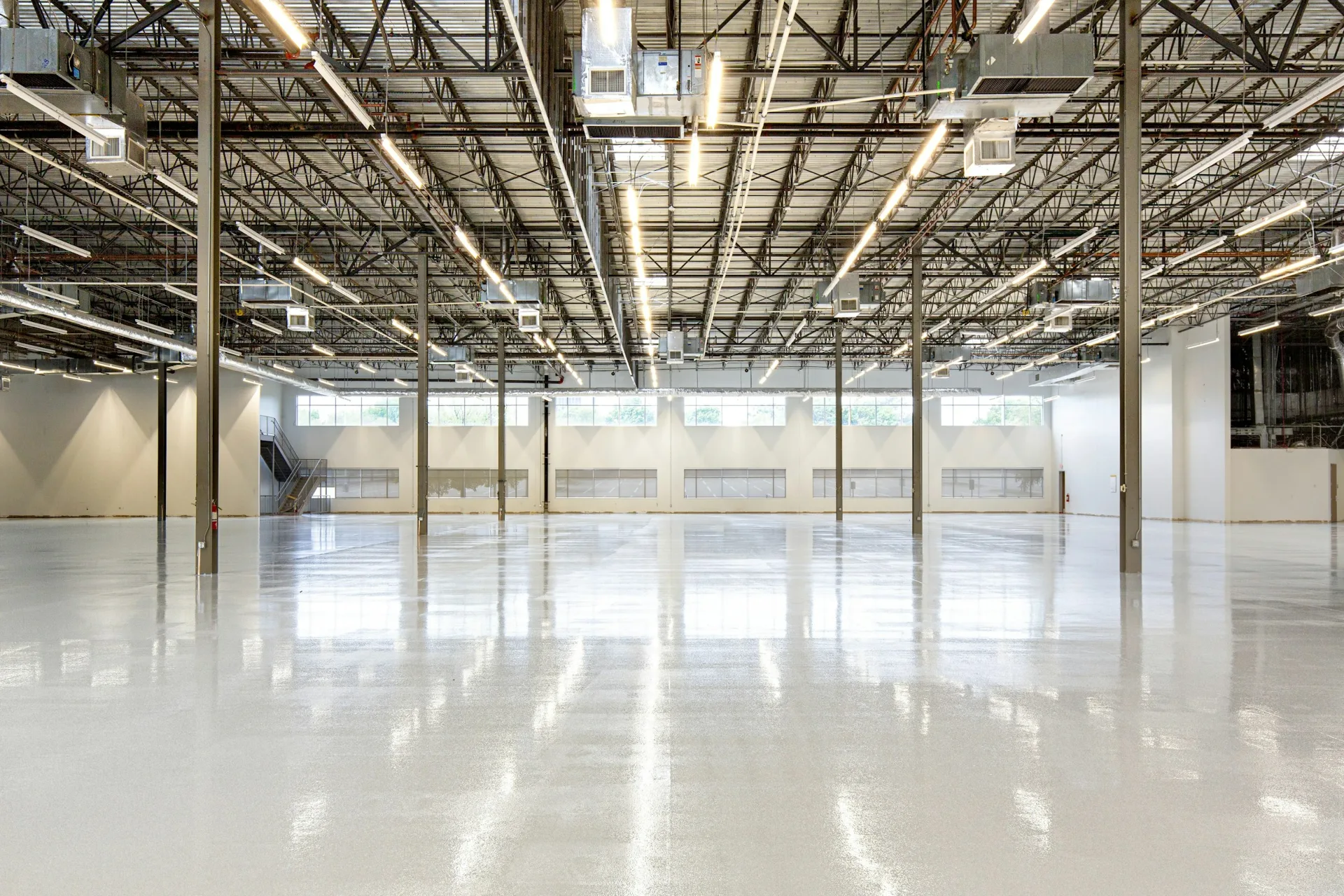
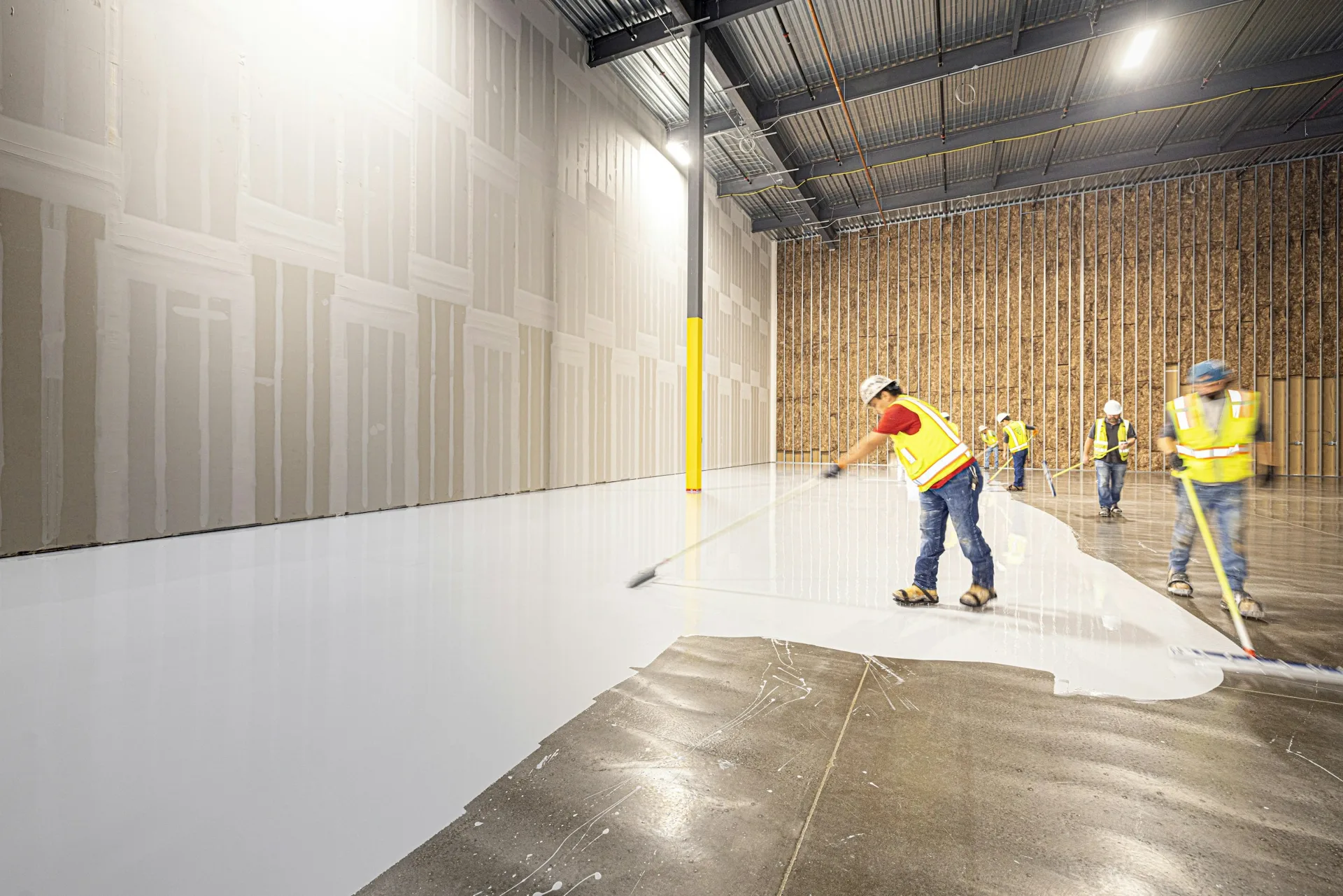
Factory epoxy flooring turns the concrete in a production area into a dust-free, seamless, easy-to-clean surface. A 2–3 mm self-leveling epoxy is chosen for dry production and assembly areas, a 3–5 mm textured (quartz-filled) epoxy for wet, oily and impact-prone sections, and anti-static epoxy for production that is sensitive to static electricity. The floor can be walked on after about 24 hours and opens to forklift traffic in 3–7 days; the work can be phased so that production does not stop.
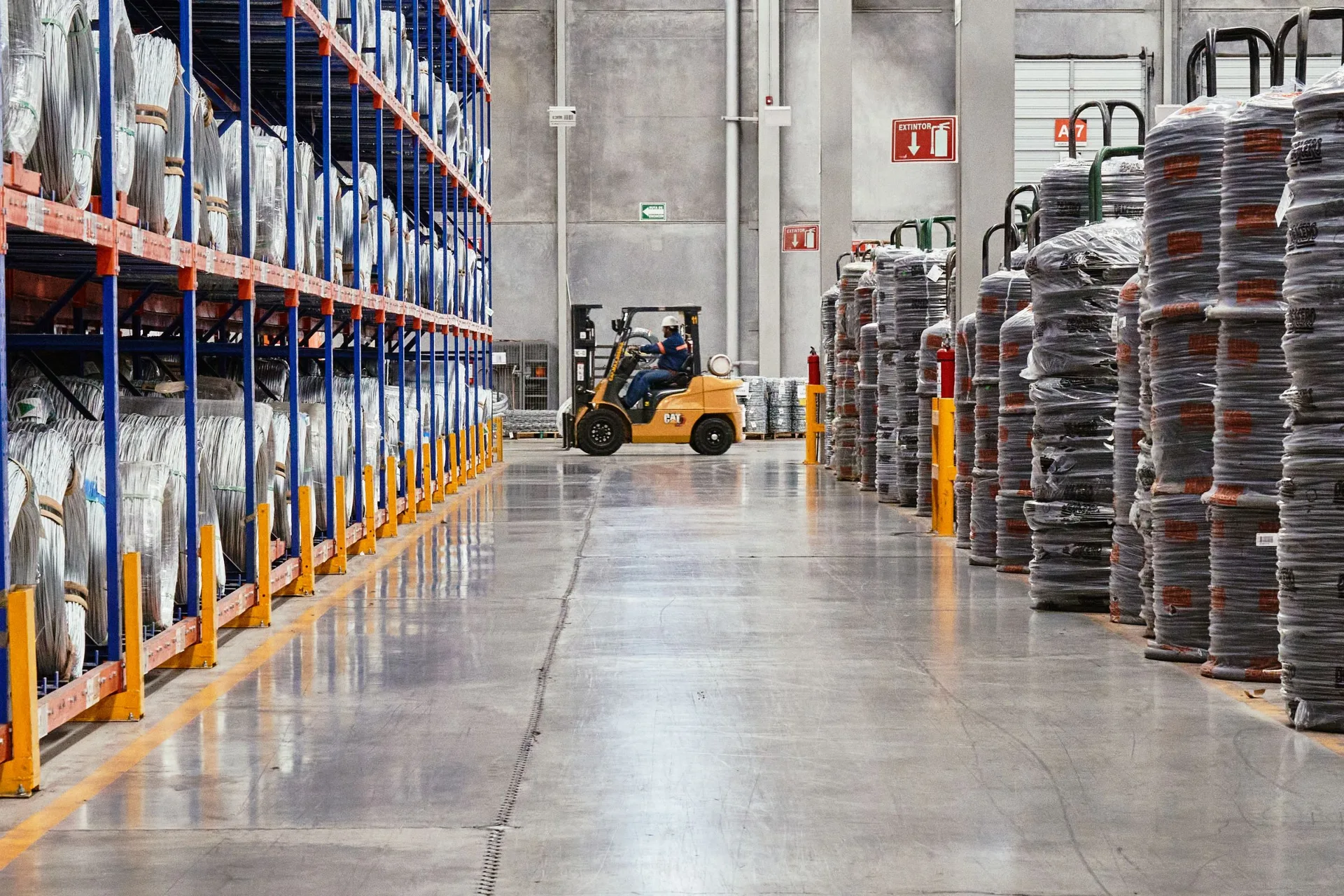
Factory epoxy flooring is the most common way to turn the concrete of a production hall into a dust-free, seamless and chemical-resistant surface. In a production plant the floor matters not just because people walk on it, but because it carries forklifts, takes the load of the machinery, comes into contact with oil and coolant, and is cleaned every single day.
Bare concrete wears out quickly under these conditions. The weak cement laitance on its surface is ground down under the wheels and released into the air as a fine dust. That dust finds its way into the moving parts of machines, into electrical panels, onto products waiting to be painted or packed, and into the air that employees breathe. Concrete is also porous: spilled oil soaks into it, the stain becomes permanent and the floor grows slippery over time.
An epoxy coating seals the pores of the concrete and forms a hard, impermeable wear layer on top of it. Because there are no joints or grout lines, dirt has nowhere to lodge, and the floor can be washed by machine in a short time. A light-colored surface reflects light, so the hall looks brighter, and a bolt that has dropped to the floor or a leak of oil is noticed straight away.
Tile and ceramic floor coverings create a different problem under factory conditions: the joints. The hard wheel of a pallet jack delivers an impact at every joint, tile edges chip and the grout works loose. An emptied joint both collects dirt and lets liquids pass down into the layer beneath. On a seamless epoxy surface this weak point is eliminated from the outset.
Every section of a factory stresses the floor in a different way. Below, we describe one by one the plant types we work in most often, what wears the floor in each of them, and which system is chosen and why.
In general production halls the floor does several jobs at once: pallets of raw material are moved by pallet jack, foot traffic flows between the workbenches, and crates of semi-finished goods are set down on the floor. The problem we meet most often is concrete that is dusting and has become pitted in places. In these areas a self-leveling epoxy 2–3 mm thick is usually applied; it evens out minor undulations and gives a single, continuous surface that is easy to wipe clean.
When storage islands, walkways and the areas around machines are separated by different colors inside the hall, order becomes visible of its own accord. The detail to watch is the base of the columns and the door thresholds: if the coating is finished by feathering it out thin at these points, that is where the first delamination will start. For this reason a narrow chase is cut into the concrete along the edges and the coating is keyed into that chase. In the transition lanes between production and shipping, where traffic is concentrated, the thickness is increased where necessary.
On machinery and assembly lines, what stresses the floor is not traffic spread across the whole surface but point loads and constantly dripping liquids. Beneath the machine feet the load bears on a small area; oil seeping from hydraulic units, gearboxes and lubrication points drips onto the same spot for months on end. At assembly stations, meanwhile, the operator stands in the same place all day, and a small part dropped on the floor needs to be easy to find.
On these lines self-leveling epoxy performs well with its flat, light-colored surface; in maintenance zones that get oily, a textured finish is preferred. The soundest approach is to carry out the coating before the machines are installed. If the machines are already in place, the coating is cut in around them with a clean line and the areas around the anchors are sealed with a flexible filler. The joint between the foundation of a vibrating machine and the concrete of the hall is not covered over with the coating; it is left open and filled with a flexible material.
In automotive plants the floor works as if it were part of the line. Along the assembly line, carrier trolleys and automated guided vehicles always follow the same track, and over time that track forms a wear lane in the floor. In the press and body shops, heavy dies and crates of sheet metal cause impact, while engine oil and brake fluid are spilled in the mechanical sections.
In assembly and final inspection areas, a smooth, light-colored self-leveling epoxy immediately reveals any leak underneath a vehicle. In sections exposed to impact, a thick quartz-filled system is chosen. Because sensitivity to dust is high around the paint shop, it is especially important there that the floor does not dust. At stations where electronic modules and batteries are assembled, anti-static epoxy is required if there is a risk of electrostatic discharge. In the lanes followed by automated guided vehicles, the flatness of the surface and the durability of the lines are planned separately. We cover the conditions on the after-sales side separately on our auto repair shops and service areas page.
In metalworking plants the floor has to contend with three things: cutting fluid, swarf and heavy parts. The coolant emulsion that splashes from lathes and machining centers keeps the floor permanently wet and slippery; sharp swarf scratches the surface under the wheels; and a casting or a die set down on the floor delivers an impact.
For this reason textured epoxy is recommended around the machine tools instead of a smooth, glossy surface; the quartz filler both reduces slipping and stands up better to scratching and impact. In assembly and measurement sections that work dry, a self-leveling system is sufficient. In welding and grinding areas there is one limit that has to be stated plainly: red-hot spatter leaves a burn mark on every resin coating. At these points it is better to think of the coating together with a protective steel plate or a welding blanket, and sometimes to leave that small zone uncoated.
In textile mills the difference between one department and the next is considerable. In spinning, weaving and knitting halls the real problem is airborne fiber; on a jointed or rough floor the fiber clings, cleaning becomes harder and the lint that builds up increases the fire load. Seamless self-leveling epoxy allows the fiber in these halls to be collected easily with a broom or a vacuum cleaner, and fabric roll trolleys run smoothly over the flat surface.
In garment-making and cutting departments a light-colored floor helps the lighting, and a needle that has fallen to the floor becomes visible. The dyehouse and finishing departments, however, are an entirely different environment: the floor is constantly wet, and dyes and auxiliary chemicals are spilled. Here a thick system with an anti-slip texture and an adequate fall toward the drains are required. At points where very hot water is continuously discharged onto the floor from the vats, on the other hand, epoxy is not the right choice; we say so clearly at the quotation stage.
In plastics manufacturing plants the most insidious hazard on the floor is spilled granulate. On a flat, hard surface the pellets behave like ball bearings; this is why, in the raw material feeding, under-silo and regrinding zones, a lightly textured surface is considered together with ease of sweeping. Hydraulic oil leaks are commonplace around injection molding and extrusion machines, and an impermeable coating that extends right under the machines prevents the oil from soaking into the concrete.
During mold changes, heavy molds lowered by crane and the mold trolleys create impact and point loads; in the tool room and mold holding areas a quartz-filled system lasts longer. In the packaging and finished goods sections, self-leveling epoxy is sufficient. In zones crossed by cooling water lines, if there is condensation or leakage, that source has to be dealt with before the coating is applied; an application made on wet concrete will not bond.
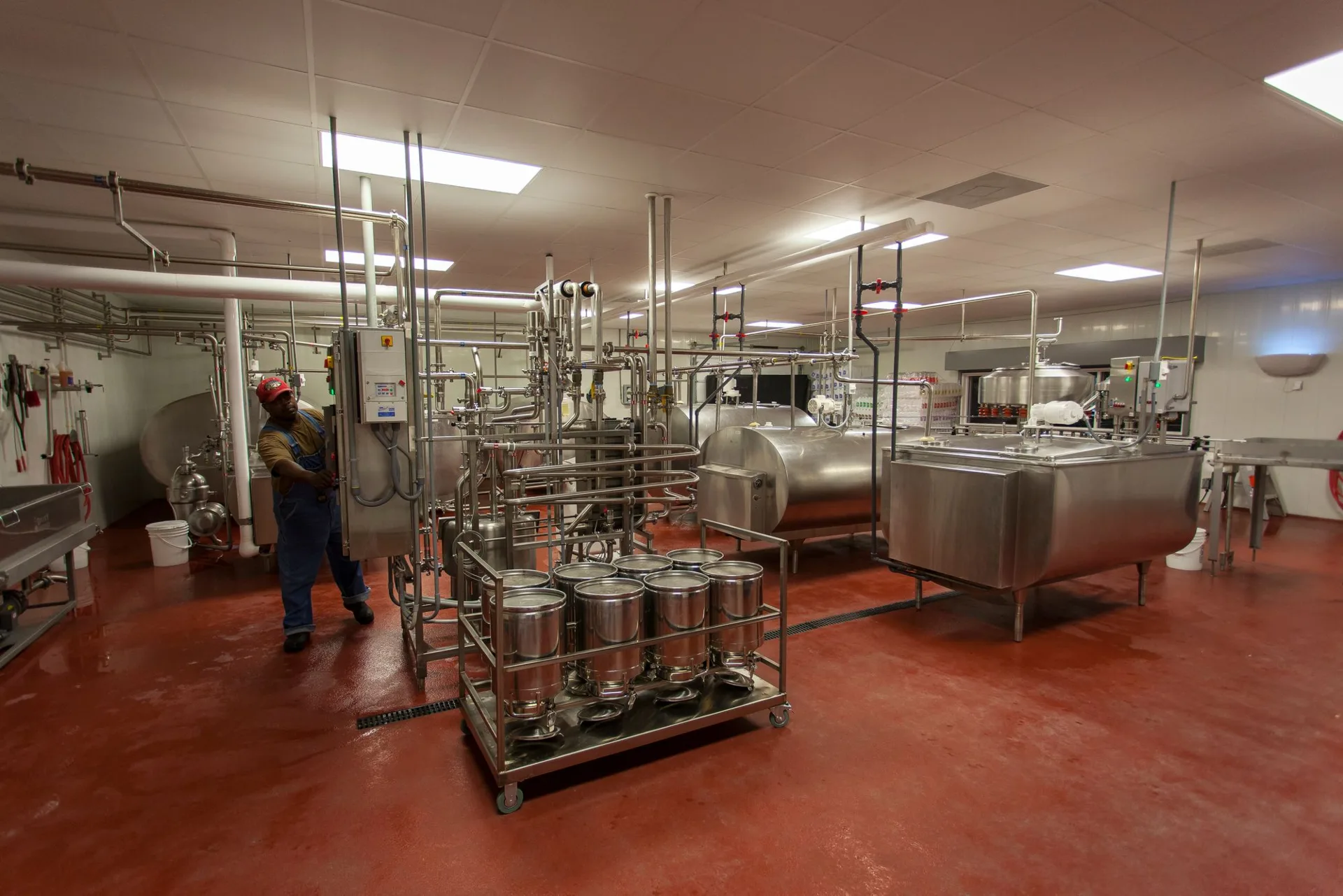
In food production plants the floor is a direct subject of inspection. In HACCP-based audits, what is expected of the floor is a surface that is impermeable, crack-free and easy to clean and that does not hold standing water. Seamless epoxy offers a base that meets this expectation, because it leaves no grout lines or pores for bacteria to cling to.
In wet process areas, in sections that are washed down and in production involving oils and fats, textured epoxy is applied; the texture is chosen fine enough not to compromise cleanability. In dry filling, packaging and shipping sections a self-leveling surface is preferred. The fall toward the drains, the edges of the channels and the junctions at the base of the walls are the details that demand the most care in these plants. Let us state one limit as well: at points that see continuous thermal shock above 60 °C, such as cooking lines or washing with hot water and steam, epoxy is not the right choice. The details can be found on our food and beverage plants page.
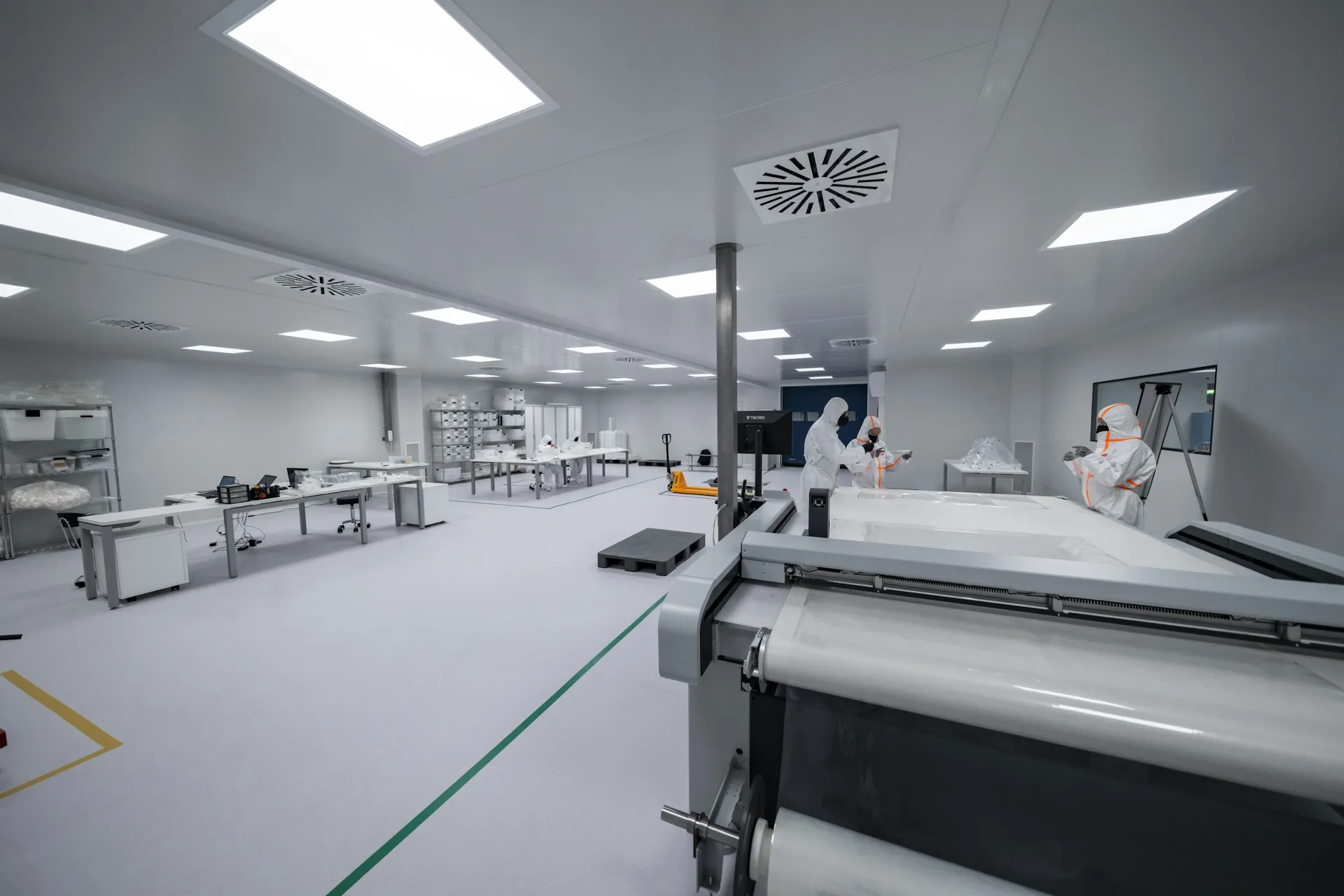
In pharmaceutical plants the floor is part of the clean production conditions. In GMP audits, what is expected of the floor is a surface that sheds no particles, is smooth and crack-free, and withstands frequent wiping with disinfectants. This is why self-leveling epoxy is preferred in production, weighing and filling rooms: it is seamless, it does not hold dust and its surface is closed.
So that dirt does not collect in the corner where the wall meets the floor, the junction is finished as a rounded cove. Door thresholds and airlock transitions are finished without any difference in level, so that wheeled trolleys do not catch on them. In rooms where solvents are used or raw materials are processed as fine powder, electrostatic discharge can pose a risk; in these sections anti-static epoxy is applied and the surface resistance is measured and recorded. The choice of color is functional too: clean and dirty corridors, and the flows of materials and personnel, can be distinguished by different shades. For what is expected on the laboratory side, you can also look at our hospitals and healthcare facilities page.
There is no single right system; the right system is determined by the load, the wetness and the cleaning method of the section in question. The matching below holds true for most factories.
It is quite normal for several systems to be used together in the same plant. The production hall can be coated with a self-leveling system, the wash-down section with textured epoxy and the archive with paint; the transitions are resolved with attention to matching colors and levels. In this way the budget is spent where the floor is really put under stress.
The service life of an epoxy coating is determined by the surface preparation far more than by the material. In factories the process moves forward in the following order.
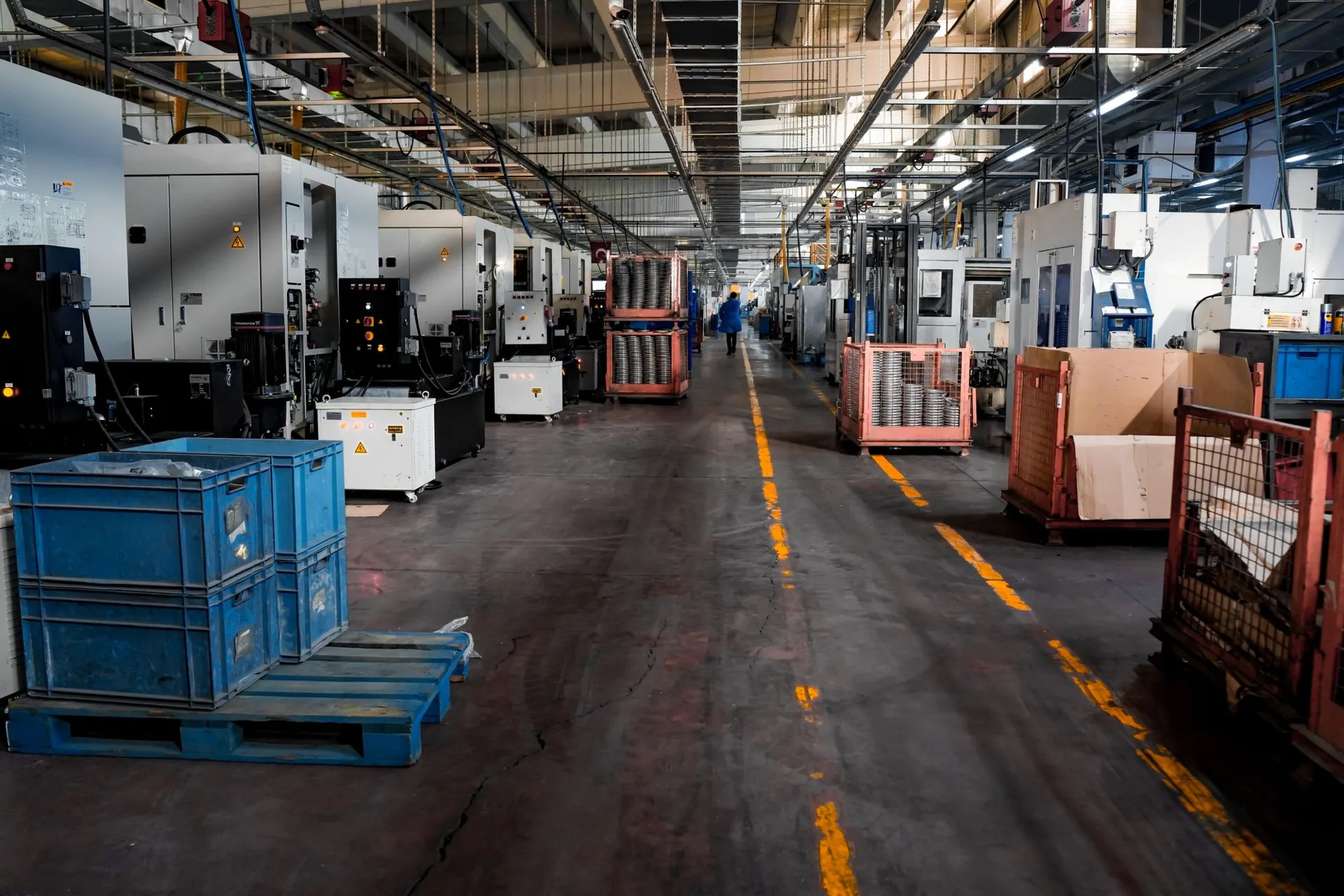
Most factories cannot halt production for days on end for the sake of the floor. For this reason the area is divided into phases: while one line is running, the neighboring section is coated and forklift traffic is diverted to a temporary route. The boundaries of the phases are made to coincide with existing joints or marking lines wherever possible, so that the day joint cannot be seen.
Weekends, public holidays and planned maintenance shutdowns are the most productive times. Even in a short shutdown the surface preparation and the primer can be completed; the coating layer is then placed in the schedule with its curing time taken into account. If a machine relocation or a change to a line is being planned, combining the floor work with it reduces both the time and the cost.
The systems we use are solvent-free; there is a slight smell of resin during application, but it does not prevent work from continuing in the neighboring section. Temperature, however, is decisive: when the floor temperature drops below 10 °C, curing slows down markedly. In unheated halls during the winter months, the times are extended accordingly or the space is heated.
A note, too, for loading yards that are open to the weather: under direct sunlight epoxy yellows and loses its gloss over time. In sections that receive sunlight, a polyurethane topcoat can be used against yellowing; yards that are entirely outdoors are assessed separately.
The greatest enemy of an epoxy floor is the sand and metal swarf that travel across its surface; under the wheels they work like sandpaper. Daily sweeping or industrial vacuuming is the cheapest way to preserve the gloss of the coating. For the weekly clean, a scrubber-dryer working with a neutral detergent is sufficient; on textured surfaces a machine fitted with brushes is used instead of a mop.
Spilled oil and chemicals should be removed without delay. The coating withstands them, but a liquid left standing for a long time can leave a stain and makes the floor slippery. Dragging pallets and metal crates, fork tips scraping along the floor and damaged wheels all cause scratches; briefing the operators on this point extends the life of the floor.
Over time the places that wear the most are turning points and narrow passages. These lanes can be refreshed by sanding the surface and applying a new coat, without renewing the whole hall. Lines, too, can be repainted in the same way without disrupting production.
For a daily, weekly and yearly maintenance schedule and cleaning tips for each type of stain, see our guide Epoxy Floor Maintenance and Cleaning.
We do not quote prices here, because no two factory floors are alike and the right figure can only be set out in a quote prepared for your own floor. The main factors that determine a quotation are these:
We explain what to look for when comparing quotes in our article 7 Factors That Determine the Cost of Epoxy Flooring per m².
To receive a system recommendation and a price for your plant, you can fill in the quotation form. It speeds things up if you note in the form the approximate area, the current condition of the floor, the vehicles in use (pallet jacks, forklifts, heavy transporters), the liquids that are spilled on the floor and the days on which the work can be carried out. Adding a few photographs makes the initial assessment easier.
Once the information has reached us, we prepare our written quote together with a section-by-section system plan and a phasing plan; once the quote is approved, a day is set for the site survey and measurement. For your raw material and finished goods storage areas you can take a look at our warehouses and logistics areas page, and for the details of the systems at our services page; you can send us your questions through the contact page.
| Recommended system | 2–3 mm self-leveling; 3–5 mm textured epoxy in wet and heavy-duty sections |
|---|---|
| Surface preparation | Shot blasting or diamond grinding (vacuum-assisted, dust-free) |
| Concrete condition | At least 28 days old, moisture content below 4% |
| Lines and marking | Walkways, forklift routes, storage areas and safety lines |
| Open to foot traffic | Approx. 24 hours |
| Open to forklift traffic | 3–7 days, depending on system and temperature |
| Full cure | 7 days (20 °C) |
An epoxy floor opens to forklift traffic within 3–7 days, depending on the system and the ambient temperature. Foot traffic can start after about 24 hours, but at that stage the coating has not yet reached its full hardness. Full mechanical and chemical resistance develops in 7 days at 20 °C. If the hall is cold these times become longer; for this reason, when the phasing plan is drawn up, the temporary route that the forklifts will use on those days is also defined.
Yes, by dividing the area into phases the coating can be applied while production continues. While one line is running, the neighboring section is prepared and coated, and forklift traffic is temporarily diverted to another aisle. Because the machines used for surface preparation work with vacuum extraction, dust is not carried into the section that is in operation. If weekends, public holidays and planned maintenance shutdowns are put to use, the number of phases goes down and the job is completed in a shorter time.
In areas with heavy forklift traffic, epoxy paint is generally not sufficient. Paint is a thin film 0.3–0.5 mm thick; it prevents dusting, but it wears through quickly on lanes where wheels are constantly turning. In these sections a 2–3 mm self-leveling system or a 3–5 mm quartz-filled system lasts longer. Paint is a sensible solution in low-traffic ancillary areas such as archives, plant rooms and pedestrian corridors.
It can, but it is essential that the oil is first removed from the concrete. Oily concrete whose surface appears to have been wiped clean will not hold the primer, and after a while the coating blisters in that zone. For this reason the oily zones are marked during the site survey and cleaned in depth; if necessary, the oil-soaked layer is removed mechanically and filled again with repair material. How deep the oil has penetrated directly affects the preparation time and the cost.
Epoxy is resistant to machine oils, fuel, cutting fluids, cleaning agents and many dilute chemicals. On the other hand, concentrated acids, some strong solvents and hot water or steam that is continuously above 60 °C can damage the coating. This is why, before a system is selected, we ask for a list of the substances that are likely to be spilled on the floor. If there is a condition for which epoxy is not suitable, this is stated clearly at the quotation stage.
When the right system is chosen and the surface preparation is done properly, an epoxy floor serves a factory for many years; the exact period depends on the intensity of the traffic and on maintenance. The places that wear fastest are turning points, narrow passages and the aprons in front of loading doors. These can be refreshed by sanding the surface and applying a new coat, without renewing the whole hall. Daily sweeping and removing spilled liquids without delay extend the service life markedly.
An epoxy floor needs little maintenance, but it should not be neglected. Everything you need to know, from daily cleaning and stain removal to the…
We explain in plain language what epoxy flooring is, which types are available and why it is chosen for different kinds of spaces.
Every stage of an epoxy flooring installation from survey to handover: surface preparation, repairs, primer, coating layer and curing.
The two coatings look alike but behave differently. We compare epoxy and polyurethane in terms of hardness, flexibility, and UV and heat resistance.
When can you walk on an epoxy floor, and when can it take loads? Curing times by temperature and the conditions that affect the process.
Our priority is
Tell us about your project, and together we will pin down the right epoxy system for your floor, the application time and our quote.
Get a Quote5-year workmanship and 10-year product warranty. We respond to all requests within 24 hours. We work in all 81 provinces.