
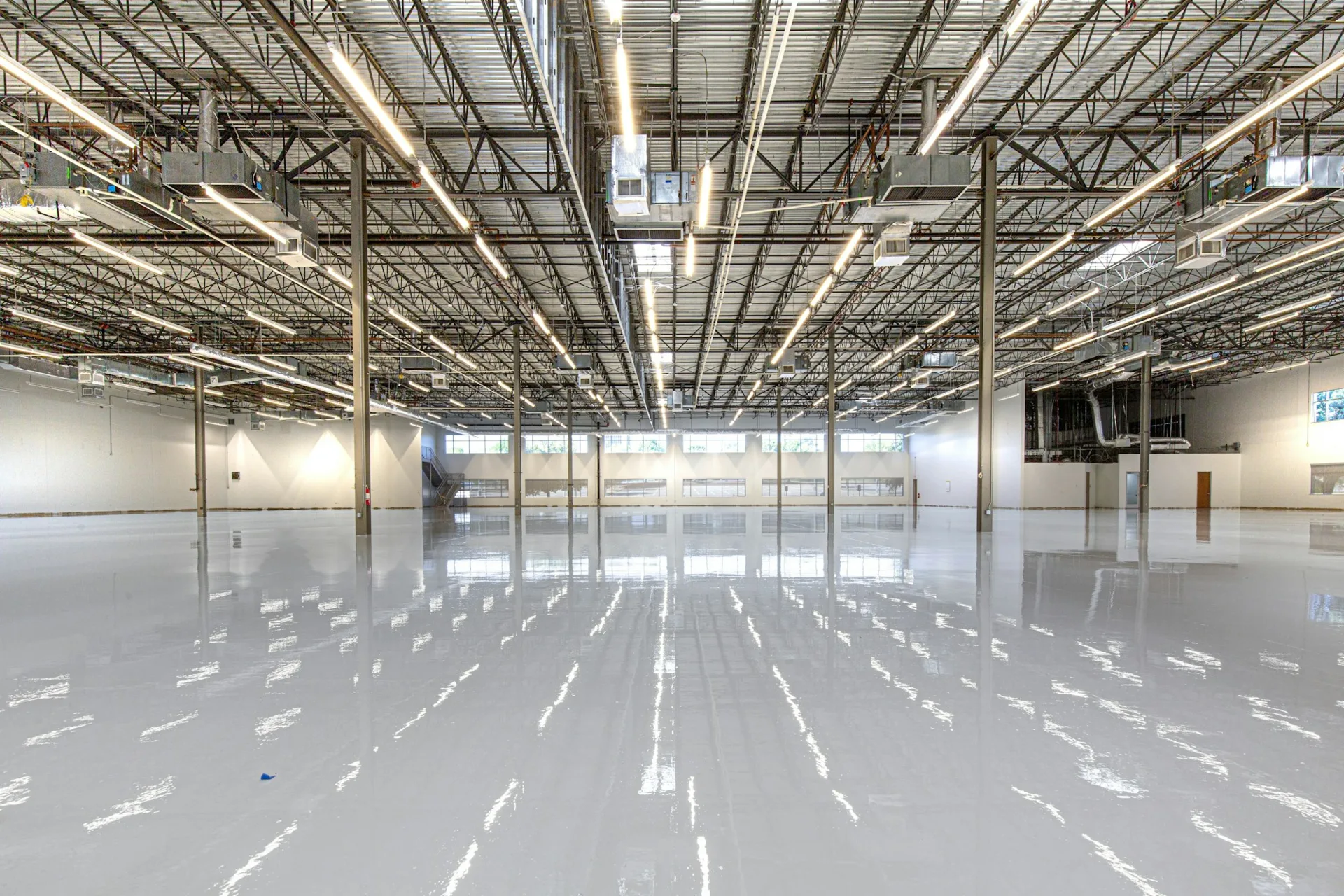
How Is Epoxy Flooring Installed? Application in 7 Steps
Every stage of an epoxy flooring installation from survey to handover: surface preparation, repairs, primer, coating layer and curing.
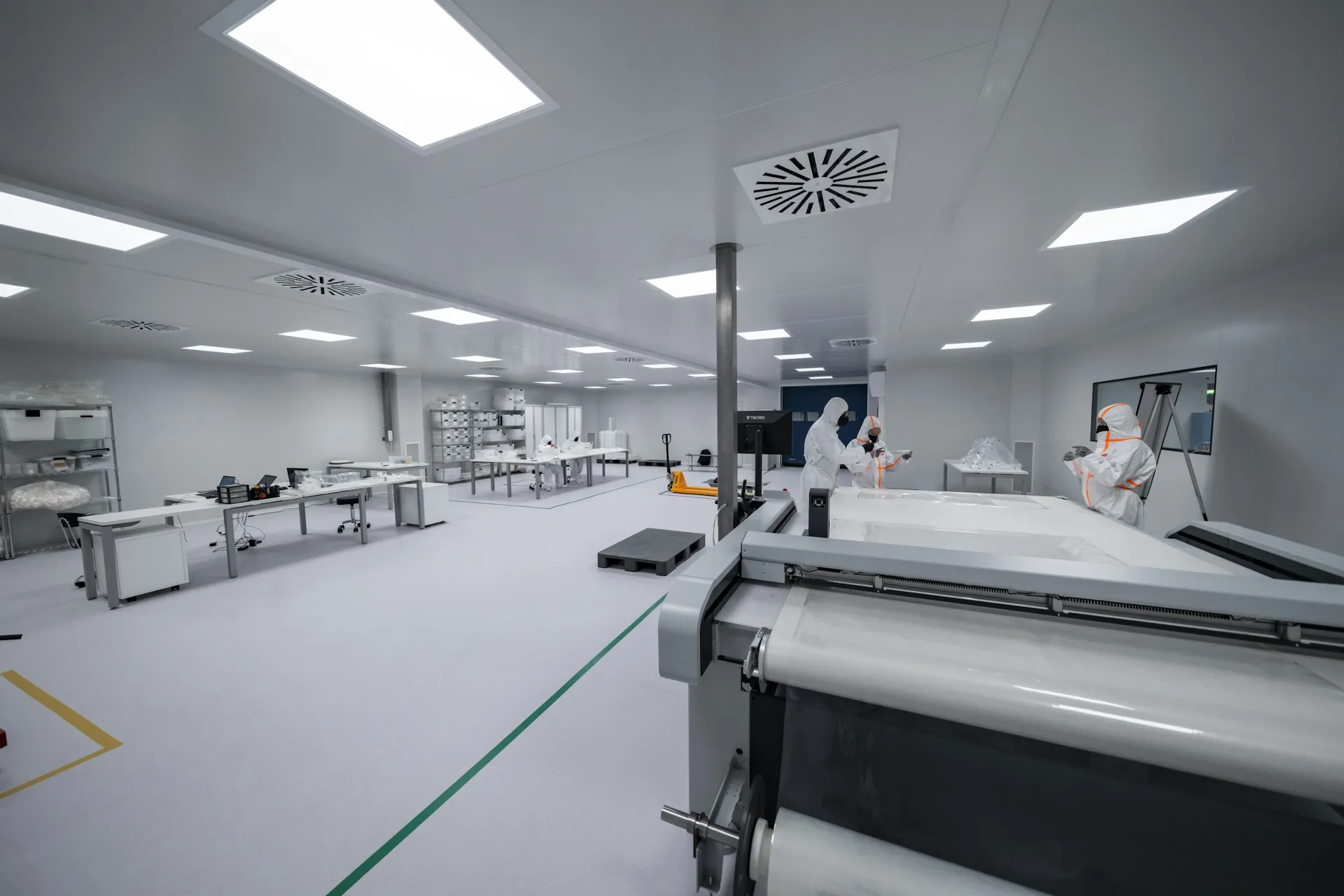
An epoxy floor that carries static electricity to ground in a controlled way through copper tapes and conductive layers. For electronics manufacturing, server rooms, operating rooms and areas containing flammable substances; handed over with resistance measurements.
Anti-static (ESD) epoxy flooring is a seamless coating, 2–3 mm thick, that transfers the static electricity building up on its surface to the building's grounding line through conductive layers and copper tapes. In electronics manufacturing, data centers, operating rooms and areas with an explosion risk, it protects equipment and personnel from electrostatic discharge. Depending on requirements it is installed as a conductive (approx. 10⁴–10⁶ Ω) or static-dissipative (approx. 10⁶–10⁹ Ω) floor, and it is handed over with its surface resistance measured and recorded.
Anti-static epoxy flooring is a seamless floor system, 2–3 mm thick, that transfers the static electricity building up on it to the building's grounding line by way of conductive layers and copper tapes. The abbreviation ESD stands for electrostatic discharge; the job of the system is to prevent this discharge from taking place suddenly and in an uncontrolled way. It is used in electronics manufacturing, data centers, operating rooms and rooms containing flammable substances.
In appearance it cannot be told apart from a standard epoxy coating: it is a smooth, single-color surface that wipes clean easily. The difference lies inside and beneath the coating. Ordinary epoxy does not conduct electricity, in other words it is an insulator; in the anti-static system, by contrast, an unbroken conductive path is established from the surface all the way to ground. Whether this path really works cannot be judged by eye. This is why an anti-static floor is handed over with its surface resistance measured and with a record of the measurements.
When two surfaces rub against each other and separate, an electrical charge is left on them. The shoe soles of a person walking, the turning wheel of a trolley, an employee getting up from a chair and packaging film being pulled off a reel all generate charge continuously. On an insulating floor this charge has nowhere to go; it builds up on the person or the trolley and discharges all at once when a conductive object is approached. The shock felt on touching a door handle in winter is the everyday example of this.
This discharge causes harm in three different ways:
An anti-static floor does not prevent charge from being generated altogether. What it does is to make the charge flow to ground at a controlled rate before it has a chance to build up.
The system consists of elements that are connected to one another from the bottom up. When any one of them is missing or interrupted, the conductive path is broken even if the surface looks flawless.
If the concrete is not flat enough, it is leveled with an epoxy filler coat before the conductive layers. The order matters: leveling and repair work stays beneath the copper tapes, and no insulating layer is placed on top of the tapes.
Anti-static floors are installed in two types according to their electrical resistance. The overall range of the system is 10⁴–10⁹ Ω; which end of this range the floor should be close to is determined by how the area is used.
Which type and which value are required is determined together with you on the basis of the standard the facility works to, the customer's specification or the risk assessment. Our job is to build the system that delivers that value correctly and to demonstrate the result by measurement. If the target value has not yet been settled, we clarify it at the quotation stage by talking to the facility's quality or occupational safety officer.
An anti-static floor is an expensive, specialized system; it does not solve every problem and it is not needed everywhere. The following should be known before a decision is made.
The common factor is spaces in which static discharge can harm the product, the equipment or people. In each of them the reason and the type chosen are different.
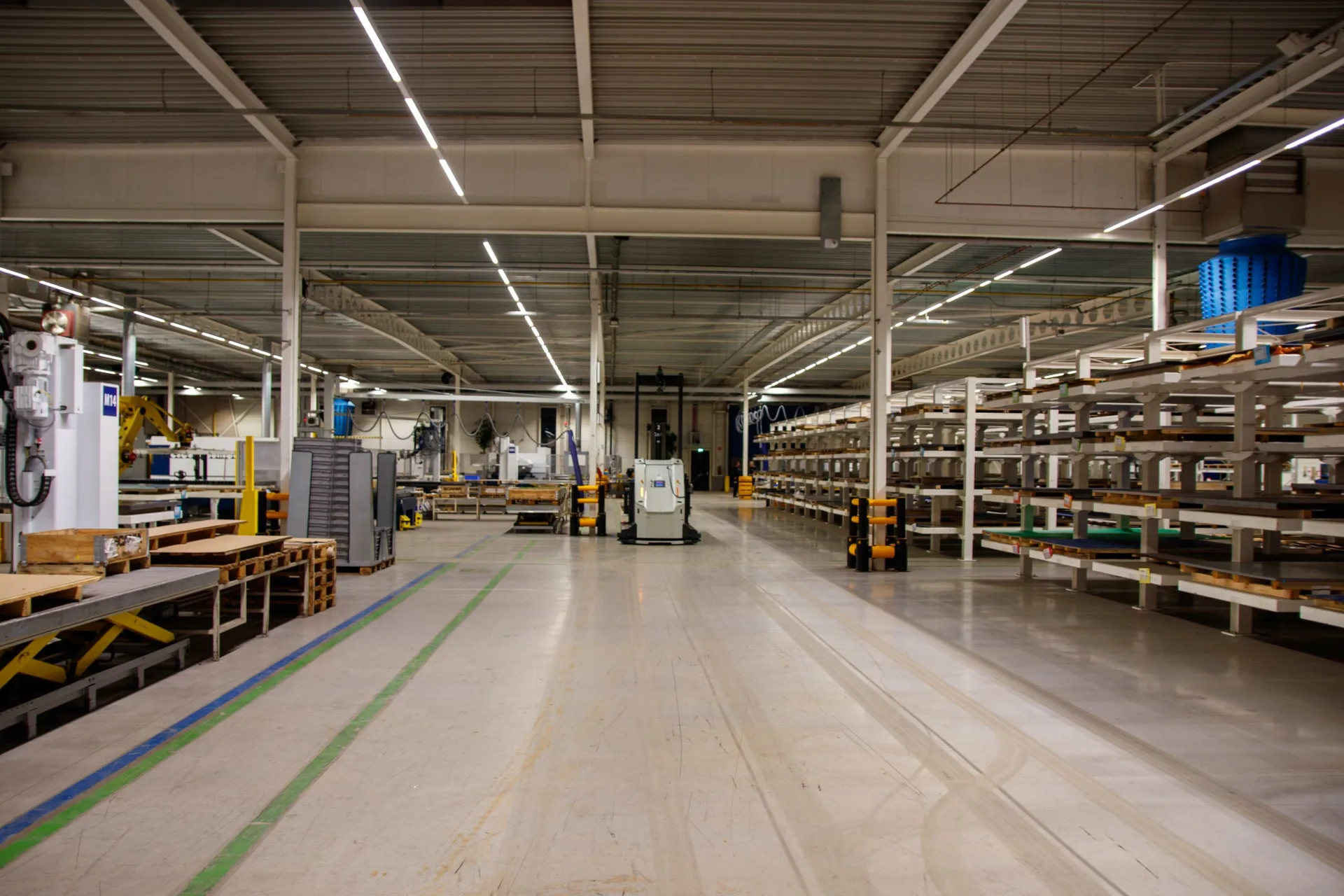
Board assembly lines, manual assembly benches and test and repair stations are where anti-static flooring is used most widely. The employees walk along the line all day and material trolleys travel back and forth between the stations; charge is generated continuously. Here the static-dissipative type is generally chosen. The boundary of the ESD-protected area is marked on the floor with a line; everyone and every trolley that enters this boundary is expected to make conductive contact with the floor. The flatness of the floor matters too: the board racks on the trolleys are affected by jolting. For the other sections of production buildings you can look at the factories and industrial plants page.
In server rooms, static discharge poses a risk to the boards and drives in cabinets that are opened during maintenance. The second issue is dust: the dust rising from bare concrete is drawn inside by the cooling fans of the equipment. Anti-static epoxy solves both problems together; the charge flows to ground and the floor does not dust. These rooms are mostly small, and the application is carried out next to equipment that is running; for this reason dust-free surface preparation and the choice of a low-odor, solvent-free material come to the fore. In rooms where a raised access floor is used, the coating is applied to the concrete beneath the raised floor to stop it dusting. The system rooms in hotel, school and office buildings are handled in the same way; an example can be found on the hotels and hospitality facilities page.
Sensitive electronic equipment operates in an operating room, and the sudden discharge of the charge generated by the movement of the staff can affect this equipment. There is a similar sensitivity in imaging rooms. In these rooms the anti-static floor is mostly defined in the project specification, and the required resistance value is taken from there as well. In a healthcare building, what is expected of the floor does not end with static: the surface must be seamless, it must withstand disinfectants, and no corner that could hold dirt may be left at the junction with the wall. The anti-static system meets these expectations at the same level as standard self-leveling. The application is divided into sections in a way that does not disrupt the work of the neighboring rooms. For the other rooms you can take a look at the hospitals and healthcare facilities page.
In a solvent store, a paint mixing room, a flammable liquid filling section or rooms where raw materials are processed as fine powder, a static discharge means a spark, and a spark means ignition. In these rooms the conductive type, which discharges the charge quickly, is chosen. It is not we who decide which section falls within this scope; that is defined in the facility's explosion protection assessment. Here too the floor is only one of the precautions: conductive footwear and the grounding of containers and equipment work together with it. We also ask what kind of chemical is spilled, because the chemical resistance of the upper coat is put to the test in these sections as well. The details are on the chemical plants and energy facilities page; for the mixing rooms in automotive paint shops you can look at the auto repair shops and automotive page.
In electronics and metrology laboratories both the part under test and the measuring instrument can be affected by static discharge. In cleanrooms dust attraction is added to this: a charged surface gathers airborne particles onto itself. With its seamless structure, anti-static epoxy does not hold particles and prevents charge from building up. In these spaces the junctions at the base of the walls, the door thresholds and the areas around bench legs are detailed with care; every point at which the conductive surface is interrupted shows itself in the measurement. The same system is considered in the electronics, robotics and computing laboratories of universities as well; we deal with this subject on the schools and educational facilities page.
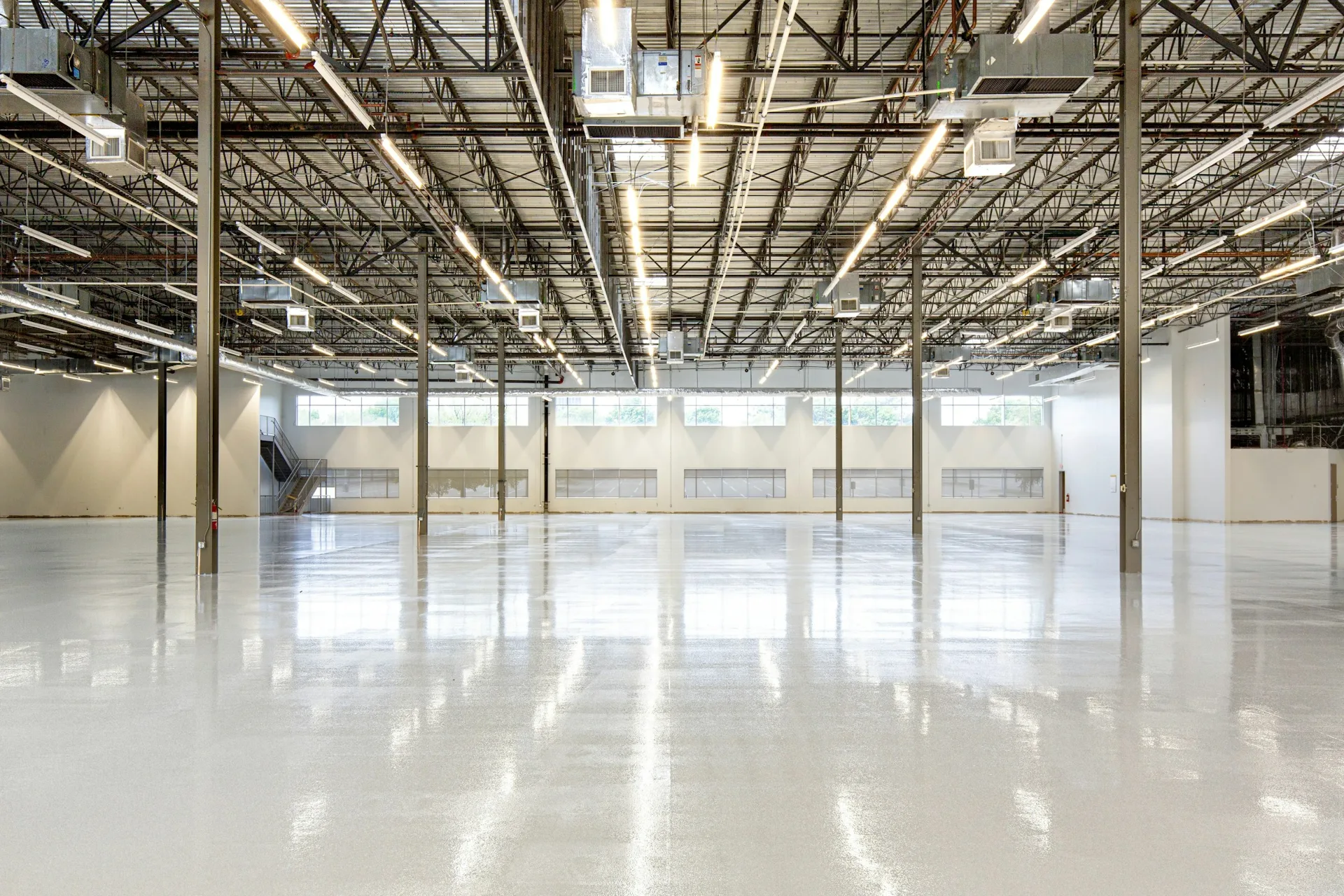
Most warehouses have no need for an anti-static floor; the places where it is needed are well defined. Chief among them are stocks of electronic components that are handled with their packaging opened, board and module stores, and enclosed sections where flammable liquids are kept. In these warehouses it is mostly not the whole building but only the section concerned that is made anti-static; the rest of the area is coated with standard self-leveling or epoxy paint. The line where the two systems meet is planned from the start, and the boundary of the anti-static section is marked on the floor. Whether everything that touches the floor, such as rack feet and trolley wheels, makes conductive contact is also reviewed separately. For the general needs of warehouse floors you can look at the warehouses and logistics areas page.

When the floor temperature drops below 10 °C, curing slows down markedly; if there is condensation on the surface, no application is carried out. In facilities where production cannot be stopped the job is divided into sections, and each section is closed out with its own measurement.
What sets an anti-static floor apart from the other systems is that the job ends with a measurement. Once curing is complete, the surface is measured at points spread across the area. The measurement points are marked on a plan; the value at each point, the date of measurement and the ambient conditions are written into the record. This record is handed over together with the floor.
The measurement method and the acceptance value are determined by the standard or specification the facility works to; the standards most often cited in this field are IEC 61340-5-1 and EN 1081. Because the humidity and temperature of the room can affect the result of the measurement, recording the conditions allows a sound comparison to be made with later measurements.
The handover measurement is a baseline value. As the floor is used it gets dirty, is cleaned and wears in places; for this reason we recommend that the resistance be measured again at the same points at set intervals. A drift in the values in most cases indicates not that the floor has deteriorated but that an insulating layer of dirt or polish has formed on the surface.
Anti-static epoxy is applied in RAL colors, but the choice is more limited than with standard systems. The conductive filler it contains affects the shade of the color; in very light and vivid colors the choice narrows, and the shade may look slightly different from the sample on the color chart. The most widely used are light and mid-gray shades. If color is important, the right thing to do is to look at a sample before deciding.
The finish is mostly gloss or satin. The clear protective coats used against scratches on standard floors are not applied here; any insulating layer placed on top of the conductive surface puts the system out of action.
The thickness is 2–3 mm, and in this system thickness is not a value that can be increased at will. If more filling or leveling is needed, it is done beneath the conductive layers. The lines that show the boundary of the ESD-protected area, the walkways or the positions of the stations are kept narrow; covering large surfaces with ordinary paint cuts off the conductivity in that zone.
The other four systems we apply are electrically insulating. This is the property that sets the anti-static system apart from them, and the choice is made accordingly.
The two systems belong to the same family: both are applied by pouring, and both are 2–3 mm thick, seamless and smooth. Self-leveling epoxy is an insulator; in the anti-static system, copper tapes, a conductive primer, an upper coat with conductive filler and resistance measurement are added to it. In production, warehouse and laboratory areas where static discharge poses no risk, standard self-leveling is sufficient and more economical. The two systems can be used side by side in the same building.
Epoxy floor paint is a thin film 0.3–0.5 mm thick applied by roller; it stops dusting but does not conduct charge to ground. As far as static is concerned, a floor that has been painted is no better than bare concrete. In places such as a server room or an electronics workshop, painting the floor merely to prevent dust leaves the real problem unsolved.
Textured epoxy is a thick system that is given its texture with quartz sand and reduces slipping in wet and oily areas; it is not conductive. The anti-static system, by contrast, has a smooth surface and is designed for spaces that work dry. The question that decides the choice is this: in this section, is the main risk slipping or static discharge?
Metallic epoxy is chosen for its appearance; a pattern is created by hand with clear resin containing metallic pigment, and it is sealed with a protective topcoat. On an anti-static floor, on the contrary, appearance comes second to function and no clear coat is applied on top. The decorative system is used in sections such as the reception area, the showroom or the meeting room, and the anti-static system in the production and technical sections.
In looking after an anti-static floor, the aim is not only that it should look clean but that it should keep its conductivity. Dirt, oil and detergent residue that build up on the surface behave like an insulating layer.
If the floor is damaged, the repair is carried out with the same conductive system: the area is opened up, the conductive primer and the conductive upper coat are applied again, and the repaired spot is then measured. The most important part of maintenance is that the team doing the cleaning knows why this floor is different; a coat of polish applied with the best of intentions can undo months of care.
For a daily, weekly and yearly maintenance schedule and cleaning tips for each type of stain, see our guide Epoxy Floor Maintenance and Cleaning.
An anti-static system costs more than a standard self-leveling coating of the same thickness. The items that make up the difference are these:
The way to use the budget correctly is to apply the anti-static system only to the sections where it is really needed. When the boundary of the ESD-protected area is drawn clearly, the rest of the building is coated with a standard system and the total cost falls markedly.
We explain what to look for when comparing quotes in our article 7 Factors That Determine the Cost of Epoxy Flooring per m².
In a quotation for an anti-static floor, the technical requirement is as important as the size of the area. When you fill in the quotation form, it makes our work easier if you include the following information:
With this information we prepare an itemized written quote that sets out the firm price; once the quote is approved, the moisture of the concrete is measured during the on-site survey. If you are not sure whether an anti-static floor is needed, you can write that too; if we see that it is not, we recommend a standard system. For your questions you can reach us through the contact page, and you can view the other systems on the services page.
| Thickness | 2–3 mm |
|---|---|
| System | Primer + copper tape + conductive primer + conductive self-leveling coat |
| Electrical resistance | In the 10⁴ – 10⁹ Ω range (conductive or static-dissipative, depending on requirements) |
| Relevant standards | IEC 61340-5-1, EN 1081 |
| Open to foot traffic | Approx. 24 hours |
| Full cure | 7 days (20 °C) |
| Handover | With a resistance measurement record |
The difference is not in appearance but in electrical behavior: ordinary epoxy is an insulator, whereas anti-static epoxy conducts static charge to ground. To achieve this, copper tapes are laid over the primer and connected to the building's grounding line, and then a conductive primer and a self-leveling coat with conductive filler are applied. When the two floors are side by side they cannot be told apart by eye; what distinguishes the anti-static one is the resistance measurement carried out when the job is finished and the record of that measurement.
Anti-static epoxy floors are installed in the range of 10⁴–10⁹ Ω; the right value depends on how the area is used. Where there is an explosion risk, the conductive type (approximately 10⁴–10⁶ Ω), which discharges the charge very quickly, is preferred; in electronics manufacturing, the static-dissipative type (approximately 10⁶–10⁹ Ω), which discharges it more slowly and safely. The exact target is stated in the standard the facility works to or in the project specification; this value is clarified together before application.
No, the floor is only one part of static control. For the charge to pass from a person to the floor, conductive footwear or a heel strap is needed; someone walking in shoes with insulating soles builds up a charge even on the best floor. Trolley wheels, chairs, workbenches and the grounding of equipment are elements of the same system too. When the floor is built correctly it offers all of these elements a common, reliable path to ground; the rest depends on the facility's own static control arrangements.
An anti-static floor is cleaned with a neutral detergent that leaves no residue; polish and wax must never be applied. These products form an insulating film on the surface and reduce the conductivity of the floor. Because a thick layer of dirt and detergent residue can have the same effect, regular cleaning and thorough rinsing are important. For daily care a mop or a floor machine with a soft pad is sufficient. When the cleaning product or method changes, taking check measurements at a few points is a good habit.
If the existing coating is firmly bonded to the concrete, in most cases it can. The old surface is sanded to roughen it, copper tapes are laid on it and connected to the grounding line, and then the conductive primer and the conductive self-leveling coat are applied. An old coating that is blistering, peeling or has a moisture problem beneath it, however, is removed and the job starts from the concrete. The fact that the floor level will rise by 2–3 mm is taken into account from the outset with regard to door clearances and thresholds.
The floor can be walked on about 24 hours after the upper coat has been poured and reaches its full strength in 7 days at a temperature of 20 °C. The placing of heavy equipment and wheeled traffic should wait until this period is over. The resistance measurement for handover is carried out after curing, so the schedule for bringing the area into service includes the measurement day as well. In facilities that operate around the clock the job is divided into sections; each section is released for use once its own measurement has been completed.
Every stage of an epoxy flooring installation from survey to handover: surface preparation, repairs, primer, coating layer and curing.
We explain in plain language what epoxy flooring is, which types are available and why it is chosen for different kinds of spaces.
Why do epoxy flooring prices vary so much from one project to the next? We explain the items that make up the price so that you can compare quotes…
The two coatings look alike but behave differently. We compare epoxy and polyurethane in terms of hardness, flexibility, and UV and heat resistance.
When can you walk on an epoxy floor, and when can it take loads? Curing times by temperature and the conditions that affect the process.
An epoxy floor needs little maintenance, but it should not be neglected. Everything you need to know, from daily cleaning and stain removal to the…
Our priority is
Tell us about your project, and together we will pin down the right epoxy system for your floor, the application time and our quote.
Get a Quote5-year workmanship and 10-year product warranty. We respond to all requests within 24 hours. We work in all 81 provinces.