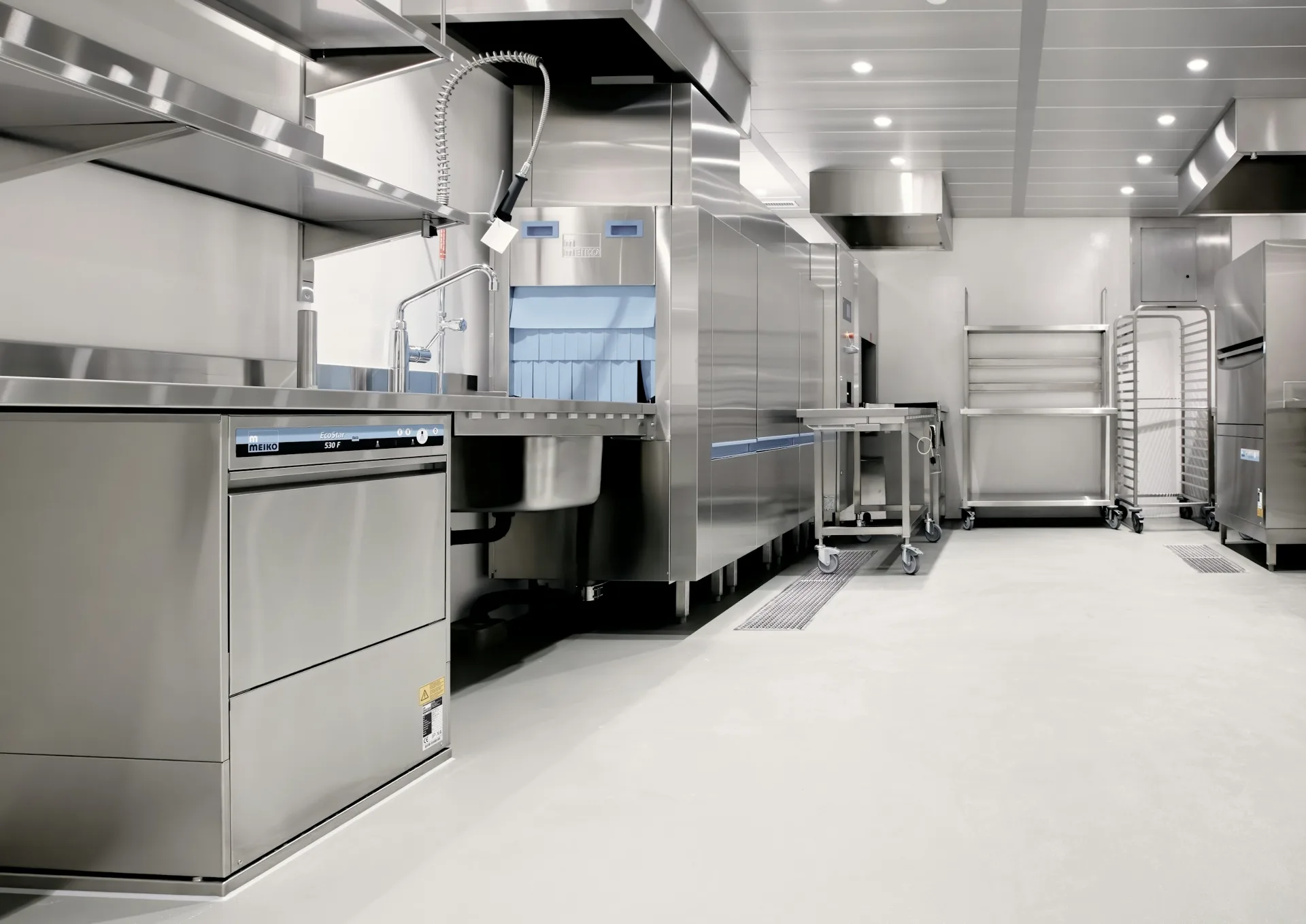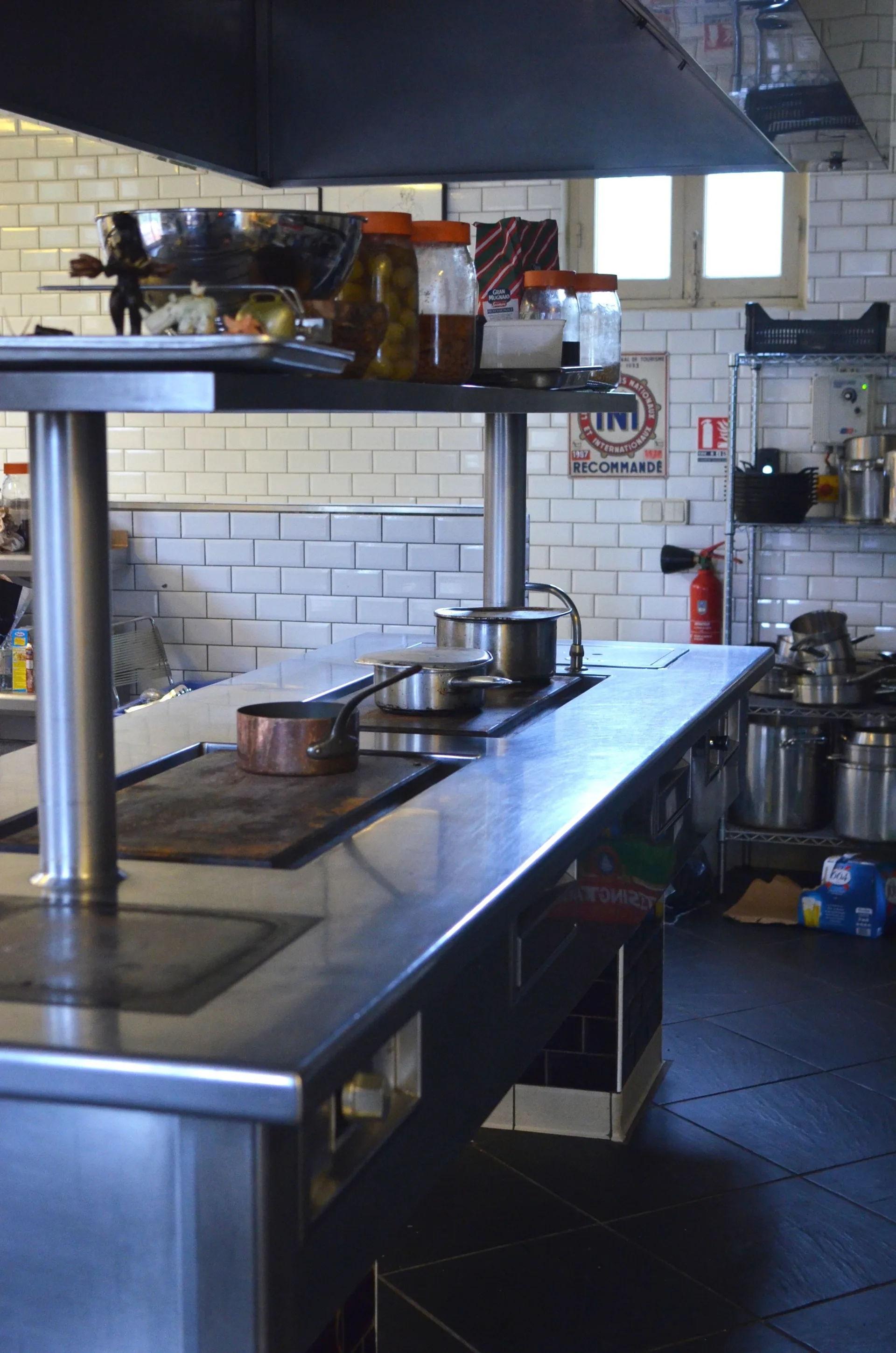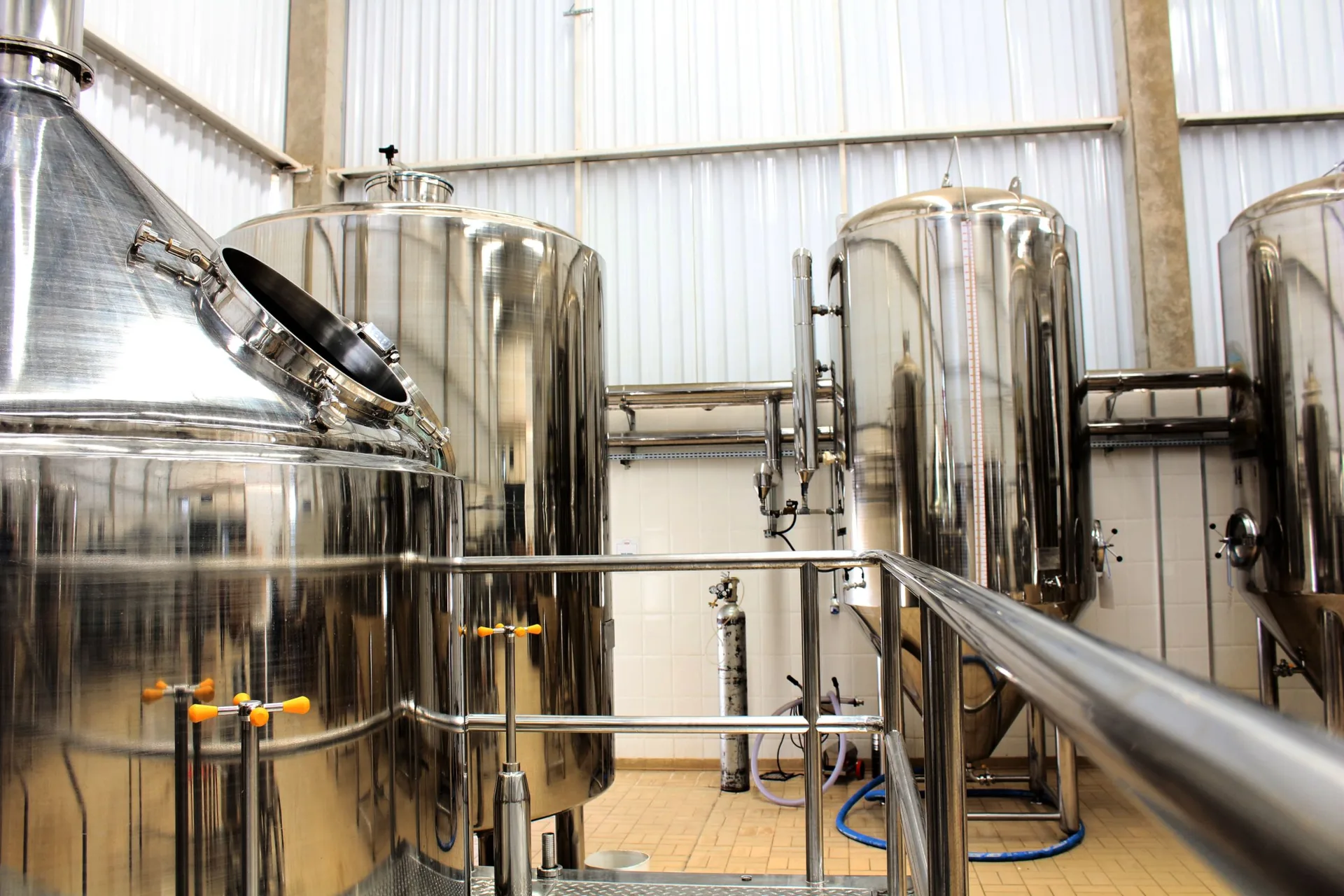

Polyurethane concrete flooring (PU cement flooring) is a seamless industrial floor, 4–9 mm thick, made from a mix of polyurethane resin, hardener and a cement-based filler. Unlike epoxy, it withstands boiling water, steam cleaning and sudden temperature changes, and it resists food chemicals such as lactic acid, fats and sugar. It is the preferred choice in meat, dairy, bakery and beverage plants, in industrial kitchens and in cold stores. The thickness is chosen according to the highest temperature the floor will see; the anchor grooves along the edges are the most critical detail of the application.
What is polyurethane concrete flooring?
Polyurethane concrete flooring is a seamless, heavy-duty industrial floor system, 4–9 mm thick, made by mixing a polyurethane resin, a hardener and a cement-based mineral filler together. In technical literature it also goes by the names "PU concrete", "PU cement" (polyurethane cement) or "urethane concrete". It looks like a coating, but it behaves very much like concrete: it is hard, dense and resistant to abrasion; unlike epoxy, however, it withstands sudden changes in temperature, boiling water and steam.
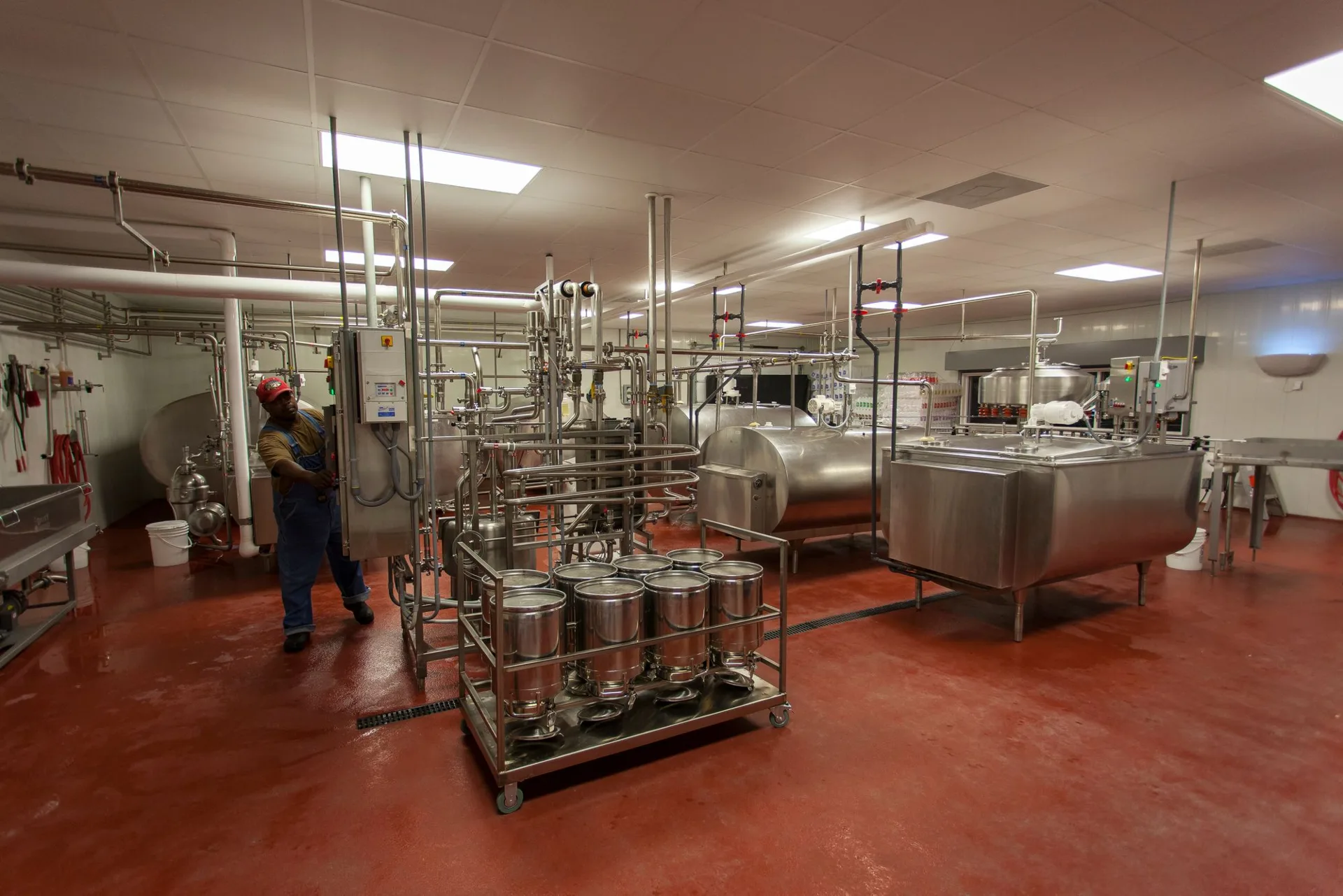
What sets this system apart from other resin floors is its resistance to thermal shock. In a food plant, boiling water spilled on the floor, steam cleaning or trays coming straight out of a hot oven create stress in rigid coatings such as epoxy; over time that stress comes back as cracking, blistering and peeling. Polyurethane concrete, on the other hand, carries this stress because its expansion behavior is close to that of concrete. This is why it is the first-choice floor system in meat, dairy, bakery, beverage and ready-meal plants, in industrial kitchens and in cold stores.
The material has three components: a liquid polyurethane resin (A), a hardener (B) and a powder component made of cement and selected aggregate (C). When the three are mixed, the chemical reaction and the hydration of the cement proceed together, producing a layer that combines the chemical resistance of a resin with the solidity of a mineral floor. Depending on the type used, it is applied either by trowel or as a self-leveling pour.
Types of polyurethane concrete systems
Polyurethane concrete is not a single product but a family of systems distinguished by thickness and finish. The right type is chosen according to the thermal load, wetness and traffic on the floor:
- Self-leveling polyurethane concrete (4–6 mm): It flows out on its own and gives an even, lightly textured surface. It suits moderate thermal loads, dry or slightly wet production areas, storage areas and packaging sections.
- Trowel-applied heavy-duty polyurethane concrete (6–9 mm): This is the type that offers the highest mechanical and thermal resistance. It is used in areas that are steam cleaned, washed down with boiling water and subjected to heavy pallet jack traffic.
- Textured anti-slip polyurethane concrete: It is obtained by broadcasting aggregate onto the self-leveling coat and applying a sealing coat over it. It reduces the risk of slipping in constantly wet and oily areas, in slaughter and cutting rooms and in wash-down sections.
- Polyurethane concrete coving and skirting: It forms a curved, seamless transition between floor and wall. By eliminating the corners where dirt and water collect, it provides the detail required in hygiene audits.
What does polyurethane concrete deliver?
- Thermal shock resistance: Depending on thickness and product, it withstands hot water and steam cleaning, and sub-zero temperatures in cold stores.
- Chemical resistance: It resists food and cleaning chemicals such as lactic acid, vinegar and fruit acids, animal and vegetable fats, sugar solutions, brine, caustics and disinfectants.
- Hygiene: The seamless, non-porous surface leaves no gaps for bacteria to cling to; together with coved skirting, the base of the wall becomes part of a single piece as well.
- Mechanical strength: It is far more resistant to heavy pallet jack wheels, impact and dropped equipment than epoxy paint and thin systems.
- Slip resistance: With a textured finish it provides safe footing on wet and oily floors.
- Short downtime: Depending on the product, most systems can be opened to light traffic within 24 hours; this is an important advantage for facilities that can halt production only briefly.
- Odor and food suitability: Solvent-free systems give off little odor during application and, once cured, do not transfer odor or taste to food.
The difference between epoxy and polyurethane concrete
Epoxy and polyurethane concrete are often used side by side in the same facility; the difference between them determines which one is applied to which section. You can find a detailed comparison in our article epoxy or polyurethane?; in short:
- Temperature: Epoxy cannot withstand continuous hot water and steam; polyurethane concrete was developed for exactly these conditions.
- Thickness: Self-leveling epoxy is generally applied at 2–3 mm; polyurethane concrete is 4–9 mm and carries heavier loads.
- Appearance: Epoxy gives a glossy surface with a wide choice of colors; polyurethane concrete has a matte, industrial look and a more limited color range. Its color may lighten over time in sunlight; this is a visual change and does not affect its performance.
- Moisture tolerance: Thanks to its cement content, polyurethane concrete is more tolerant of moisture in the underlying concrete than epoxy; even so, measuring before application is essential.
- Cost: Because of its thickness and material, its cost per square meter is higher than that of epoxy systems. For this reason it is usually applied only to the sections with thermal load and wetness; the budget is balanced by choosing epoxy for dry storage, corridor and packaging areas.
Where is polyurethane concrete flooring used?
Polyurethane concrete flooring is the system for areas where the floor is exposed to wetness, heat, chemicals and heavy loads all at the same time. The places where it is applied most often:
- Meat, poultry and fish processing plants; slaughter rooms and chill rooms
- Dairy and dairy product plants; cheese and yogurt production areas
- Bakery, baked goods and confectionery production
- Beverage, fruit juice and brewing plants; filling lines
- Hotel, hospital and catering kitchens; dishwashing areas
- Cold stores and freezer stores
- Pharmaceutical and cosmetics production areas
- Chemical plants and laboratories
- Industrial laundries and vehicle wash areas
For sector-specific details, see our food processing epoxy flooring, hotel and hospitality facilities, hospital and healthcare facilities and chemical and energy facilities pages.
Limits: when is polyurethane concrete not the right choice?
- Decorative expectations: If a glossy, patterned or corporate-colored floor is wanted, metallic and decorative epoxy or self-leveling epoxy is a better fit.
- Dry, temperate areas: Where there is no thermal load and no constant wetness, the extra cost of polyurethane concrete is usually unnecessary; epoxy floor paint or self-leveling epoxy is sufficient.
- Static control: In areas where static electricity must be controlled, such as electronics manufacturing, anti-static epoxy systems are used.
- Damaged, weak substrate: No coating can rescue concrete that cannot carry loads. On very weak or disintegrating screeds, the substrate must be repaired first.
Polyurethane concrete application, step by step
- Site survey and measurement: The strength and moisture of the concrete are measured; the temperatures, cleaning methods, chemicals and traffic in each section are recorded. The thickness and type are determined on the basis of this data.
- Surface preparation: The concrete is opened up by shot blasting or diamond grinding; the weak top layer, oil and old coatings are removed.
- Anchor grooves: This is the step specific to polyurethane concrete, and the most critical one. Grooves are cut into the concrete along every edge where the floor ends, around drains, channels and door thresholds, and on both sides of movement joints. The coating is keyed into these grooves, which keeps it from lifting at the edges. Where this step is skipped, thermal movement lifts the coating at the edges.
- Repairs and falls: Pits and cracks are repaired; in areas where water must run to the drain, falls are corrected with a screeding mortar.
- Primer: A primer suited to the system is applied and, if necessary, broadcast with quartz to create a key for the next coat.
- Body coat: The three components are mixed with a low-speed mixer and, within the pot life, either trowel-applied or spread as a self-leveling coat. In anti-slip systems, aggregate is broadcast onto the wet coat and a sealing coat is applied.
- Skirting and details: The bases of the walls are finished with coved polyurethane concrete skirting, and the areas around drains are finished with a fall toward the drain.
- Curing and handover: Depending on the product and temperature, the floor generally takes foot traffic after 8–12 hours and light traffic after about 24 hours, and reaches full chemical resistance within a few days. Hot water and steam cleaning begin only after full cure.
We cover the steps shared with epoxy application in our article how epoxy flooring is applied, and the temperature and humidity conditions that affect curing in our article how long epoxy flooring takes to dry.
How to choose the thickness and temperature resistance
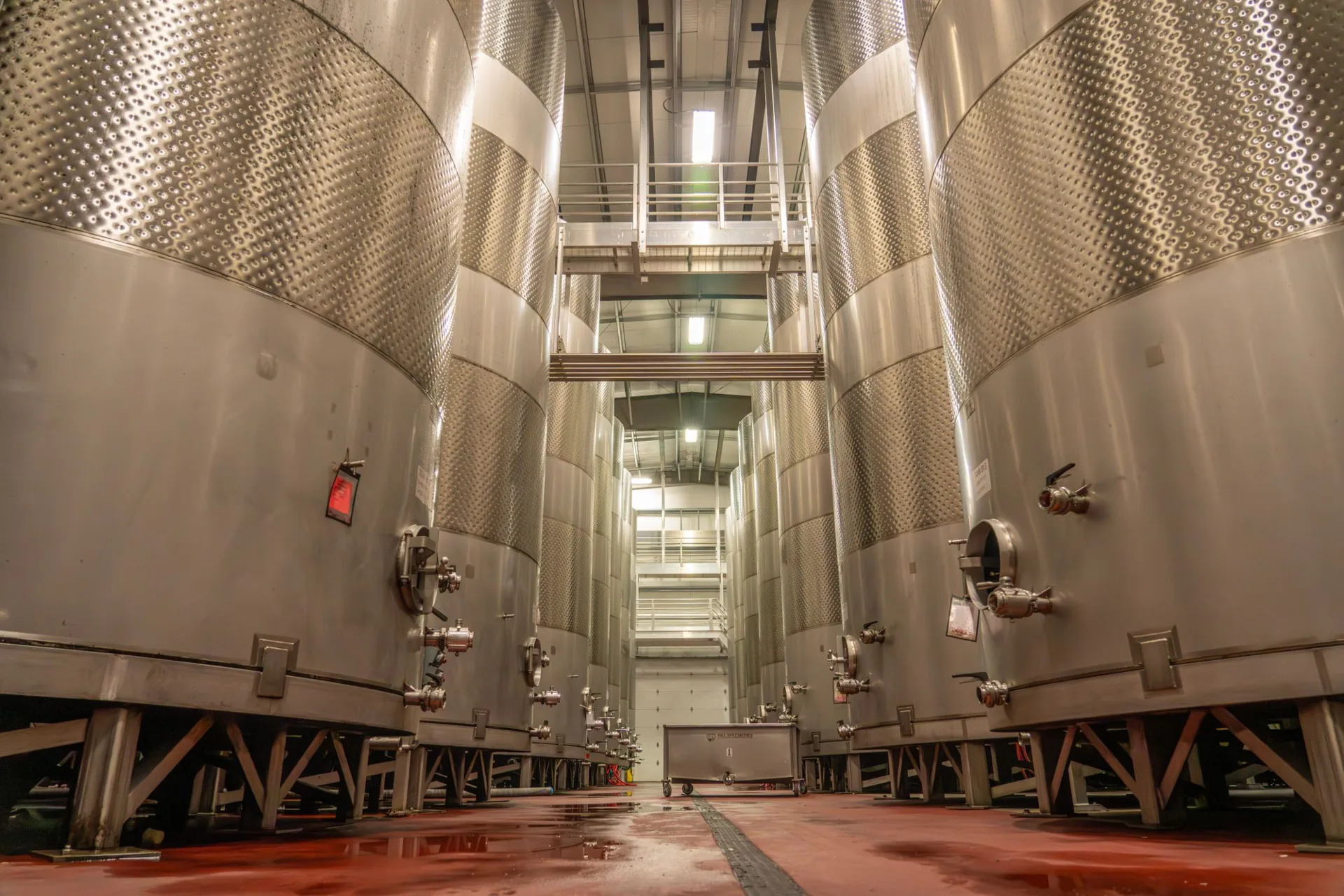
With polyurethane concrete, the thickness is determined by the highest temperature the floor will be exposed to. The general approach is as follows; exact values are taken from the technical data sheet of the product used:
- 4–6 mm: Washing with warm water, moderate traffic, occasional hot water spills.
- 6 mm: Production areas with regular hot water washing and hot liquid spills.
- 9 mm: Steam cleaning, boiling water, oven fronts and hot process lines.
Choosing different thicknesses for different sections of the same facility is both a safe and an economical approach: the line where boiling water is spilled can be 9 mm, while the packaging section next to it can be 4–6 mm or epoxy.
Polyurethane concrete in cold stores and freezers
Thermal shock is not only about heat. In cold stores and blast freezers the floor carries constant loads at sub-zero temperatures; as the doors open and close, condensation and freeze–thaw cycles occur at the boundary between warm and cold air. Under these conditions epoxy can become brittle. Polyurethane concrete, by contrast, keeps its flexibility at low temperatures as well, so it is used with confidence on the floors of chill rooms, freezer stores and loading ramps.
The timing of the application also matters in cold areas. The coating is applied before the room is brought down to temperature, and it is left to cure at the temperature specified for the product; refrigeration is then brought into service gradually. If a cold store in operation is to be refurbished, the room is emptied and warmed to create suitable conditions. The anchor groove and joint details at door thresholds and at warm–cold zone transitions are planned separately, because these lines are where the temperature difference is felt most.
Color and finish options
Polyurethane concrete gives a matte or semi-matte, lightly textured surface. Colors are usually chosen from a limited palette of red, ochre (mustard), cream, gray, green and blue shades. Different colors can be used side by side to separate zones; for example, a high-hygiene zone and the dispatch section can be distinguished by color. The texture is chosen as fine, medium or coarse according to the risk of slipping; the coarser the texture, the greater the slip resistance, but cleaning becomes somewhat harder.
Common mistakes
- Applying without cutting anchor grooves; this is the most common cause of lifting at the edges.
- Choosing the thickness without taking the thermal load into account; applying a thin system to an area that is steam cleaned.
- Coating without properly resolving the areas around drains and the falls; standing water creates both a hygiene and a slip problem.
- Mixing the components in the wrong ratio or not mixing them thoroughly.
- Starting hot water or steam cleaning before curing is complete.
- Leaving the base of the wall without skirting; water and dirt collecting in the corner is the first thing picked up in hygiene audits.
Cleaning and maintenance
Polyurethane concrete is designed to withstand the intensive cleaning routines of food and kitchen areas. Daily cleaning consists of removing coarse soiling, foam washing with a suitable detergent, scrubbing and rinsing. On textured surfaces, scrubbing machines with non-abrasive brushes or scrubbing by brush are more effective than mopping. Chemical cleaning agents should be used at the concentration recommended by the manufacturer and should not be left on the surface longer than necessary. You can find general maintenance recommendations in our guide Epoxy Floor Maintenance and Cleaning; the same principles apply to polyurethane concrete.
Over the years the texture may wear in zones with heavy traffic. In that case the floor can be renewed without being removed, by preparing the surface and applying a new sealing coat.
What determines the price of polyurethane concrete flooring?
The cost per square meter is determined mainly by the thickness, the system type (self-leveling, trowel-applied or anti-slip), the condition of the existing floor, the length of anchor grooves and skirting, the need for fall correction and the total area. The more drains and door transitions there are, the more detail work is involved. Phased application while the facility is operating and night work are also reflected in the cost. We explain the general price factors in detail in our article 7 Factors That Determine the Cost of Epoxy Flooring per m².
Requesting a quote
With polyurethane concrete flooring, the right thickness and details depend on your sections, your cleaning methods and your temperature conditions. From the floor area, photos and these details we provide a written quotation showing the layers, the thickness and the details and, where necessary, plan polyurethane concrete and epoxy together in the same facility. Once the quotation is approved, we finalize the application plan with an on-site survey. Click here to request a quotation.
Key Features
- Resistance to boiling water, steam cleaning and thermal shock
- Chemical resistance to lactic acid, fats, sugar, salt and disinfectants
- Seamless, non-porous and hygienic surface; coved skirting option
- 4–9 mm body resistant to heavy pallet jack traffic and impact
- Textured anti-slip finish for wet and oily areas
- More tolerant of substrate moisture than epoxy
- Open to light traffic in about 24 hours with most systems
- Solvent-free systems that transfer no odor or taste to food
Areas of Use
- Meat, poultry and fish processing plants
- Dairy and dairy product plants
- Bakery, baked goods and confectionery production
- Beverage, fruit juice and brewing plants
- Hotel, hospital and catering kitchens
- Cold stores and freezer stores
- Pharmaceutical and cosmetics production areas
- Chemical plants and laboratories
- Industrial laundries and vehicle wash areas
Technical Details
| Thickness | 4–9 mm |
|---|---|
| System | Primer + polyurethane concrete body (self-leveling, trowel-applied or textured anti-slip) + coved skirting |
| Components | Three-component (polyurethane resin, hardener, cement-based filler) |
| Thermal resistance | Up to hot water and steam cleaning, depending on thickness and product |
| Finish | Matte or semi-matte; fine, medium or coarse texture |
| Open to foot traffic | Approx. 8–12 hours (20 °C) |
| Open to light traffic | Approx. 24 hours |
| Critical detail | Anchor grooves at edges, drains and joints |
Frequently Asked Questions
What is the main difference between polyurethane concrete and epoxy?
The main difference is temperature resistance. Epoxy is a rigid material and can crack and blister when exposed to continuous hot water, steam and sudden temperature changes. Polyurethane concrete, on the other hand, withstands thermal shock because its expansion behavior is close to that of concrete. It is also thicker (4–9 mm) and more resistant to heavy loads. Epoxy, for its part, gives a glossy, decorative and more economical surface; this is why the two systems can be used together in different sections of the same facility.
What temperatures can polyurethane concrete withstand?
Resistance depends on thickness and product. Thin systems are chosen to withstand warm water and occasional hot water spills, while thick systems (about 9 mm) are chosen to withstand steam cleaning and boiling water. In cold stores it also keeps its flexibility at sub-zero temperatures. The exact limits are given in the technical data sheet of the product used; the thickness is set in the quote according to the highest temperature the floor will be exposed to and confirmed during the site survey.
Is polyurethane concrete suitable for food plants?
Yes, polyurethane concrete is a system developed specifically for food plants. Its seamless, non-porous surface does not harbor bacteria, it resists food-derived chemicals such as lactic acid, animal fats and sugar, and solvent-free systems transfer no odor or taste to food once cured. Together with coved skirting and details that fall toward the drains, it provides the floor conditions required in hygiene audits.
How many days does a polyurethane concrete application take?
In a medium-sized area, surface preparation, anchor grooves, primer and the body coat are generally completed within a few working days. Depending on the product, the floor can be walked on after about 8–12 hours and is opened to light traffic after around 24 hours. Hot water and steam cleaning begin only after full cure. In facilities in operation, the work can be divided into sections and carried out without stopping production.
Why is polyurethane concrete more expensive than epoxy?
It is applied thicker, it is a special three-component material, and details such as anchor grooves, coved skirting and the areas around drains require more labor. For this reason its cost per square meter is higher than that of epoxy systems. To balance the budget, a common solution is to apply polyurethane concrete only to the sections with thermal load and constant wetness, and epoxy to the dry areas.
Can polyurethane concrete be applied over old ceramic tiles or epoxy?
It is generally not recommended. To be able to carry thermal movement, polyurethane concrete must be bonded directly to sound concrete and keyed in with anchor grooves. Old ceramic tiles, quarry tiles or coatings are usually removed and the concrete is prepared mechanically. On some sound, well-bonded surfaces, alternative solutions can be considered after a preliminary test; the decision is made during the site survey.