
Epoxy Floor Maintenance and Cleaning: How to Extend Its Service Life
An epoxy floor needs little maintenance, but it should not be neglected. Everything you need to know, from daily cleaning and stain removal to the…
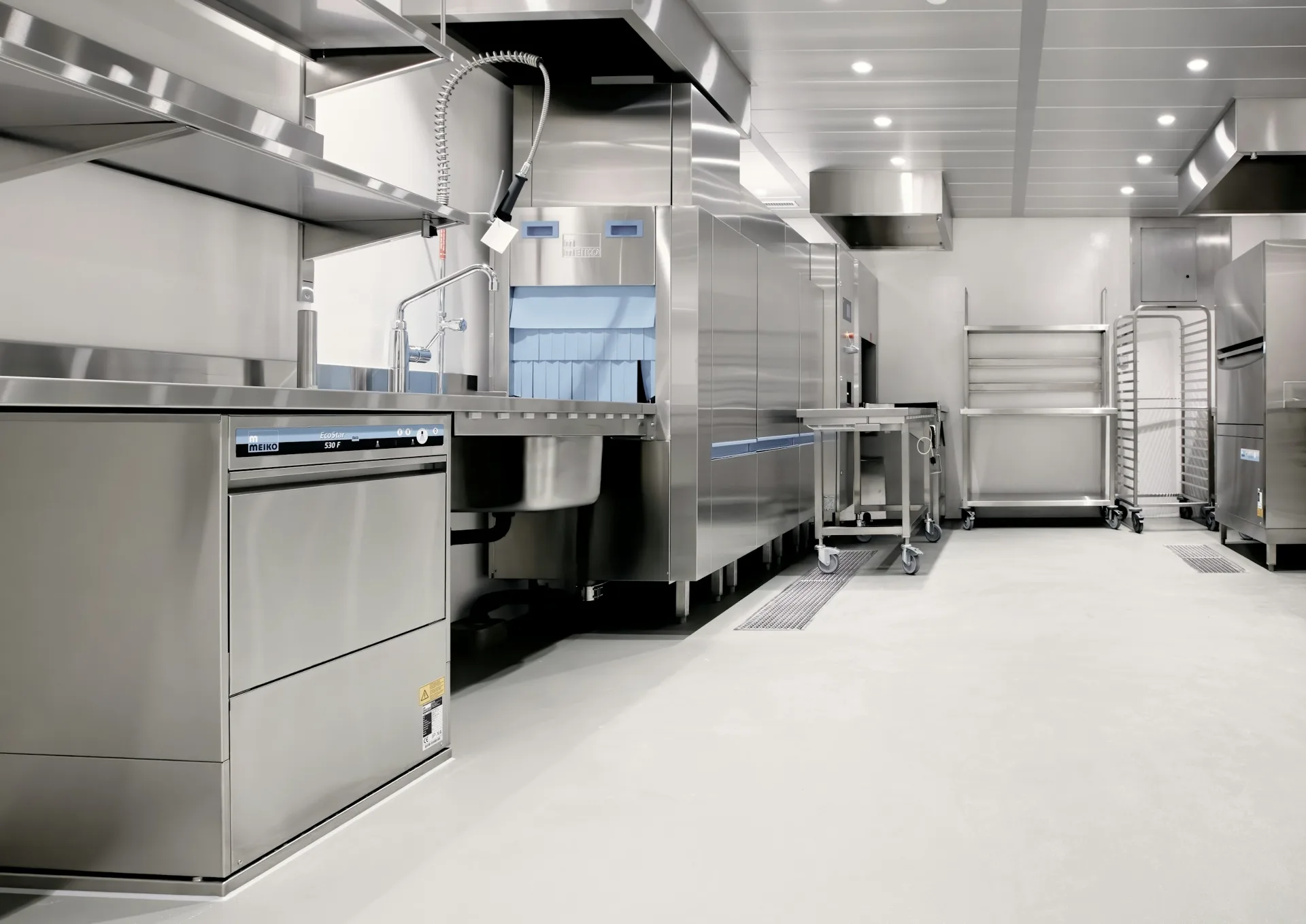
Washable, seamless and anti-slip epoxy floors for meat, dairy, bakery and beverage production and for kitchens, complete with cove, drain and fall details.
Food processing epoxy flooring creates a seamless, impermeable, washable surface; in oily and wet sections it is applied with a quartz-sand anti-slip texture (R10–R13) and with a curved cove along the base of the walls. A 2–3 mm self-leveling system is chosen for dry packaging areas and a 3–5 mm textured epoxy for wet production and kitchens. At points washed continuously with hot water above 60 °C or with steam, epoxy is not the right choice; these zones are identified separately in the quotation.
Food processing epoxy flooring keeps floors that meet fat, water, sugar, blood and cleaning chemicals every day washable, impermeable and safe. In food businesses the floor is judged from two separate angles: it must not contaminate the product, and it must not cause the people working on it to fall.
Bare concrete is porous; it absorbs fat and protein-laden liquids, starts to smell over time and its surface dusts. With ceramic, the tile is durable but the grout is eaten away by acidic wash water, water gets under the tiles and the tiles come loose. The space beneath a broken tile is a void that no cleaning can reach.
An epoxy coating covers the floor with a one-piece, seamless layer. What is expected of the floor in HACCP plans and food safety audits is clear: that it is impermeable and washable, that it contains no cracks or open joints, that it leaves no standing water and that its junction with the wall can be cleaned. A properly designed epoxy system helps to meet these expectations; what determines the result, however, is not the coating alone but details such as the fall, the drains and the cove.
On the occupational safety side, the deciding factor is slip resistance. A smooth surface cannot be used on an oily, wet floor; a textured epoxy roughened with quartz sand is required. The coarser the texture, the better the grip, and the harder the cleaning. In food plants the real task is to strike this balance separately for each section.
We want to say this at the very start and plainly. Epoxy is not the right material for floors that are washed continuously with water above 60 °C or with steam. When hot water hits a cold floor, the coating and the concrete expand at different rates; as this thermal shock is repeated, the coating separates from the concrete, blisters and cracks. The points where cooking kettles are emptied, process areas washed down with steam and the areas beneath lines that are cleaned in place with hot water are examples of this condition.
When we see a zone like this we do not recommend epoxy, and we state so clearly in the quotation. Those sections need a different floor system, designed to withstand thermal shock, and that is not among the systems we apply. Washing with lukewarm water, occasional splashes of hot water and pressure washing with cold water, on the other hand, are not a problem for epoxy.
It is rare for a whole plant to be under the same conditions. In most businesses the hot process area is a small part of the total floor; packaging, storage, shipping, cold rooms, corridors, the laboratory and the staff areas are suitable for epoxy. We make this distinction section by section in our quote and confirm it during the site survey.
Under the subheadings below we have described what stresses the floor in each type of business and which system we choose and why.
In sections such as cutting, mincing, delicatessen production and cheese processing, the floor is cold, wet and greasy. Animal fat forms a thin film on a smooth surface and makes boot soles slide; this is why we use a textured epoxy with medium-to-coarse quartz in the processing halls. If the organic acids in blood and dairy products are left standing on the surface, they wear down a standard resin over time; for this reason a resin with high chemical resistance is selected and the end-of-shift washing routine becomes important. The wheels of crates and meat trolleys and dropped hooks and knives cause impact; the thickness of a quartz-filled system is an advantage here. Because these plants operate under refrigeration, the space has to be heated before application. On a cold floor the resin cures late, and if condensation forms on the surface the bond is impaired. In delicatessen sections where salt and spices are used, the drain edges and the base of the walls are sealed completely so that salt water does not reach the concrete.
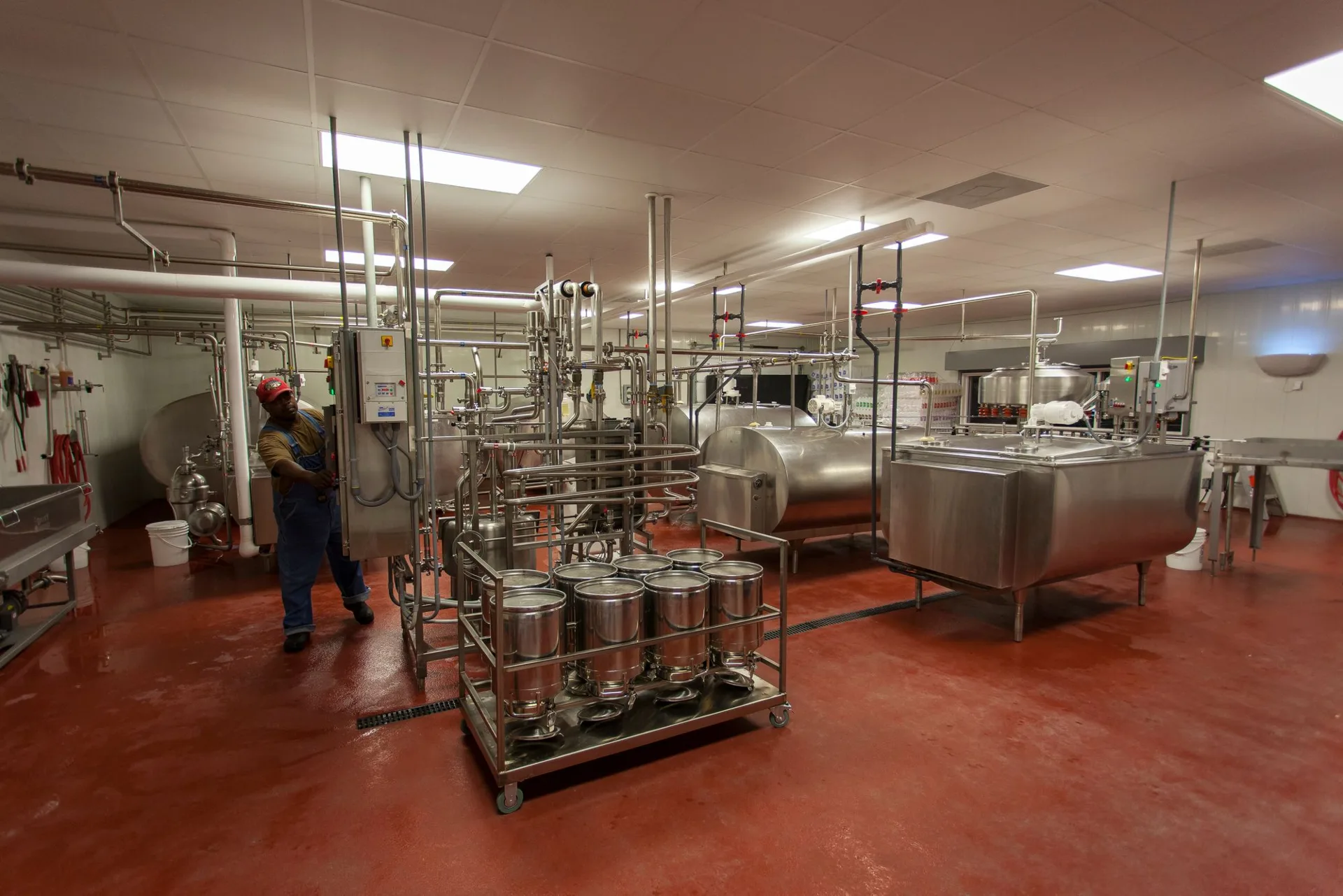
In dairy plants the two factors that wear the floor are lactic acid and clean-in-place (CIP) solutions. Spilled milk and whey turn sour within a short time, and caustic and acidic cleaning solutions drip onto the floor from the pipe connections. Standard epoxy does not last long in this environment; a resin with increased chemical resistance is required. The areas beneath the pasteurization and filling lines are most often washed with hot water; the limit we described above applies precisely to these points, and we keep these zones outside the scope of the epoxy. In contrast, packaging, case packing, cold storage, the finished goods store, the laboratory and the corridors are suitable for epoxy. We choose self-leveling epoxy for the dry packaging section and a finely textured finish for transitions that get wet. In cheese sections where brine is used, the cove and the surrounds of the drains are sealed with care so that salt water does not pass down into the concrete. On the milk reception platform, an anti-slip texture and a fall toward the drain are needed for the milk that drips from the tanker hoses.
The slaughterhouse is the environment in the food sector that treats the floor most harshly: constant water, blood, fat, the impact of falling pieces and frequent washing with hot water. In the slaughter and offal separation sections the floor is wet all day and the highest slip-resistance rating is required. Because in most plants these sections are also washed with hot water, however, they fall within the limit of epoxy; we do not make a recommendation without first finding out the temperature and the frequency of the wash water. The places where we use epoxy with confidence are the live animal reception corridors, the chilling and resting rooms, the packaging section, the shipping dock and the staff passages. On ramps a coarse-quartz texture grips both boots and pallet jack wheels. In all wet sections the fall of the floor and the layout of the drains are checked before the coating; no hollow should remain in which blood can collect. Beneath the overhead rail line, falling hooks and chains cause point impact; in these lanes the coating is kept thick.
In bakeries the floor is dry but dusty; flour spreads everywhere and on a smooth surface it becomes slippery underfoot. On a coarse-textured floor, on the other hand, flour fills the texture and turns to dough with moisture. For this reason, in the dough preparation and shaping sections we prefer a very fine sand texture that can be swept, or a matte self-leveling surface. The second factor is heat: the floor in front of the oven mouth is constantly warm, and the wheels of rack trolleys that have just come out of the oven are hot. Epoxy softens at continuously high temperatures; the soundest course is to measure the conditions on the narrow strip in front of the oven and, if necessary, to leave that strip out of the scope. In the raw material store where sacks of flour are stacked, epoxy floor paint is sufficient to prevent dusting. The areas under the feet of the dough trough and the mixer should be coated too. In sections working with high-fat doughs, such as savory pastries and buns, the floor becomes greasy; here the texture is chosen one grade coarser.
In pastry production kitchens it is sticky spills that stress the floor: sugar syrup, cream, chocolate, butter and egg. When sugar dries it forms a hard crust that tempts people to scrape it off, and scraping scratches the coating. On a seamless epoxy surface these residues are softened with lukewarm water and removed easily. A finely textured epoxy is suitable for the production section and a smooth self-leveling system for the cold cream and chocolate room. In most pastry shops the production kitchen and the sales floor are under the same roof, and the customer can see the back of house; a light-colored floor that looks clean is the showcase of the business. In the sales and seating section, decorative options such as metallic epoxy can also be used; for areas of this kind you can look at our stores and commercial spaces page. In small production kitchens the work is planned to coincide with the closing day. The dishwashing and mold washing corner, small as it may be, should be considered separately and made anti-slip with a fall toward the drain.
In kitchens where meals are produced in bulk, the floor is greasy, wet and heavily trafficked all at the same time. The cooking line, preparation, the dishwashing area, the cold room and the service exit are under different conditions, and a single texture does not suit all of them. We apply a coarse-textured epoxy in the cooking and dishwashing sections and a medium-textured one in preparation and the corridors. The points where tilting pans and kettles are emptied are the critical places: if boiling water is poured directly onto the floor, the epoxy blisters there. The solution lies most often in the design; a stainless steel grated channel is placed beneath the emptying point and the hot water reaches the drain without touching the floor. The channel edges and the equipment feet are joined to the coating, and the base of the walls is coved. At the service exit, where meal carts and insulated food containers pass, no threshold is left; it is here that wheel impact tires the edge of the coating the most. Additional information on hotel and resort kitchens can be found on our hotels and accommodation facilities page.
Restaurant kitchens are small, but they are among the most intensively used floors per square meter. The existing floor is generally ceramic tile; the joints have filled with grease and some of the tiles have begun to move. Epoxy can be applied over sound ceramic: the surface is degreased, roughened with diamond tooling, the joints are filled and a textured system is applied. In front of the deep fryer, splashes of very hot oil can leave dull spots on the surface; placing a stainless steel drip tray or an anti-slip mat in this zone is enough. For restaurants the most difficult issue is time. A few days are needed for preparation, primer, coating and topcoat; although the surface becomes walkable in about 24 hours, it should not be opened immediately to intensive washing and contact with oil. The job has to be made to coincide with the annual closure, a refurbishment period or a closed period of at least a few days. Narrow rooms such as the back of the bar and the service pantry are also coated with the same system, making them one piece with the kitchen.
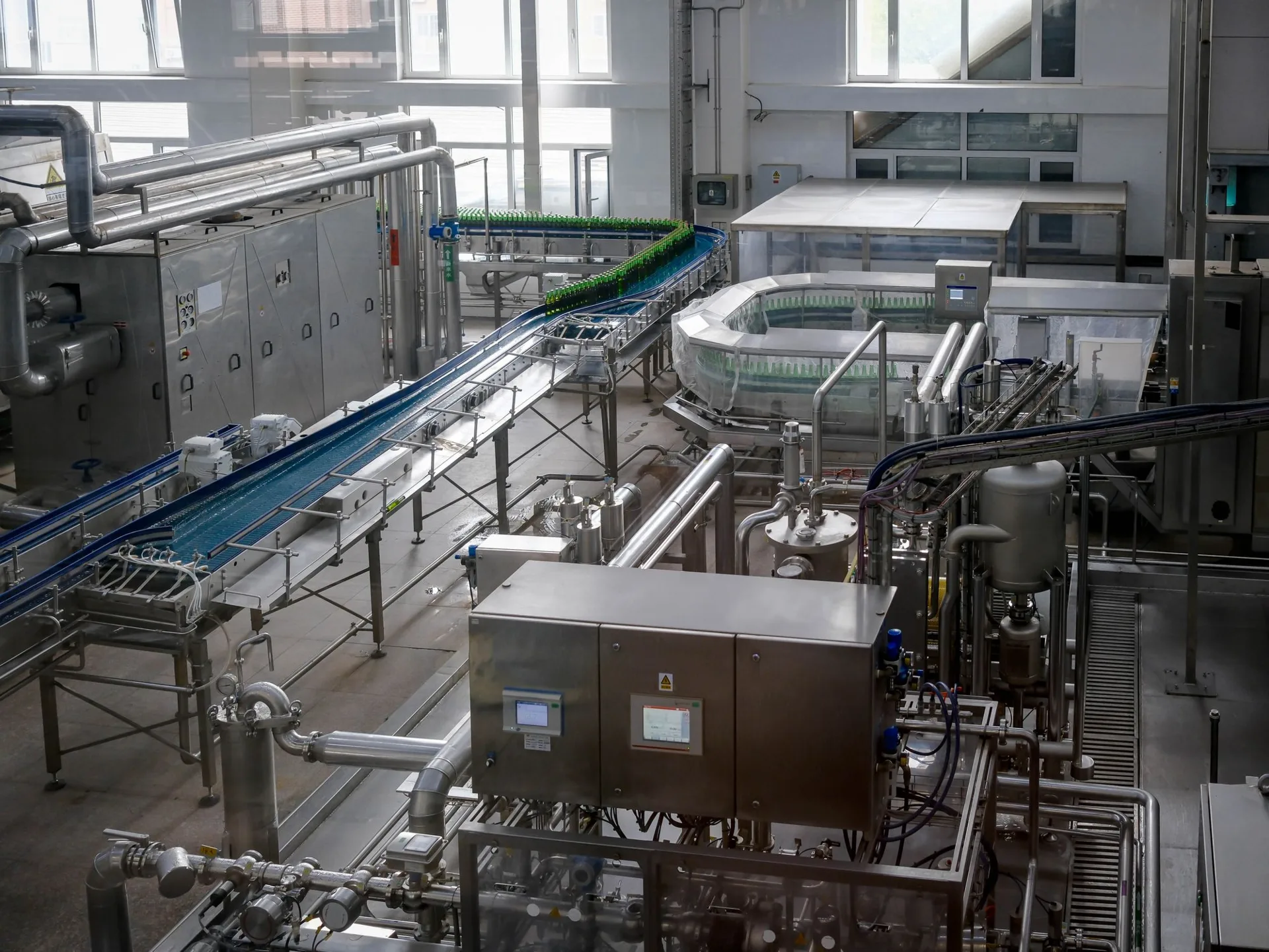
In plants that fill fruit juice, carbonated drinks, water and beer, the floor meets sugar and acid. Fruit concentrates and syrup leave a sticky film, while fruit acids and cleaning solutions tire the surface chemically. The area beneath the filling line is constantly wet, and on lines that work with glass bottles, broken glass scratches the surface. In this section we use a textured epoxy with a fall toward the drain, a medium texture and high chemical resistance. The places where bottle washers and pasteurizers discharge hot water are assessed separately with regard to the limit of epoxy. In the syrup room and the raw material preparation section, the cove and the surrounds of the drains are important. At the filling outfeed, where kegs and crates are set down on the floor, impact is heavy; a thick quartz-filled system lasts longer here than a smooth coating. In the finished goods store and the shipping area, where full pallets are moved by forklift, self-leveling epoxy is chosen; the details of these sections are described on the warehouses and logistics areas page.
In food plants the system is determined by how wet the area gets, what is spilled on the floor and how the floor is washed:
In sections where ignitable dusts and vapors such as flour, powdered sugar or alcohol vapor are present, static electricity can pose a risk; if the explosion protection assessment of the plant requires it, anti-static epoxy comes onto the agenda. Applying the highest slip-resistance rating everywhere would be a mistake: a texture coarser than necessary holds dirt and lengthens the cleaning time.
On a food plant floor that works wet, where the water goes is as important as the coating. Epoxy is a coating of a few millimeters and does not create a fall on its own; the fall must already have been formed in the concrete or the screed. During the site survey we mark the hollows that hold water and correct these zones with repair material before the coating. On floors with a pronounced fall, a sand-broadcast system is used, because self-leveling material flows and thins out.
The edges of drains and channels are the places where the coating is stressed the most; wheel impact and water come together here. The coating is joined tightly to the stainless steel drain body or the channel profile, and the edge is thickened. The base of the walls is rounded into a curve with quartz-filled epoxy paste and generally carried up by 5–10 cm. The surrounds of cold room panels, column bases and machine plinths are finished with the same cove.
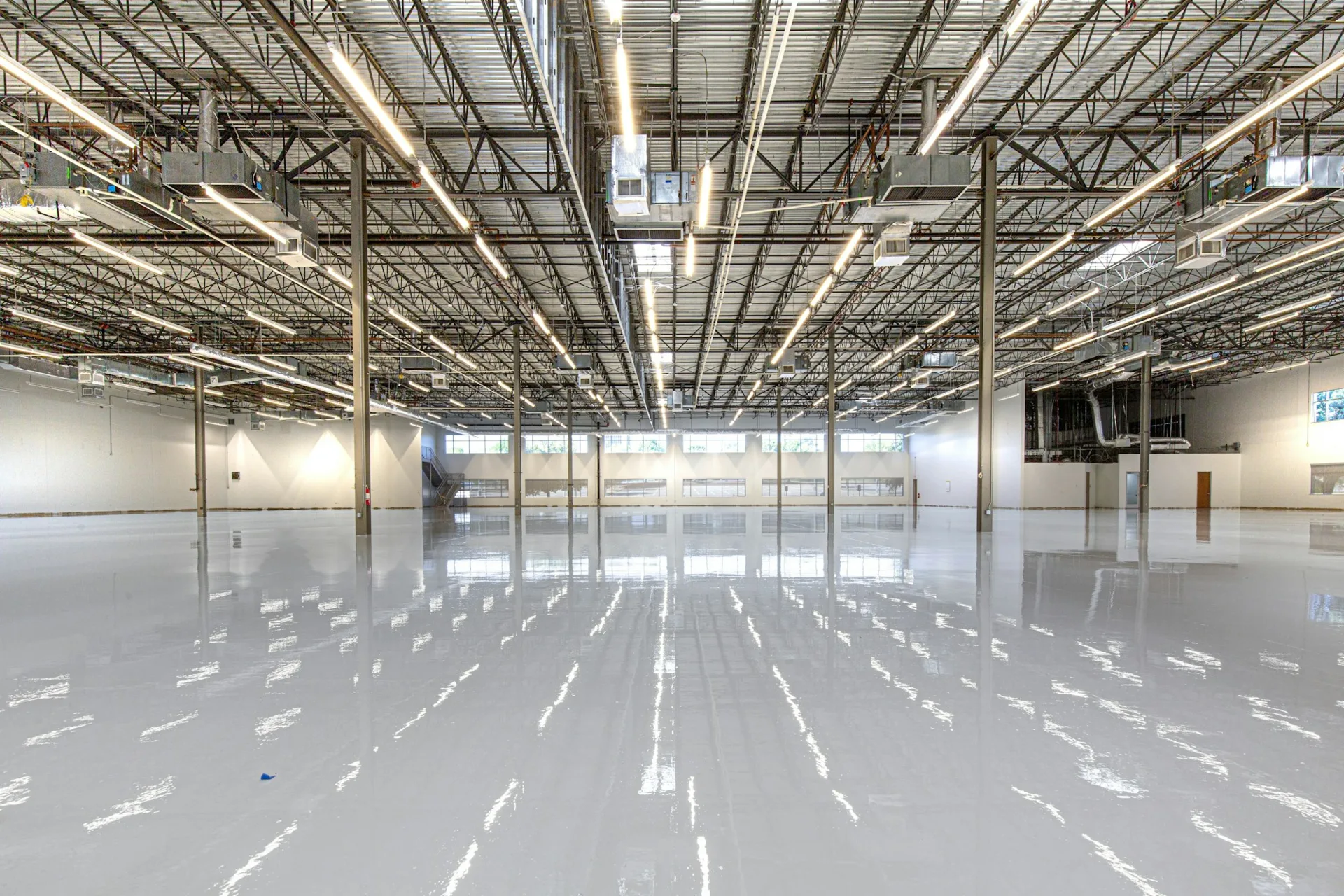
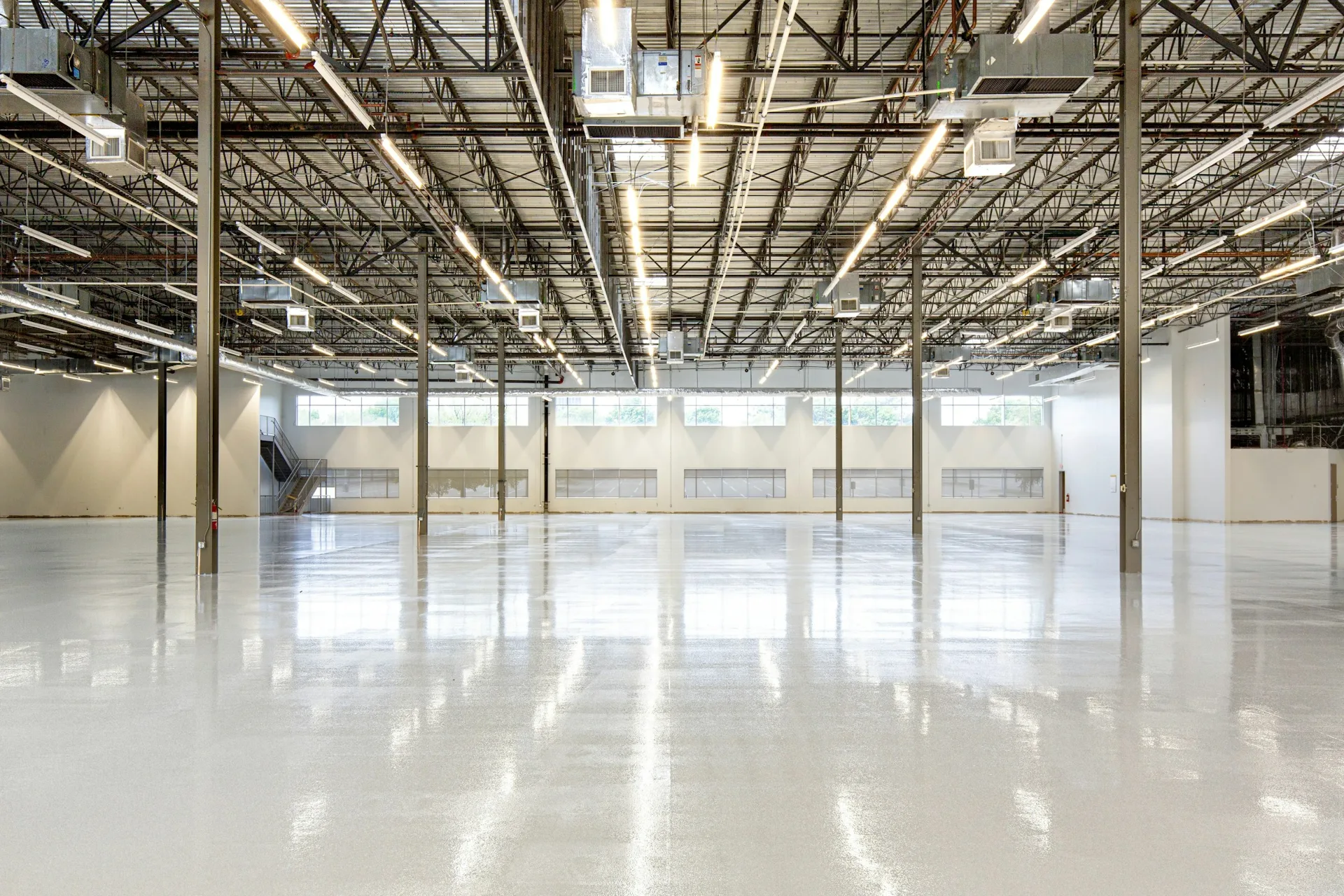
In food production a stoppage is expensive; moreover, dust and odor are unacceptable in an environment where exposed product is present. This is why we place the application in planned maintenance shutdowns, between seasons or at weekends. In large plants the area is divided according to the lines; while one line is running, the closed section is separated with temporary panels and the grinding machines work with dust extraction.
The products we use are solvent-free and low in odor. Even so, we ask that no exposed product, packaging material or raw material be left in the section being coated, and that the ventilation be kept running throughout the curing period. It is enough for products that absorb odors, such as fats and flour, to be kept closed in the neighboring rooms.
Temperature has a direct effect on the schedule. Cold rooms and refrigerated processing halls are closed for the application and brought up to ambient temperature; the refrigeration is not switched back on until the coating has cured. The earliest return to wet washing and chemical contact is the seventh day, when full cure is complete. If production has to start earlier, dry or damp cleaning should be carried out in the first days and heavy loads should be held back.
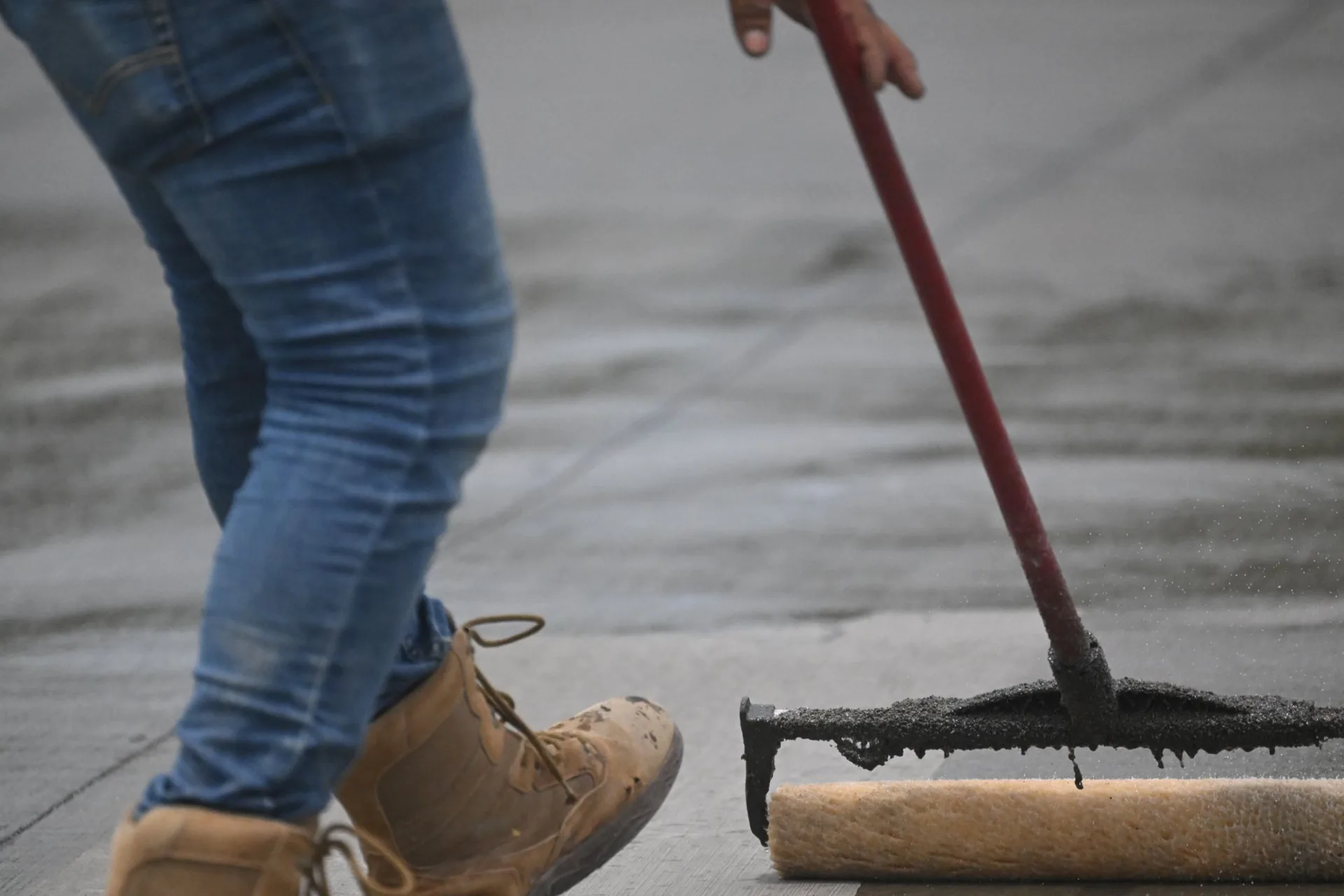
Textured epoxy floors are cleaned not with a mop but with a brush. The daily routine is generally as follows: scraping off the coarse dirt, washing with a degreasing detergent using a machine fitted with brushes or a stiff brush, rinsing with plenty of water and pulling the water to the drain with a squeegee. Detergent that is not rinsed off leaves a slippery film when it dries.
Pressure washing can be used; however, the temperature of the water should be kept lukewarm, and steam cleaners should not be held on the same spot for a long time. Acidic descalers are used at the recommended concentration and with a short contact time, and are then rinsed off. Washing away acidic spills such as milk, blood, fruit juice and vinegar without leaving them until the end of the shift extends the life of the surface markedly.
Dragging metal crates and pallets wears down the texture; wheeled transport should be preferred. If the drain edges and the areas in front of the doors are inspected visually once a month, small breakouts are repaired on the spot before they grow. When, over the years, the texture wears down and slip resistance decreases, the floor is not stripped out; the surface is sanded, sand is broadcast again and the topcoat is renewed.
For a daily, weekly and yearly maintenance schedule and cleaning tips for each type of stain, see our guide Epoxy Floor Maintenance and Cleaning.
We explain what to look for when comparing quotes in our article 7 Factors That Determine the Cost of Epoxy Flooring per m².
To determine the right system and the duration for your plant, you can fill in the quotation form. The following information makes our work easier:
For similar production areas you can look at the factories and industrial facilities page, and for examples of completed jobs at the projects section.
| Recommended system | 3–5 mm textured epoxy in wet areas, 2–3 mm self-leveling in dry areas |
|---|---|
| Slip-resistance rating | R10–R13, depending on the section |
| Cove base | Curved epoxy cove, 5–10 cm high |
| Surface preparation | Degreasing, diamond grinding or shot blasting |
| Open to foot traffic | Approx. 24 hours |
| Full cure and wet washing | 7 days (20 °C) |
| Limit | Not applied at points with continuous hot water above 60 °C or steam shock |
It withstands washing with lukewarm water; it does not withstand continuous hot water and steam. When water above about 60 °C is poured onto the floor regularly, the difference in expansion between the coating and the concrete makes the coating blister. For this reason we do not recommend epoxy in places such as kettle emptying points and the areas beneath lines cleaned with steam, and we show these zones separately in the quotation. In the rest of the plant, that is in packaging, storage, corridors and cold rooms, epoxy is used without any problem. Sending the hot water directly to the drain through a channel or a pipe eliminates the problem in most kitchens.
A rating between R10 and R13 is chosen according to how wet and greasy the area is. R10 is sufficient for corridors and packaging sections that get wet occasionally, and R11 for preparation areas that are washed frequently and for ramps. In cooking, dishwashing and meat processing sections that work constantly wet and greasy, R12–R13 is required. Applying the highest rating everywhere is not right; as the texture becomes coarser, cleaning gets harder and more dirt is held. We make the selection section by section, taking your cleaning method into account as well.
For a small restaurant kitchen a closed period of a few days is generally needed. Degreasing, surface preparation, primer, the sand-broadcast coat and the topcoat are spread over separate days; about 24 hours after the topcoat the floor becomes walkable. Because the coating reaches its full chemical resistance in 7 days, however, spills of hot oil and intensive washing with detergent should be avoided during the first week. The exact duration depends on the condition of the existing floor and on whether the kitchen equipment can be moved out of place.
If the ceramic tile is sound and there are no voids beneath it, epoxy can be applied over it. First the tiles are sounded with a mallet, and those that move or sound hollow are taken out and the gap is filled. The surface is then washed with a degreaser, its glaze is removed by diamond grinding to roughen it, and the joints are filled with paste. In joints that have absorbed grease for years, the coating will not bond if the cleaning is not thorough enough; this is the most critical step of the job. If a large part of the tiling is loose, it is sounder to strip it out and go down to the concrete.
Solvent-free epoxy systems are low in odor; even so, no application is carried out in an environment where exposed food is present. The product, raw materials and packaging materials in the section to be coated are moved to another area beforehand; the section is separated with temporary panels and ventilated throughout curing. It is enough for products that absorb odors, such as fats, flour, chocolate and milk powder, to be kept in closed packaging in the neighboring sections. Once curing is complete, the surface gives off no odor.
It can, but during the application the refrigeration of the room must be switched off and the floor must have warmed up. Epoxy cures very slowly at low temperatures, and condensation on a cold floor also impairs the bond. For this reason the room is emptied, it is allowed to reach ambient temperature, the coating is applied and the refrigeration is not restarted until curing is complete. Because condensation water and icing create a slip risk in front of the doors, a textured finish is used there. We plan together, at the quotation stage, the period for which the room will be out of service.
An epoxy floor needs little maintenance, but it should not be neglected. Everything you need to know, from daily cleaning and stain removal to the…
We explain in plain language what epoxy flooring is, which types are available and why it is chosen for different kinds of spaces.
Every stage of an epoxy flooring installation from survey to handover: surface preparation, repairs, primer, coating layer and curing.
The two coatings look alike but behave differently. We compare epoxy and polyurethane in terms of hardness, flexibility, and UV and heat resistance.
Our priority is
Tell us about your project, and together we will pin down the right epoxy system for your floor, the application time and our quote.
Get a Quote5-year workmanship and 10-year product warranty. We respond to all requests within 24 hours. We work in all 81 provinces.