

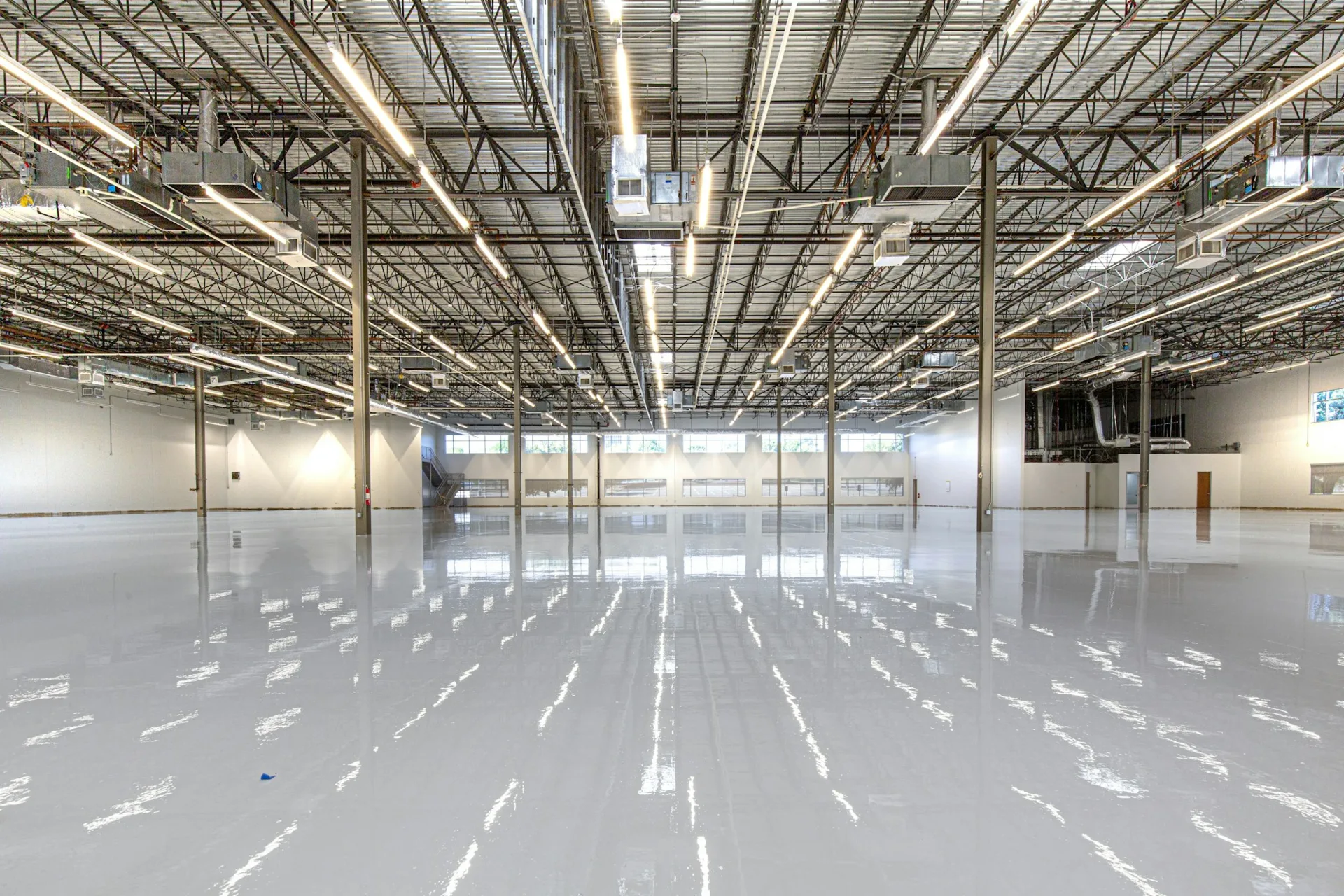
How Is Epoxy Flooring Installed? Application in 7 Steps
Every stage of an epoxy flooring installation from survey to handover: surface preparation, repairs, primer, coating layer and curing.
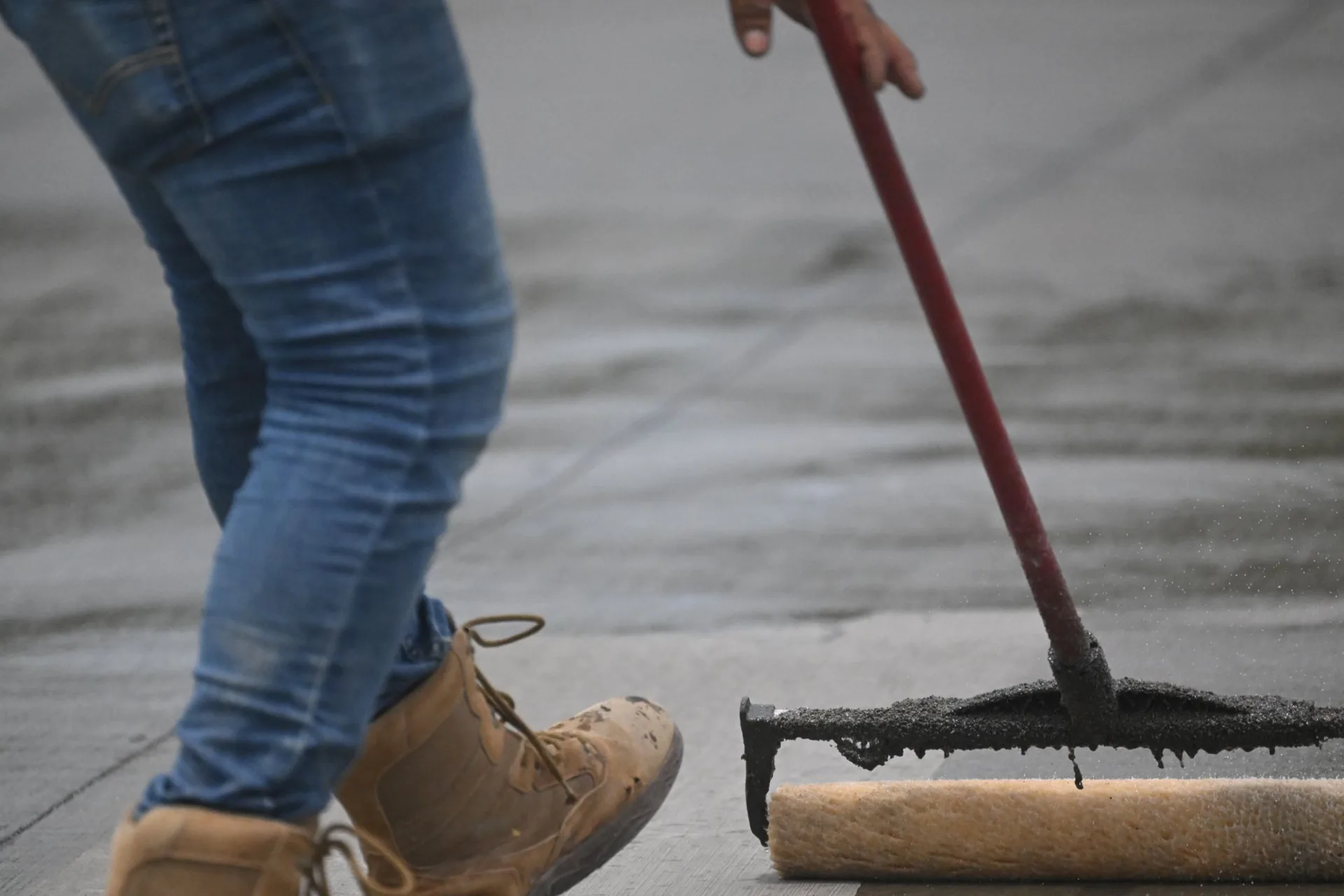
Epoxy flooring is a coating that hardens through the chemical reaction of a resin and a hardener, forming a seamless, dust-free and durable surface over concrete. It comes in different types, ranging from thin paint systems to 5 mm heavy-duty coatings.
Epoxy flooring is a seamless floor system applied over concrete, and you will find it in a wide range of spaces, from factories and hospitals to parking garages and home garages. In this guide we have brought together everything in one place: what epoxy flooring is, which types are available, its benefits and limits, which system suits which area and how the installation is carried out.
Epoxy is a resin system made up of two components: the resin (component A) and the hardener (component B). When the two are mixed in the correct ratio, a chemical reaction begins and the liquid mix turns into a hard, plastic-like solid within a few hours. This solid bonds very strongly to concrete, is waterproof and resists abrasion.
Epoxy does not dry through the evaporation of water, as a water-based paint does; it hardens through a chemical reaction. That is why it can be applied in thick layers and, once cured, forms a dense structure with no voids inside. We explain how many days curing takes in detail in our article how long does epoxy flooring take to cure.
Epoxy flooring is an epoxy resin system applied in successive layers over mechanically prepared concrete: a primer, a body coat and, where needed, a topcoat. The result is a single-piece, dust-free and easy-to-clean surface with none of the joints you get with ceramic tiles or pavers. Thickness ranges from a thin protective paint film (0.3–0.5 mm) to heavy-duty quartz-filled systems (4–5 mm).
Thinking of epoxy flooring as just a "paint" is a common misconception. Paint systems are only one member of the family; the systems most widely used in industry are thick, self-spreading coatings measured in millimeters.
Epoxy flooring types are distinguished by thickness, surface texture and special function. The five most common systems are:
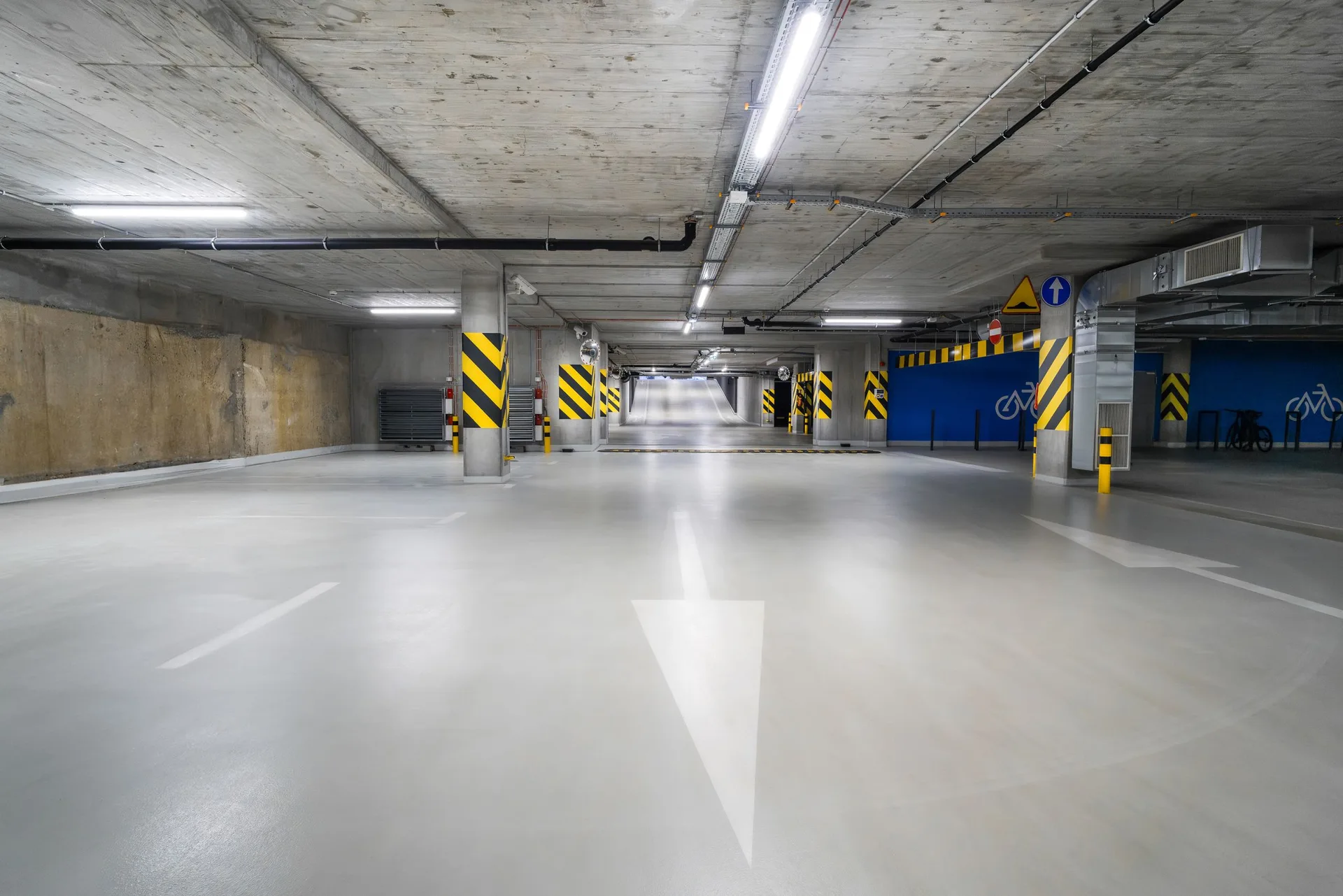
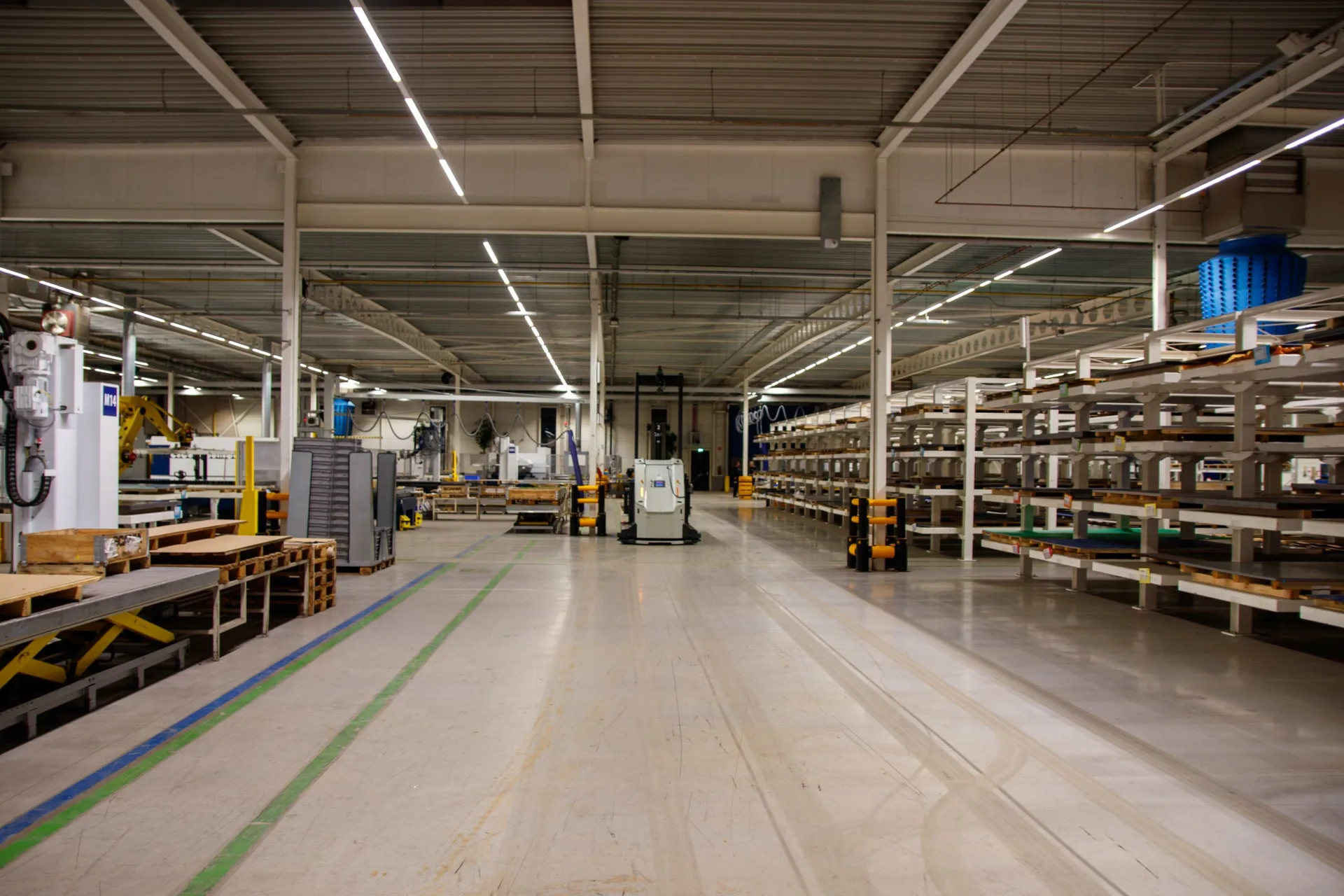
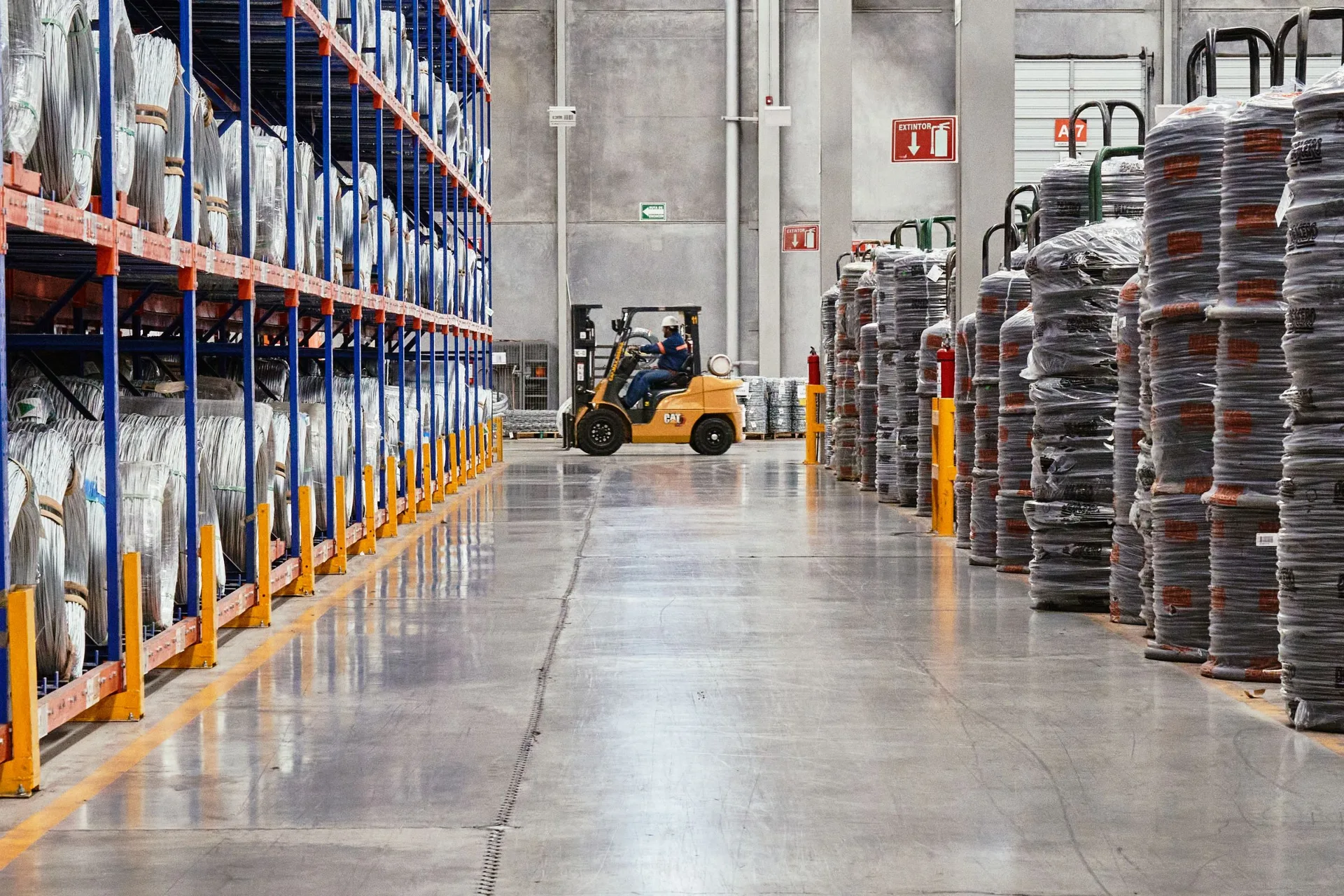
Epoxy floor paint is an economical system 0.3–0.5 mm thick, applied by roller in two coats after the primer. It stops concrete dusting and prevents oil and liquids from soaking into the concrete. It is suitable for warehouses, workshops, plant rooms and parking garages with light to medium traffic.
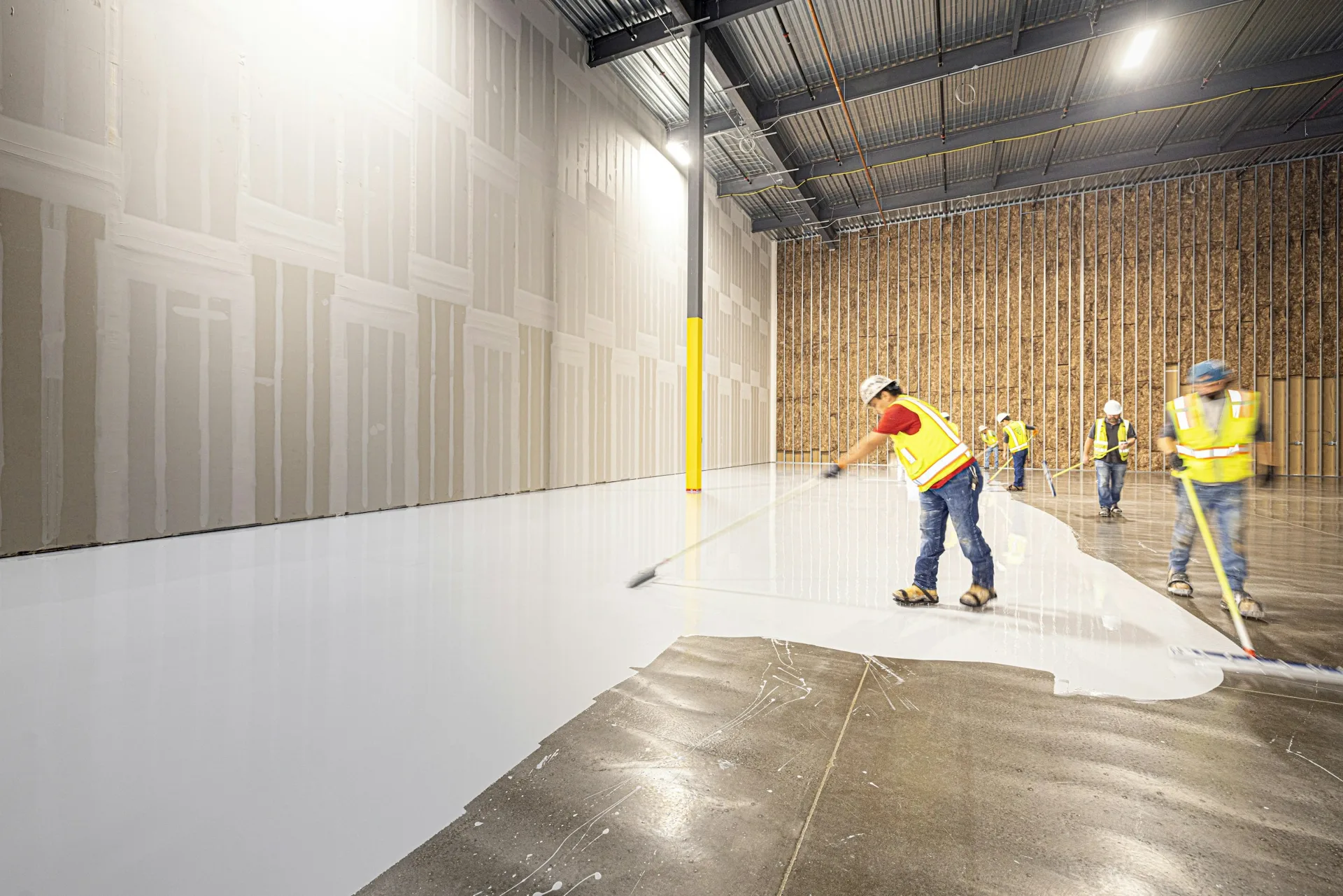
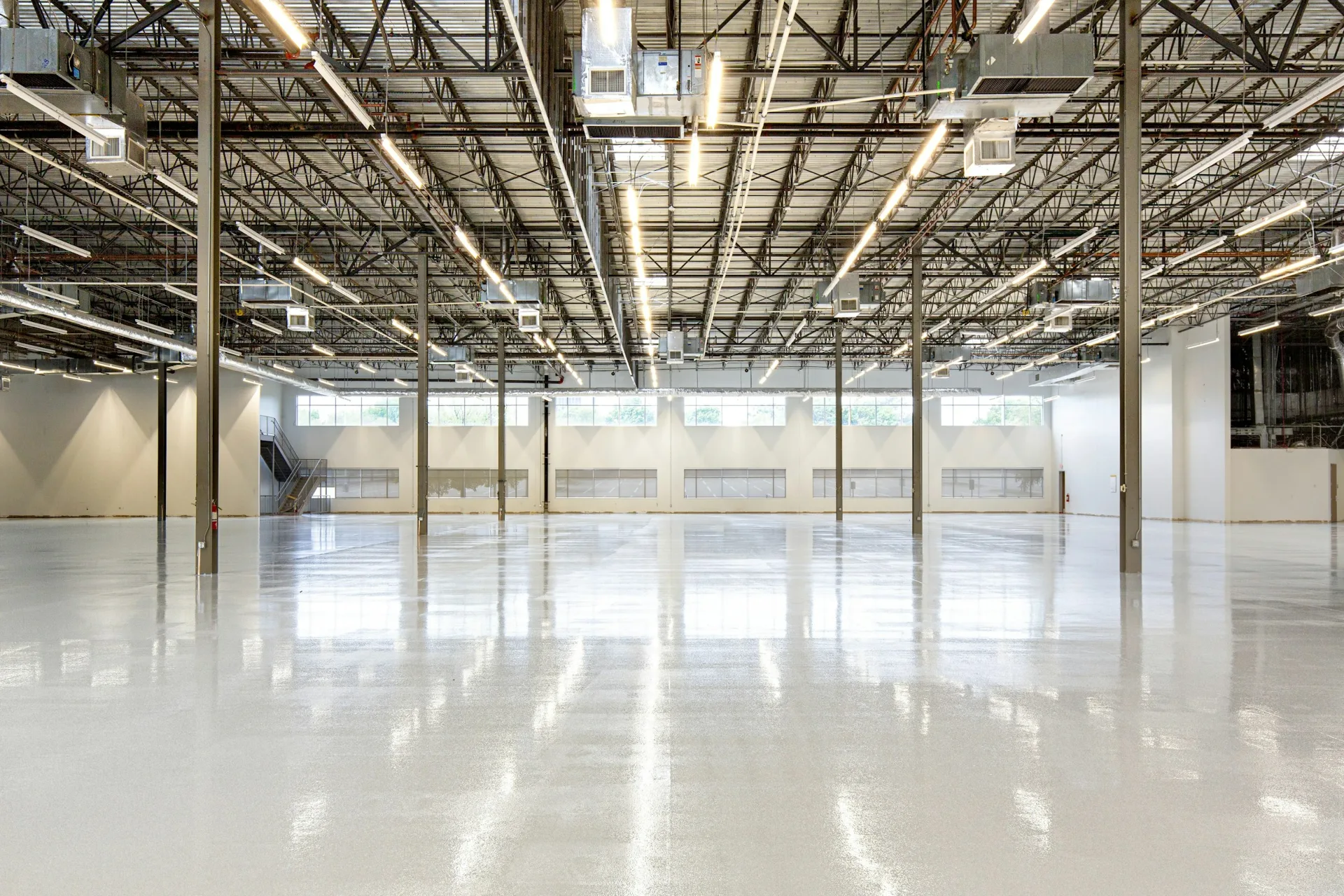
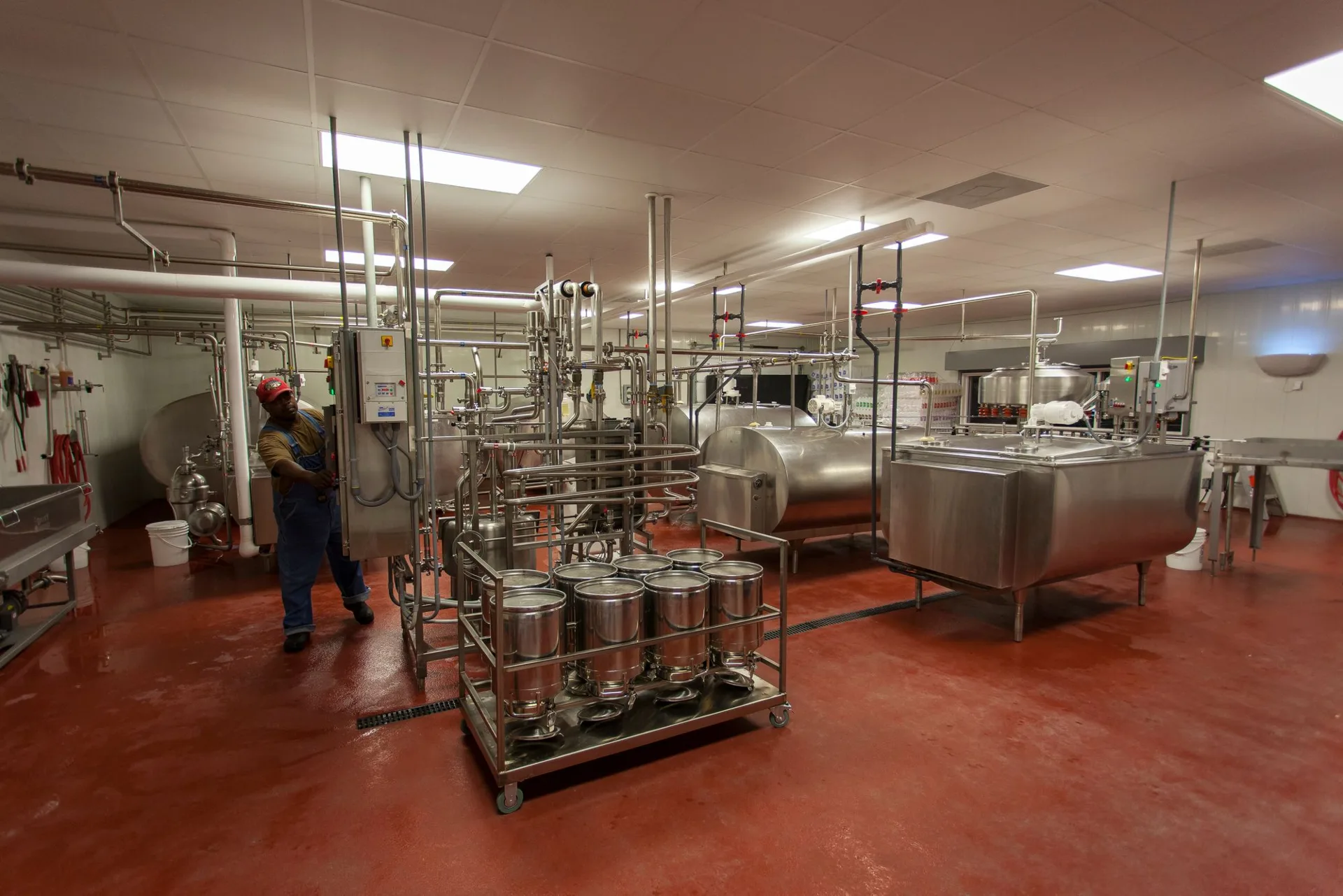
Self-leveling epoxy flooring is a 2–3 mm system that, once poured onto the floor, spreads and levels under its own weight to give a smooth, glossy surface. It is the most popular type of epoxy in factories, food and pharmaceutical plants, hospitals and showrooms.
Textured anti-slip epoxy flooring is a system made slip-resistant by broadcasting quartz sand onto the surface or applying a textured topcoat. It is used in wet, oily and sloping areas such as ramps, commercial kitchens and wash-down areas.
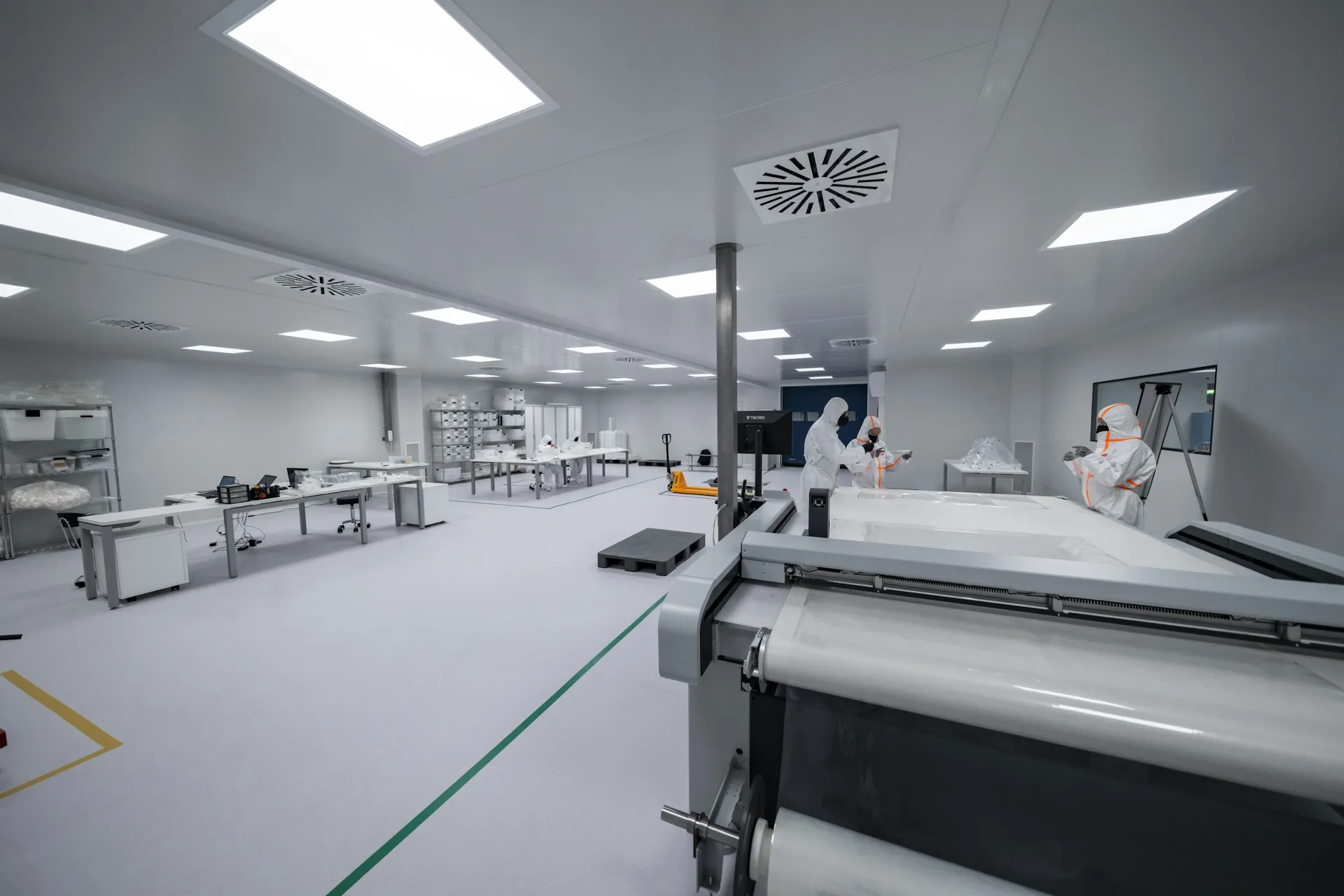
Anti-static epoxy flooring is a specialized system that carries the static electricity building up on its surface to ground through copper tapes and conductive layers. It is designed for electronics manufacturing, data centers, laboratories and facilities with a risk of explosive atmospheres.
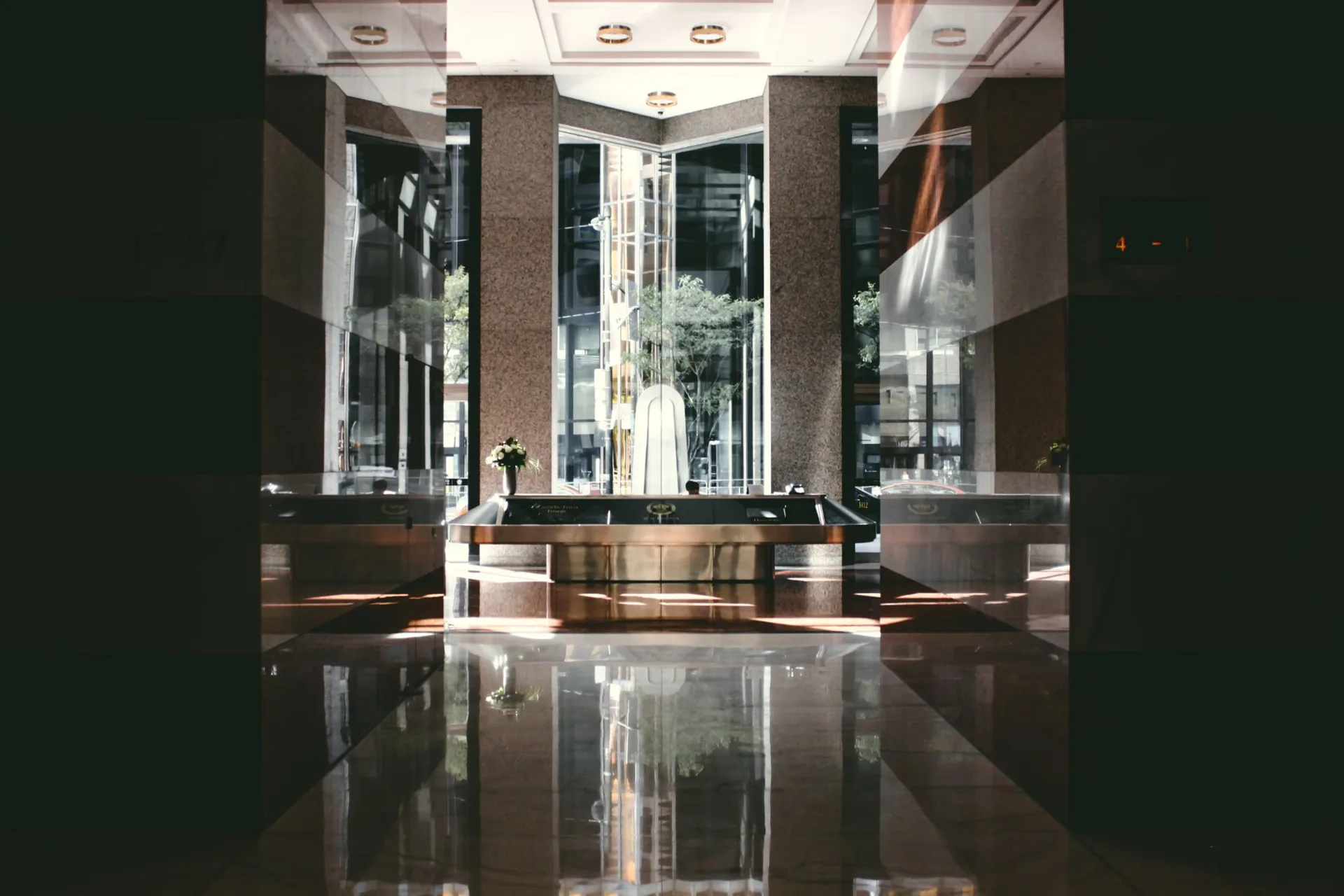
Metallic epoxy flooring is a decorative system in which metallic pigments added to a clear resin create a marble, cloud or liquid-metal look. It is the choice for retail stores, offices, restaurants, showrooms and hotel lobbies where appearance comes first.
You can find the layers, thickness options and a comparison of each system on our epoxy flooring services page.
Epoxy is not the answer to every problem; knowing its limits helps you avoid the wrong investment:
Epoxy can be used in almost any indoor space that calls for a durable, clean and seamless floor. The key requirements and the right systems by sector are as follows:
You can explore every sector, including schools, hotels, auto repair shops, chemical plants and sports facilities, on our sectors we serve page.
Installation broadly follows six steps: assessing the floor (moisture, soundness, cleanliness), mechanical surface preparation (diamond grinding or shot blasting), repairing cracks and voids, priming, applying the epoxy coating layer and curing. The step that most determines the service life of the coating is surface preparation; even the highest-quality epoxy applied to poorly prepared concrete will blister sooner or later. You can find each step in detail in our article how is epoxy flooring installed.
Service life depends on the thickness of the system, the quality of surface preparation, the traffic on the floor and maintenance. Thin paint systems wear down more quickly under heavy traffic and need renewing every few years, whereas 2–3 mm self-leveling and quartz systems last much longer when used correctly. Regular maintenance extends service life significantly; we explain what needs to be done in our epoxy floor maintenance and cleaning guide.
The price per m² is determined by the system type, thickness, the condition of the existing floor, total area, material quality, additional work and working conditions. That is why the difference between two quotes is usually not a different price for the same job, but a different thickness and a different level of surface preparation. To compare quotes properly, take a look at our article 7 factors that determine the cost of epoxy flooring per m².
When the right system is chosen and carefully installed, epoxy flooring is an investment that gives many years of trouble-free service. What matters is choosing the system that fits the needs of the space, never cutting corners on surface preparation and respecting the curing times. If you would like to find out which system is right for your space, you can request a quote or browse our completed projects.
Every stage of an epoxy flooring installation from survey to handover: surface preparation, repairs, primer, coating layer and curing.
An epoxy floor needs little maintenance, but it should not be neglected. Everything you need to know, from daily cleaning and stain removal to the…
When can you walk on an epoxy floor, and when can it take loads? Curing times by temperature and the conditions that affect the process.
Our priority is
Tell us about your project, and together we will pin down the right epoxy system for your floor, the application time and our quote.
Get a Quote5-year workmanship and 10-year product warranty. We respond to all requests within 24 hours. We work in all 81 provinces.