
How Is Epoxy Flooring Installed? Application in 7 Steps
Every stage of an epoxy flooring installation from survey to handover: surface preparation, repairs, primer, coating layer and curing.
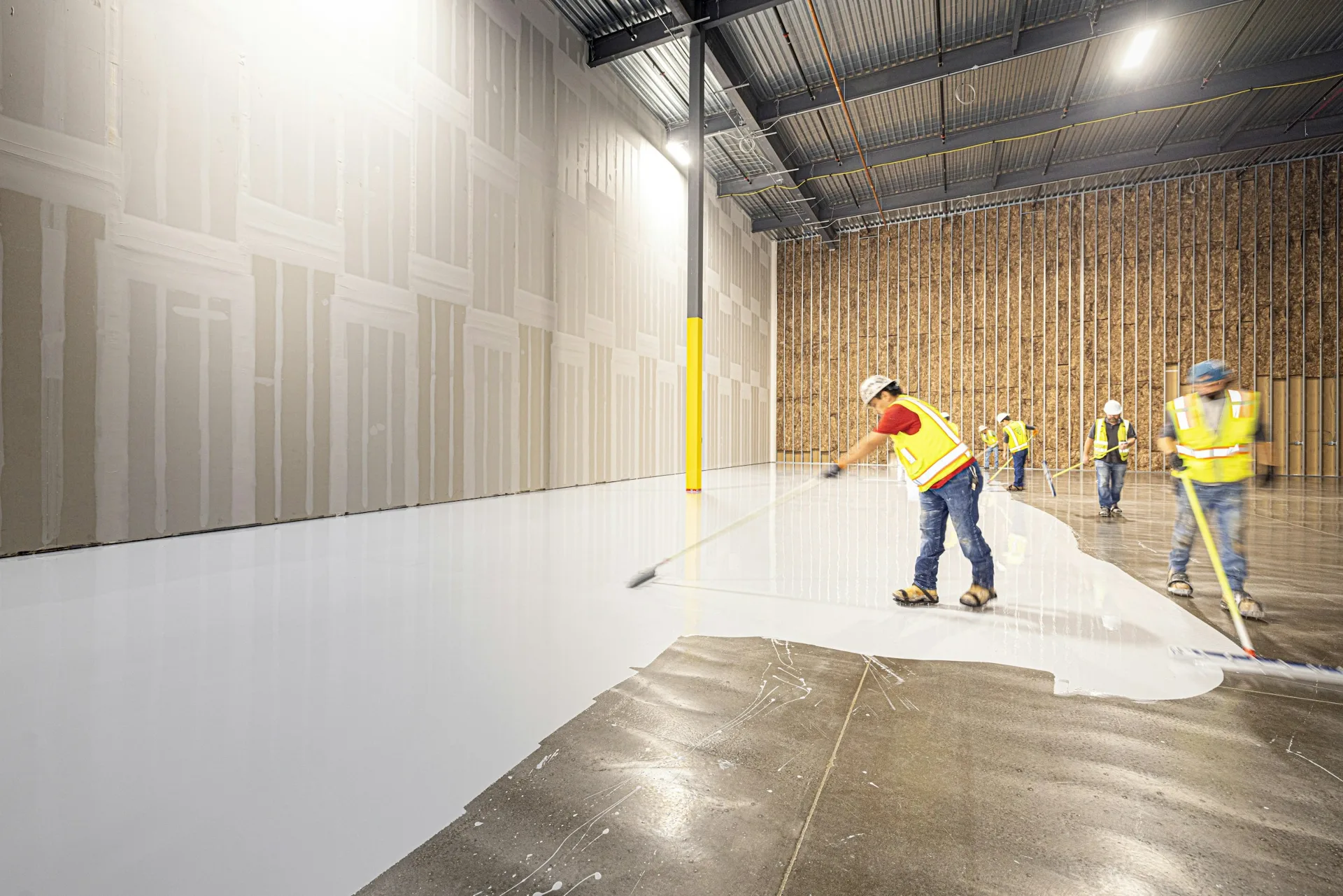
A thin-film epoxy coating applied by roller in two coats: it stops concrete dusting, protects the floor against oil and water and is economical compared with thick systems. For warehouses, workshops, parking garages and garages.
Epoxy floor paint is a two-component thin-film coating applied by roller in two coats over a primer, with a total thickness of 0.3–0.5 mm. It stops concrete from dusting, protects the surface against oil and water and is more economical than self-leveling systems. It suits warehouses, workshops, parking garages and garages with foot and light vehicle traffic; under heavy forklift traffic and where hot tires constantly stand, a thick system is chosen. The floor can be walked on after about 24 hours and cures fully in 7 days.
Epoxy floor paint is a two-component coating, made up of a resin and a hardener, that forms a thin but hard protective film on a concrete floor. It is applied by roller in two coats after the primer and reaches a total thickness of 300–500 microns, that is, 0.3–0.5 mm. Its purpose is not to level the floor or to build up a thick wear layer; it is to seal the surface of the concrete, stop dusting and turn the floor into a wipeable, single-color surface.
It resembles wall paint in name only. Single-component paints dry as the solvent or water in them evaporates; epoxy, by contrast, hardens through a chemical reaction that begins when the two components are mixed. This is why it does not soften with water or detergent once it has cured, and remains a hard film keyed into the pores of the concrete. When the two components are not mixed in the right ratio and thoroughly enough, the film does not harden; the step of the application that looks simplest is in fact one of the most important.
Uncoated concrete gives off a fine dust from its surface as it is walked on and as wheels roll over it. This dust is carried onto racks, products and vehicles and into ventilation ducts; sweeping never puts an end to it, because its source is the floor itself. Epoxy floor paint seals off this source. In areas with foot or light vehicle traffic, such as warehouses, workshops, indoor parking garages, plant rooms and garages, it is the economical solution for situations in which a thick coating is not needed.
The fact that it is a thin system does not mean that the layers are unimportant. On the contrary, because the thickness is small, each coat has to do its job without fail.
Parking bay lines, walkways, direction arrows and zone markings are applied with paints from the same family of materials once the second coat has cured. In this way the lines are washed together with the floor and do not lift at the edges as adhesive tape does.
The greatest advantage of epoxy paint is its thinness; its limit comes from the same place. A film that does not exceed half a millimeter is a surface with little allowance for wear. In the conditions below it is better to recommend a different system.
None of these limits makes epoxy paint a bad product; they simply determine which job it is used for. In areas where the load is light and what is expected is a dust-proof, orderly floor, paint more than repays the money spent on it. Used in the wrong place, however, it means a floor that wears through within a few months and labor that is paid for a second time.
Products that differ from one another are sold on the market under the name of epoxy floor paint. Broadly, three groups can be distinguished; which one is chosen depends on the floor, the traffic and the ventilation of the space.
Single-component floor paints sold ready to use in the can are a separate class; they do not give the same hardness and adhesion as two-component systems. What to look at when deciding is not the name of the product but how many components it has, how many coats will be applied and the total film thickness. We write these three pieces of information clearly in the quotation.
The common factor is this: the floor does not carry heavy loads, but it is expected not to dust, to be wipeable and to look orderly. In the spaces below, paint is very often sufficient by itself; in some of them a thick system is added in the sections that are used intensively.
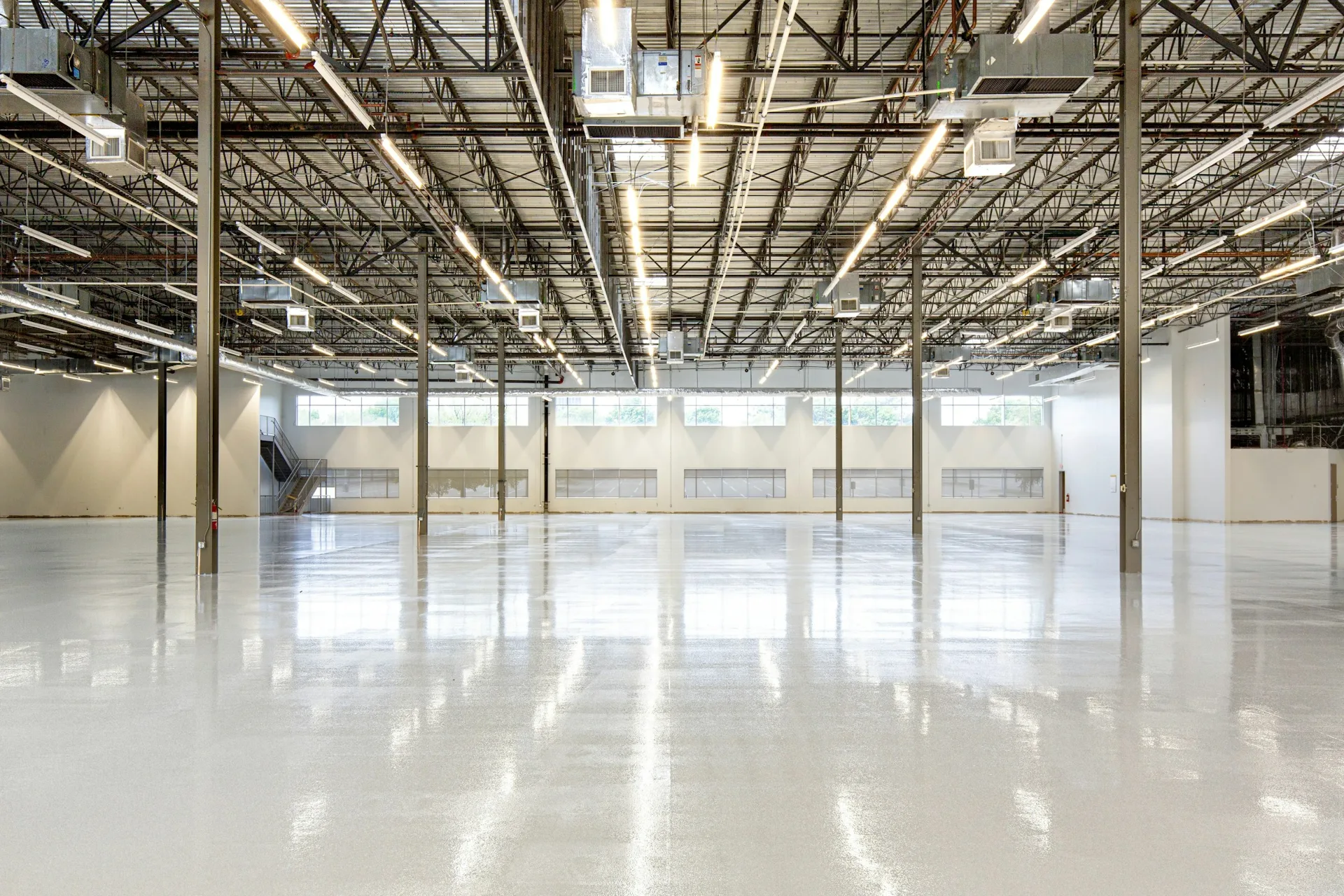
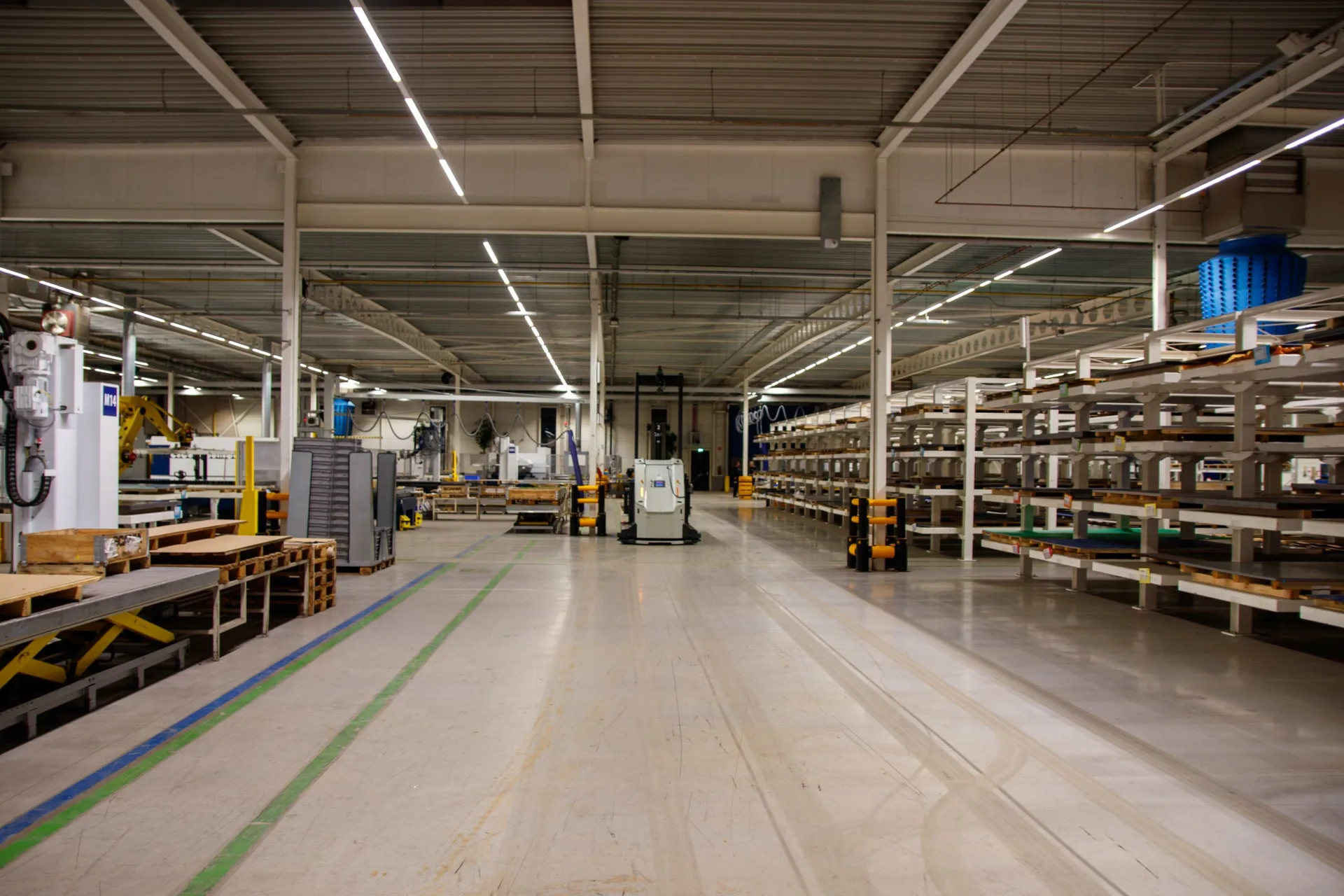
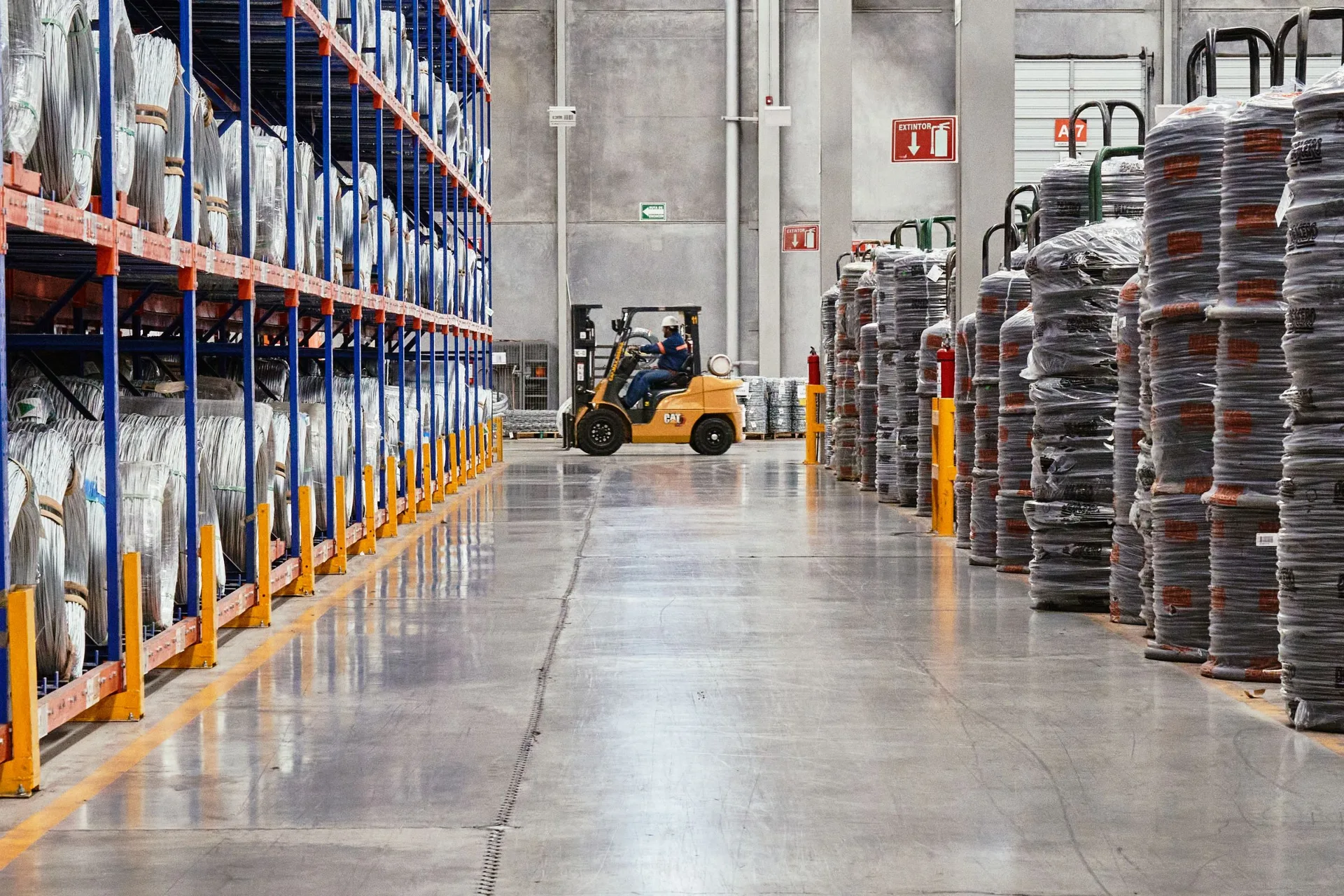
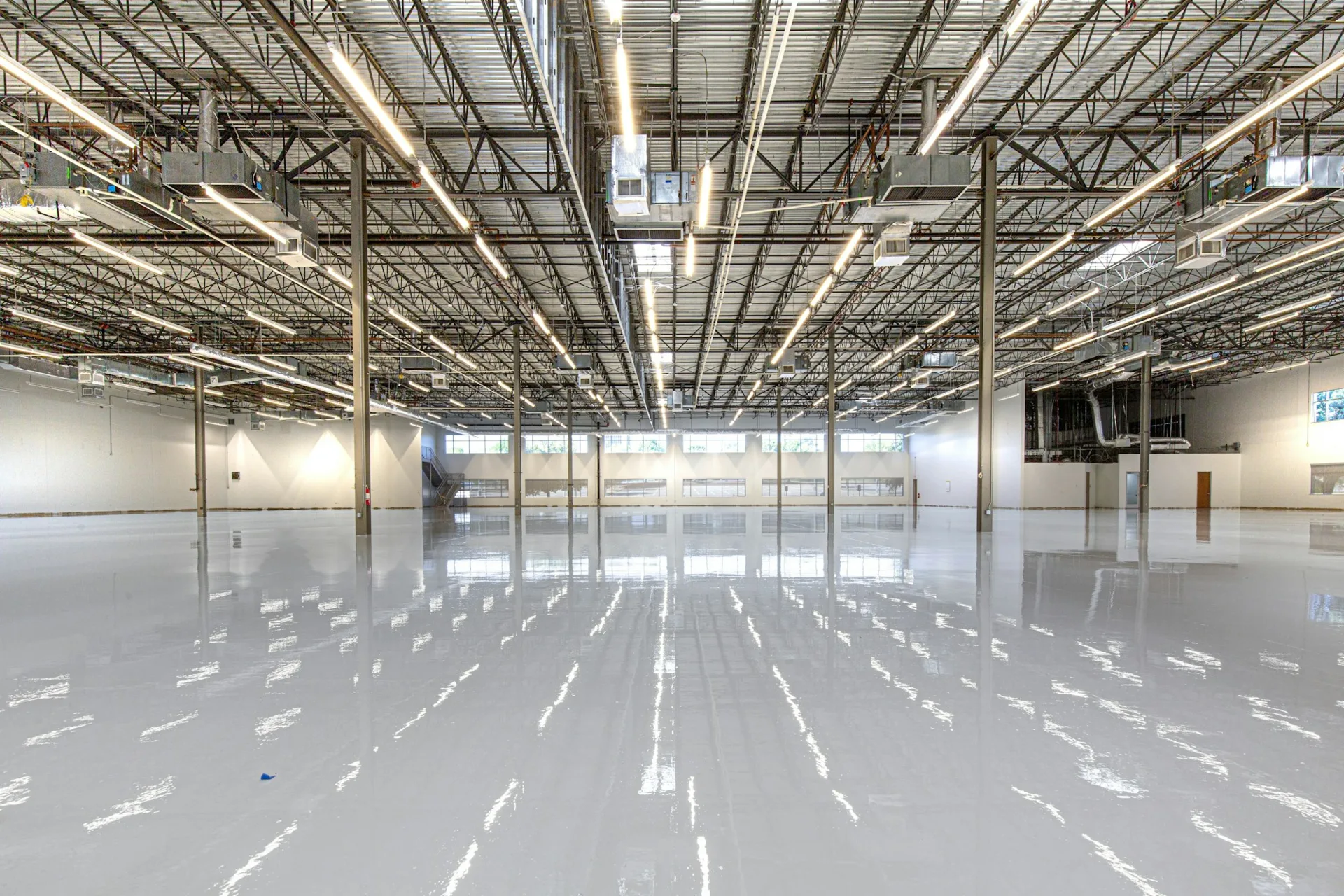
In warehouses where picking is done by hand and the traffic between the racks is limited to pedestrians and hand trucks, the real problem is dust: cartons, products and racks are constantly covered in a fine concrete dust. In archives this dust settles on the boxes and the documents. In these areas epoxy floor paint solves the problem by itself; the aisles between the racks, the walkways and the areas in front of fire hose cabinets are marked in different colors. The main aisles where forklifts work all day and the loading areas are treated separately, even if they are in the same building: there a thick system is chosen instead of paint, and the warehouse is coated with two systems. For details you can look at the warehouses and logistics areas page.
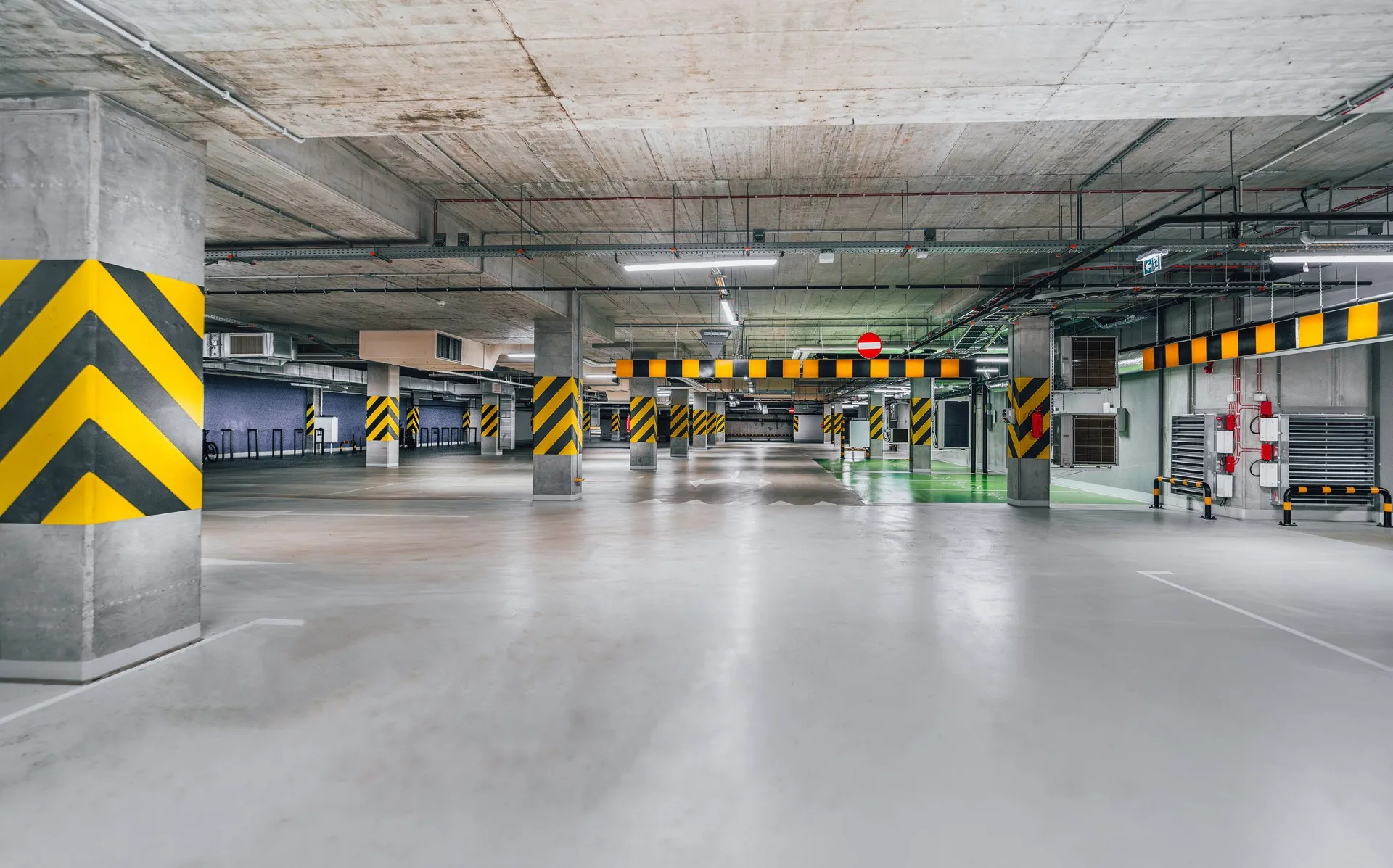
Not every square meter of a parking garage is stressed in the same way. In the parking bays, where the vehicle drives in and stands, there is little movement; in residential and workplace parking garages epoxy floor paint is a sufficient and budget-friendly solution for these sections. The driving lanes, turning points and ramps, by contrast, are where the tires exert the most force; there a textured system with quartz sand is used. On basement levels the job starts with a moisture measurement, because on damp concrete a thin film is the first system to blister. Light-colored paint markedly brightens a parking garage with a low ceiling. We describe the choice of system zone by zone on the parking garages and vehicle areas page.
In workshops where manual assembly, packing, sewing, labeling and small-scale manufacturing are carried out, the load is on the workbench, not on the floor. The employees stand, and materials are moved by hand or on light trolleys. In these conditions epoxy paint stops dusting, makes it easier to find a small part that has been dropped and gives the workshop a well-kept look. The point to watch is the exceptions inside the workshop: the area around a heavy machine, the doorway where palletized material is unloaded and the foot of the benches where swarf or oil is spilled all wear paint rapidly. Setting these zones apart from the start and coating them with a thick system works out cheaper than patching them afterwards. For heavy-duty service conditions you can take a look at the factories and industrial plants page.
The boiler room, the pump and booster room, the generator room, the switchgear room and the elevator machine room are places that are entered infrequently; but there the dust fills the filters and fans of the equipment and the insides of the panels. A painted floor stops this dust, and it has one more benefit: on a light-colored surface a drop of water or oil is visible at once, and a leak is noticed before it grows. In these rooms the paint is turned a few centimeters up the base of the wall so that it works like a skirting; the areas around the machine plinths are detailed separately. Points where hot water or steam is constantly discharged are the limit of epoxy and are assessed separately. In buildings that are in use, such as schools, this work is scheduled for the holiday period; we describe the timing on the schools and educational facilities page.
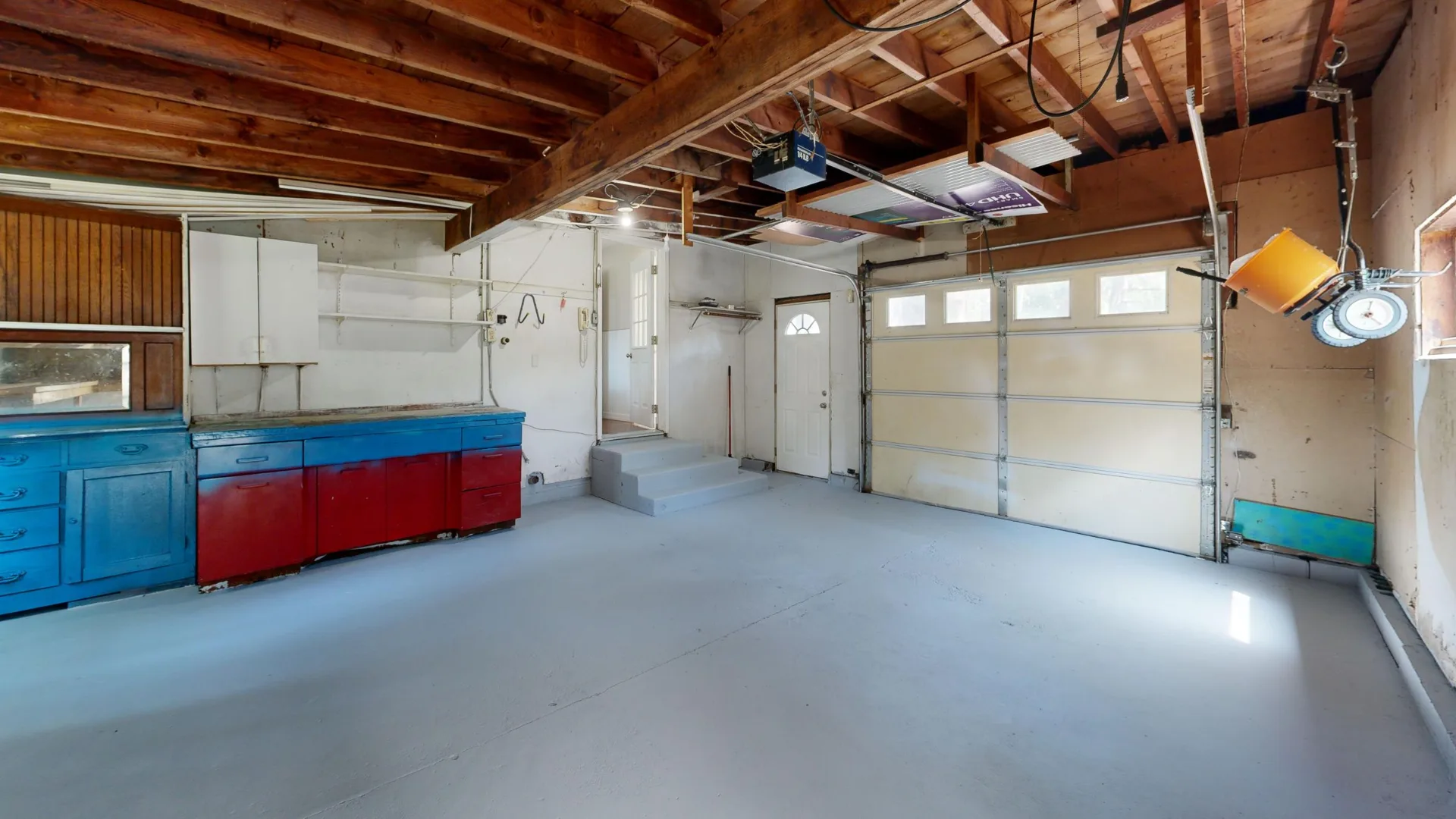
In a detached garage the traffic consists of a single car, and paint is the system that is asked about most here. The floor does not dust, a drop of oil is wiped away, and the garage looks like a room of the house, not like a storeroom. Two points have to be stated from the start. The first is tires: because the car always parks in the same place, the four points where the tires stand are the most heavily stressed; a two-component, solvent-free system and thorough surface preparation make the difference here. The second is moisture: in basement and garage slabs that rest on the ground, moisture rising from below is common, and painting does not begin without a measurement. In sections such as storage rooms, cellars and hobby workshops, low-odor water-based products make the application easier. For the other options in garages and basements you can look at the epoxy flooring for home garages and basements page.
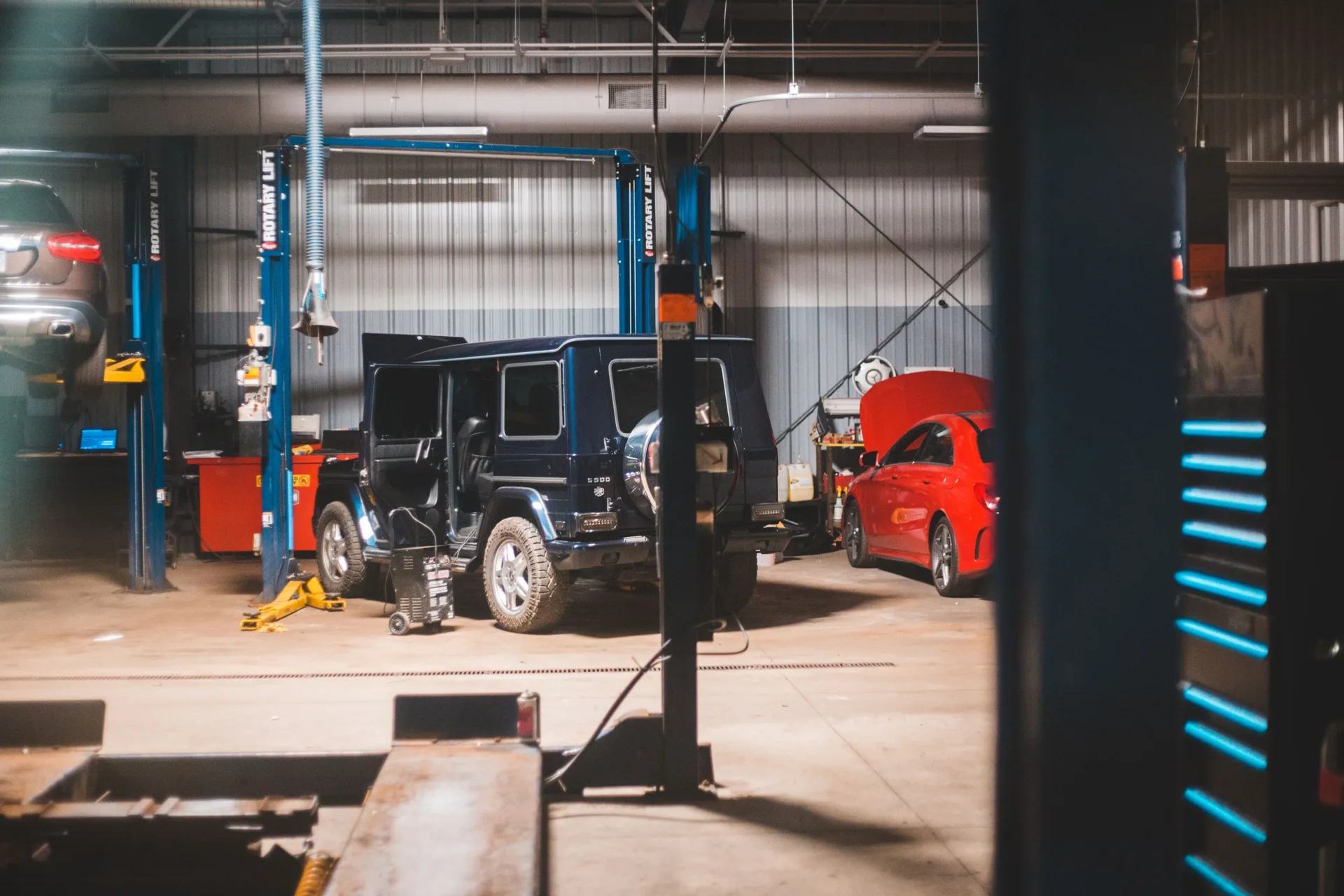
In an auto repair shop the floor does not do the same job everywhere. The areas under the lifts, the oil change bays and the wash bay are constantly exposed to oil, chemicals and hot tires; a thin film is not enough there, and we say so plainly. The spare parts store, the tire storage section, the archive and the staff areas, on the other hand, are limited to foot traffic; in these sections epoxy floor paint stops dusting and keeps the parts clean. Using two systems together in the same facility means allocating the budget to the places where the floor is really put under stress. We discuss which system is chosen for the workshop section on the auto repair shops and automotive page.
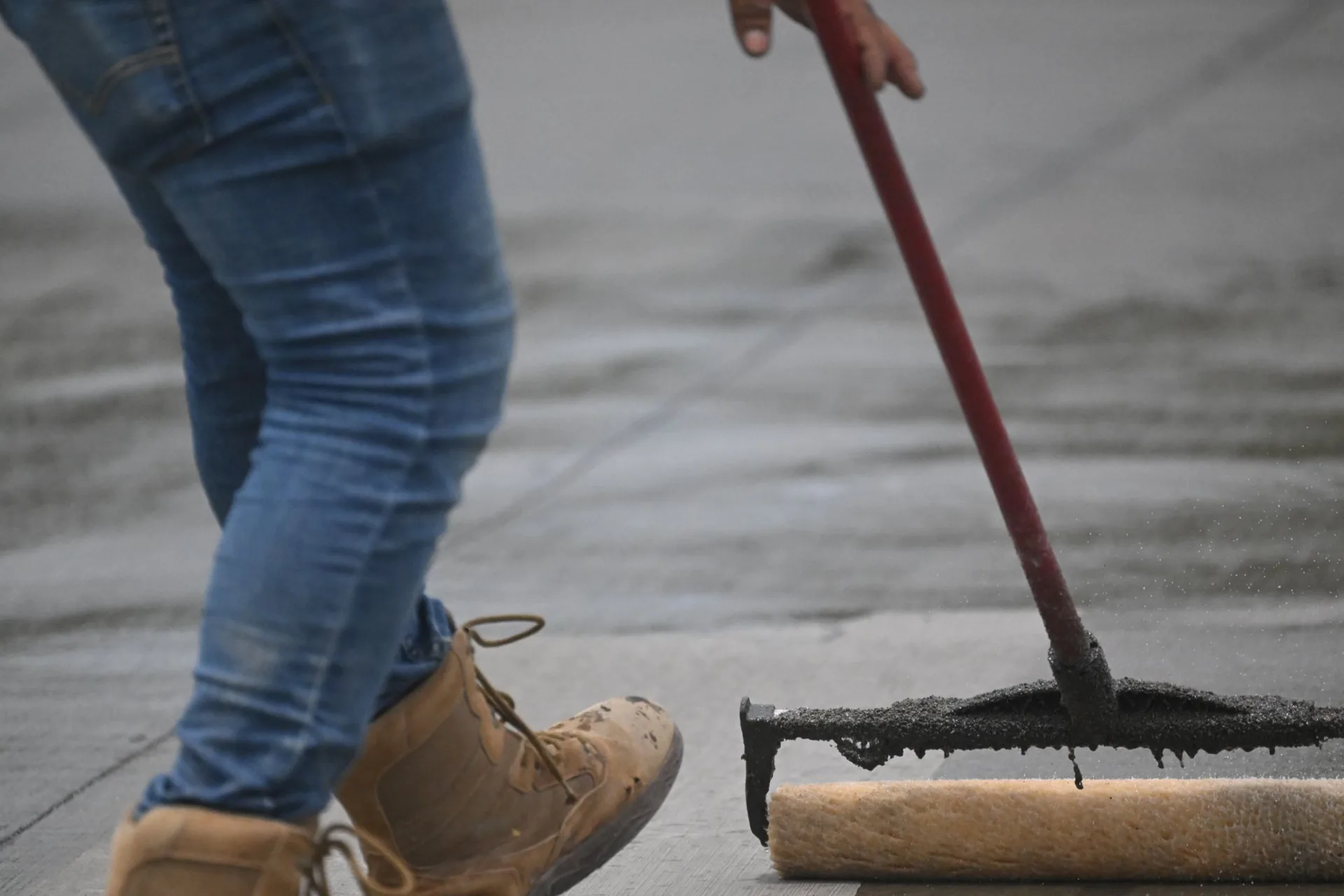
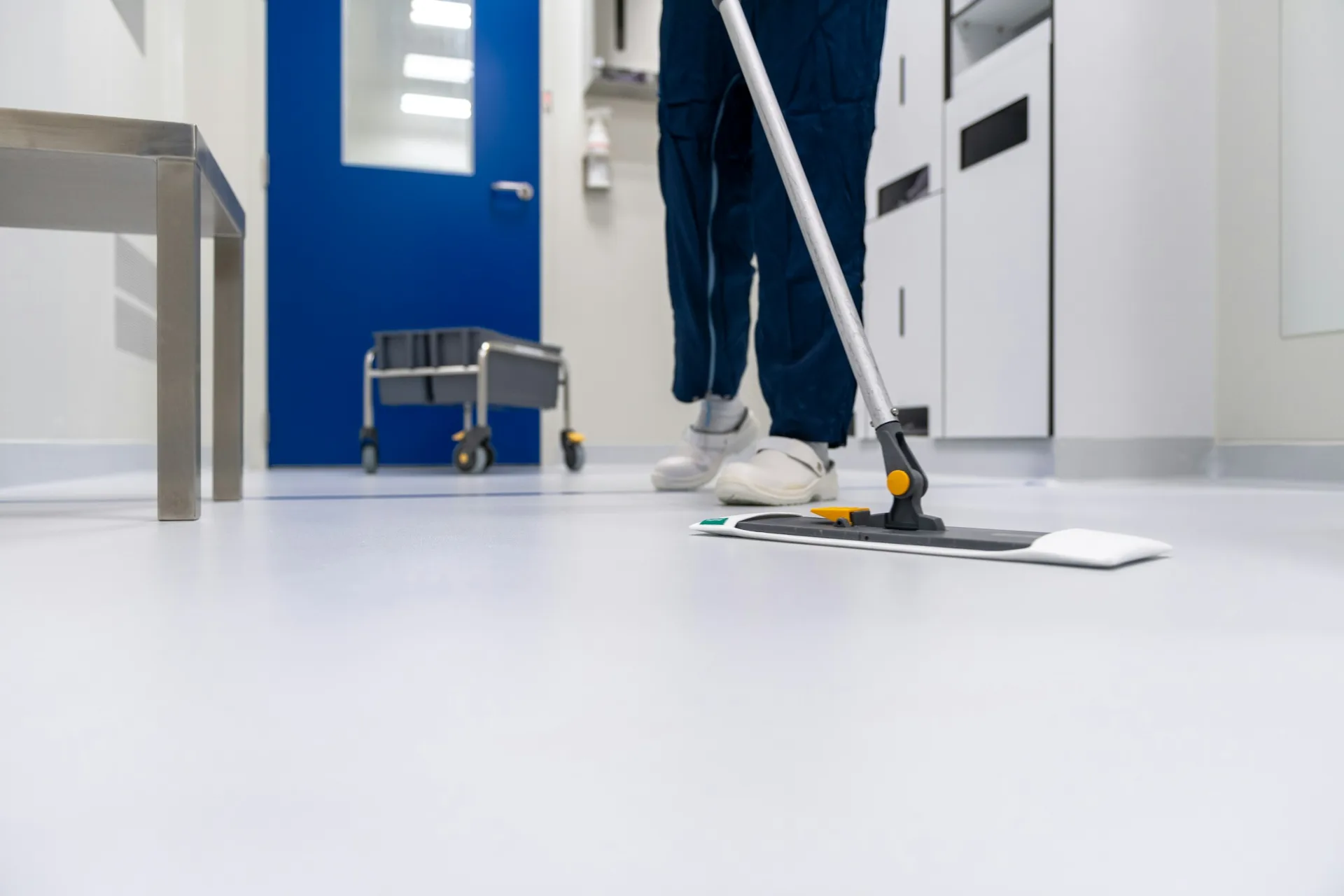
With thin systems, most of the work is done before the paint can is opened. The sequence is as follows:
Site conditions affect the result directly. When the floor temperature drops below 10 °C, curing slows down markedly; if there is condensation on the surface, no application is carried out. Water-based products need a flow of air so that the water can evaporate; in a closed, humid basement the paint will not dry properly unless ventilation is provided.
Epoxy floor paint is applied in the color chosen from the RAL chart. The most popular are light and mid-gray shades: they reflect light well and do not show dust and tire marks as much as dark or very light colors do. Green for walkways, yellow for warning zones and white or yellow for parking bay lines are frequently used pairings; but the color scheme is determined entirely by the rules of the business itself.
The finish is gloss or satin, depending on the product. A glossy surface wipes clean more easily and makes the space look brighter; a satin surface makes the undulations of the concrete and the roller marks less obvious. In old buildings where the floor is not very flat, a finish toward the matte end usually gives a better result.
The thickness is determined by the number of coats and the type of product. With a primer and two coats of paint, a film in the range of 300–500 microns is obtained. Applying a third coat to the traffic lanes increases the allowance for wear, but it does not turn paint into a thick coating; if more durability is needed, the solution is not to increase the number of coats but to change the system. At points that can get wet, such as the tops of ramps and doorways, a light texture can be given by adding a fine anti-slip additive to the final coat.
Paint is the thinnest and most economical of the five systems we apply. The difference between it and the others is not just price; each one solves a different problem.
The basic difference is thickness: paint is 0.3–0.5 mm thick and self-leveling epoxy is 2–3 mm thick. Self-leveling is poured onto the floor, spread with a notched trowel and levels itself out, covering the small defects of the concrete; paint, by contrast, follows the surface just as it is. Self-leveling stands up to wheeled traffic and abrasion for far longer, and in return it requires more material and labor. Self-leveling is chosen for areas where forklifts operate and a flat, glossy surface is expected; paint for areas that see foot traffic and where the aim is a dust-free floor.
Textured epoxy is a textured system 3–5 mm thick, obtained by broadcasting quartz sand onto the wet coating. It is both anti-slip and resistant to impact and friction. An anti-slip additive mixed into paint provides a light grip, but it is no substitute for a quartz-filled system. Ramps, wash areas, oily work bays and loading zones are the territory of the textured system; dry, level parking bays and warehouses are the territory of paint.
Metallic epoxy is chosen for its appearance: it is a floor whose pattern is created by hand, with clear resin containing metallic pigment giving a marble or cloud effect. Epoxy paint, by contrast, gives a plain, flat, single-color surface; it does not meet what is expected of a showroom or shop floor. Looked at the other way round, coating a warehouse or a parking garage with the metallic system is an unnecessary expense as well.
Epoxy paint is electrically insulating; it does not conduct static charge to ground. In electronics manufacturing, server rooms or rooms containing flammable substances, the floor is made with an anti-static epoxy system that is connected to the grounding line by copper tapes. Applying ordinary paint in these areas is not merely inadequate; it also allows static charge to build up.
Looking after a painted floor is simple, but it determines the life of the floor directly. Sand and grit on the surface work like sandpaper under shoes and wheels; this is what wears a thin film the most. For this reason, placing mats at the entrance doors and sweeping the floor regularly is the most effective maintenance there is.
After a while the doorways, the turning points and the most heavily walked routes become dull and thin. If these zones are lightly sanded and given a new coat before the concrete shows through, the floor looks as if it had been redone from scratch and the whole system is preserved. Leaving the renewal until after the concrete has been exposed means starting again from the primer.
For a daily, weekly and yearly maintenance schedule and cleaning tips for each type of stain, see our guide Epoxy Floor Maintenance and Cleaning.
Paint is the epoxy system with the lowest cost per square meter; even so, no two floors come out at the same price. The quotation is made up of the following factors:
When weighing things up, it is necessary to look not only at the initial price but also at how many years it will be before the floor needs renewing. In a lightly used warehouse paint is the most sensible choice; in a heavily trafficked aisle the same paint turns into a solution that has to be renewed after a short time and is more expensive overall.
We explain what to look for when comparing quotes in our article 7 Factors That Determine the Cost of Epoxy Flooring per m².
We can assess together whether epoxy paint is sufficient for your floor. When you fill in the quotation form, it makes our work easier if you include the following information:
Adding a few photographs speeds up the initial assessment. With this information we prepare an itemized written quote that sets out the firm price, with any extra work such as repairs or a moisture barrier listed as separate items. Once the quote is approved, we measure the moisture of the concrete during the on-site survey; if we see that paint will not be sufficient, we tell you so plainly, along with which system is more suitable and why. You can view the work we have completed on the projects page and the other systems on the services page.
| Thickness | 300–500 microns (0.3–0.5 mm) |
|---|---|
| System | Primer + 2 coats of epoxy paint |
| Application | Roller (brush at edges and corners) |
| Product type | Water-based or solvent-free, two-component |
| Open to foot traffic | Approx. 24 hours |
| Full cure | 7 days (20 °C) |
| Suitable traffic | Light to medium |
The service life of epoxy floor paint is determined not by a fixed number of years but by the traffic on it. In areas with foot traffic, such as archives, storage rooms and plant rooms, it serves for many years on a properly prepared surface. In parking garages that vehicles enter and along routes where hand trucks pass constantly, on the other hand, the traffic lanes wear thin sooner. The good side is that a worn zone can be renewed without being stripped: the surface is lightly sanded and a new coat is applied on top.
The basic difference is thickness and the durability that comes with it. Paint is a film 0.3–0.5 mm thick applied by roller, and it follows the texture of the concrete just as it is. Self-leveling, by contrast, is a coating 2–3 mm thick that is poured onto the floor and spread; it covers small defects, gives a smooth surface and stands up to wheeled traffic such as forklifts for far longer. If the only aim is to prevent dusting, paint is chosen; if loads and an even appearance are expected, self-leveling.
For vehicle traffic, the wait is 3–7 days depending on the product and the ambient temperature. The floor can be walked on after about 24 hours, but this does not mean that the film is ready to carry tire loads; full cure is complete in 7 days at a temperature of 20 °C. On cold basement levels the time is longer. In garages, keeping the car outside until the seventh day is the safest way to prevent warm tires from leaving marks in the fresh film.
It can, but the soundness of the existing surface is checked first. Old epoxy paint that is well bonded to the concrete is sanded to dull it and the new coat is applied directly on top. Old paint that is blistering, peeling or of unknown type, however, is stripped completely; new paint applied over a weak layer lifts off together with it. On ceramic tiles the surface is ground to roughen it and a suitable primer is selected; because the joint lines will remain visible in a thin film, this is discussed from the outset.
When dry, a smooth painted floor can be walked on safely, but it can become slippery when it gets wet or when oil is spilled on it. At points such as doorways, the tops of ramps and entrances where vehicles carry water in, a fine anti-slip additive is added to the final coat to give a light texture. In places that stay constantly wet, are washed down or have a steep slope this is not enough; there a textured epoxy system obtained by broadcasting quartz sand is preferred.
With water-based and solvent-free products there is little odor, but the section being painted cannot be used during application and on the first day of curing. Large areas are divided into sections and painted in turn, so that the rest of the business carries on working. In enclosed, airless rooms ventilation is provided both to disperse the odor and to let the paint dry properly. Because solvent-based products give off a pronounced odor, they are in most cases not preferred in buildings that are in use.
Every stage of an epoxy flooring installation from survey to handover: surface preparation, repairs, primer, coating layer and curing.
When can you walk on an epoxy floor, and when can it take loads? Curing times by temperature and the conditions that affect the process.
We explain in plain language what epoxy flooring is, which types are available and why it is chosen for different kinds of spaces.
Why do epoxy flooring prices vary so much from one project to the next? We explain the items that make up the price so that you can compare quotes…
Our priority is
Tell us about your project, and together we will pin down the right epoxy system for your floor, the application time and our quote.
Get a Quote5-year workmanship and 10-year product warranty. We respond to all requests within 24 hours. We work in all 81 provinces.